
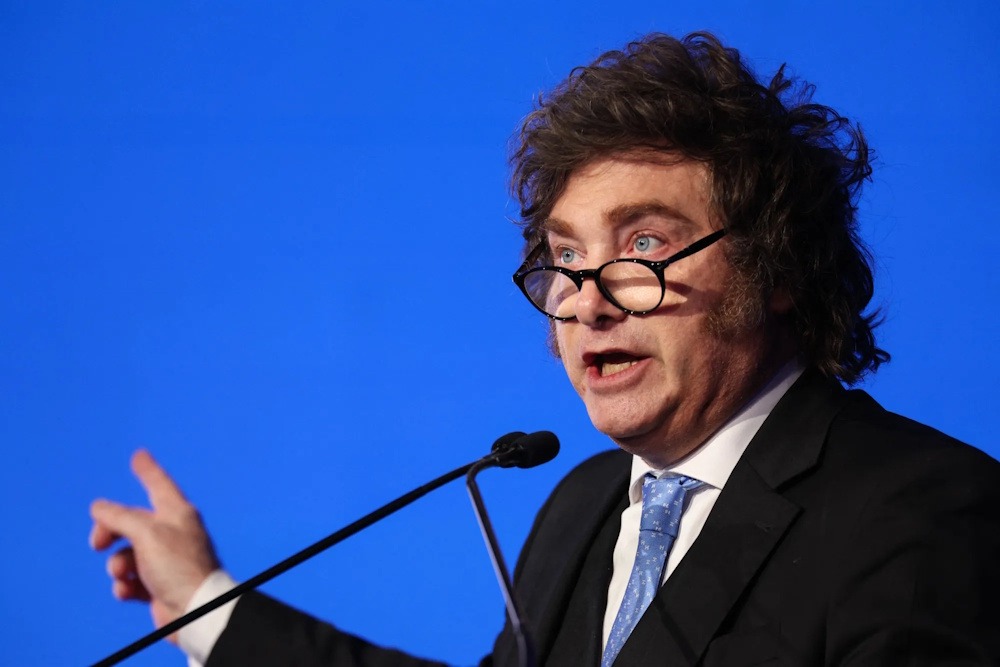
President Javier Milei states that his administration is crafting a mechanism intended to “shut down” the state once budgetary resources are depleted, drawing inspiration from a method distinctive to the United States, where periodic shutdowns have halted federal agencies for extended periods. In an interview on Tuesday with the Neura streaming platform, Milei stated that government officials in his administration are developing a bill that would enable state agencies to automatically cease operations once their funding is depleted. “We are working on designing the Executive branch’s ‘shutdown’ – in reality, the political system’s shutdown. When you run out of budget, the state switches off,” Milei said.
In the United States, a shutdown transpires when Congress does not pass, or the President declines to sign, funding for federal agencies prior to the expiration of existing appropriations. Non-essential functions cease operations, leading to furloughs or unpaid work for employees, while essential services remain operational. The mechanism has emerged as a persistent characteristic of the gridlock in Washington over recent decades. The longest shutdown in US history occurred from October 1 to November 12, 2025, lasting 43 days due to a standoff regarding healthcare subsidies. Milei provided no specifics regarding the operation of such a mechanism within Argentina’s constitutional framework, which delineates budgetary powers between the Presidency and Congress.
The government shutdown clause is included in a broader reform package that Milei stated he is finalising with Economy Minister Luis Caputo, Central Bank Governor Santiago Bausili, and Deregulation & State Transformation Minister Federico Sturzenegger. It also addresses the Central Bank’s charter, capital markets regulations, and a new ‘Fiscal Innocence’ bill, according to Milei. Government officials initially monitored the package last week after a meeting with legislators from Milei’s La Libertad Avanza party. In the interview, Milei said the proposed reforms are an attempt to “repair 91 years of fraud by politicians against decent Argentines.”
Among the most significant alterations would be a suggestion to prevent the Central Bank from creating currency to fund the government. “It will be explicitly prohibited – with criminal penalties – to violate the Central Bank’s independence by financing the Treasury,” Milei said. “Printing money will be punishable because it is fraud. In fact, the Criminal Code defines fraud, and counterfeiting currency is a criminal offence. “Monetary policy does not exist in a vacuum,” said the President.
