
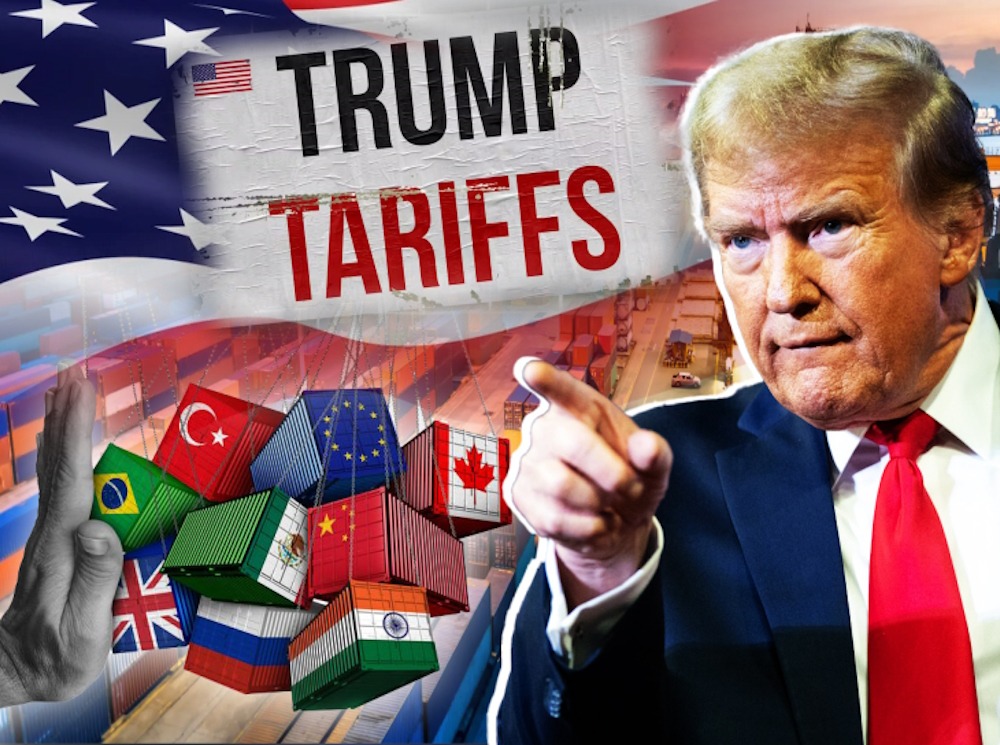
The current tariffs imposed by Washington on over 60 countries do not affect Argentina’s rate, which remains at 10% as per the original 2025 rule. Although the rate itself remains unchanged, the measure could pose challenges for Argentine products that benefited from the trade agreement signed between the two countries in February of this year. Federico Vaccarezza, Secretary of the Europe Department at the Institute of International Relations at the National University of La Plata, stated, “the reduction to a 0% tariff on certain Argentine products [negotiated under the agreement] is now left in limbo.” He argued that the agreement “is only valid if the United States chooses to honor it.” This is because Argentina “has no mechanism to defend itself if the U.S. fails to comply,” nor is there any dispute settlement mechanism between the two parties. “If they want to revoke it, they can revoke it,” he told.
Vaccarezza added that the decision could also affect U.S. investments that Javier Milei’s government is seeking to attract through its Large Investment Incentive Regime (RIGI, according to its acronym in Spanish). “If a U.S. company comes to Argentina under Milei and the government changes, Trump could say: ‘I’m going all in against Argentina now because I don’t like the new government.’ For a company, that creates an enormous amount of uncertainty,” he said. This is not simply a theoretical situation. Last year, Trump imposed 40% tariffs on Brazil under Luiz Inácio Lula da Silva, citing what he described as a “witch hunt” against former President Jair Bolsonaro. Julieta Zelicovich, stated to the Herald that the new tariffs “act as a pressure mechanism.” She said “It is a tool the U.S. government uses to keep bilateral relations under constant strain, keep diplomats on the defensive, and preserve its access to markets.” According to Vaccarezza, the main objective of the tariffs is to demonstrate “U.S. strength to the rest of the world through a single measure, and above all to punish China.”
The policy aims to obstruct the transshipment of goods entering the United States from third countries that are, in fact, produced using Chinese raw materials—or are “simply Chinese products.” Former Secretary of Foreign Trade Marisa Bircher informed the Herald that Argentina’s 10% tariff indicates the absence of a specific legal framework in the country that adequately prohibits or regulates imports of goods produced, either wholly or partially, through forced labour. She recalled that the reciprocal agreement signed with the United States in February 2026 included commitments to prohibit imports of goods produced with forced labour. According to the Office of the U. S. Trade Representative, those commitments “are sufficient to classify Argentina among the economies committed to implementing this type of control,” even though the domestic legal framework has yet to come into force.
Marcelo Elizondo, president of the Argentine Committee of the International Chamber of Commerce, arrived at a comparable conclusion. “What Trump is saying is that he recognizes Argentina is making efforts to reduce forced labor, but that there is still an adjustment process underway, and therefore has imposed the lowest tariff available,” he said. However, he added that “if the objective is to reduce imports from China, that will be difficult to achieve.” China stands as Argentina’s foremost supplier of imports and ranks as its second-largest trading partner, following Brazil. As of 2026, Argentina’s imports from the Asian nation have reached a total of US$7.983 billion.
