
The absence of a prolonged economic recovery, which constitutes the primary challenge facing President Javier Milei’s economic strategy, has once more come to the forefront. Total tax revenue data for August was reported on Tuesday at AR$20.51 trillion. Despite a 33.5% year-over-year increase relative to August 2025, consulting firm ACM determined that, when accounting for inflation, the year-over-year change reflected a decline of 0.15%. On Wednesday, the head of the Argentine Industrial Union, Martín Rappallini, made pointed criticisms of the government without directly referencing it, urging for a cessation of “disparaging remarks” and advocating for “respect for those who produce.” According to the UIA, the foremost trade association in the sector most adversely affected by Milei’s plan, the industry is currently operating at 10% below the levels observed in 2022. The decline in certain sectors spans from 25 to 30 percentage points. It was also observed that since August 2023, three months prior to Milei’s assumption of office, there has been a loss of 90,000 registered salaried positions within the manufacturing sector.
Economy Minister Luis Caputo promptly addressed the industrialists’ criticisms, demonstrating a readiness to engage with the concerns raised. Speaking at the “Winds of Change” event organised by the Freedom and Progress Foundation, the minister remarked that “most business leaders understand that a change in the economic model is necessary, even if it is difficult.” The decline in tax revenue in August signifies the sixth month this year in which it has contracted in real terms. ACM estimated that the amount accumulated in 2026 reflects a 4% real decline relative to the period of January-August in 2025. Despite an enhancement in export-related taxes in August, consulting firm LCG noted that this additional revenue merely served to “offset a further decline in tax revenue directly linked to consumption.” The firm indicated that the value-added tax imposed on the sale of personal property, leases, and services experienced a decline of 3% in real annual terms last month, consistent with the average observed over the preceding seven months.
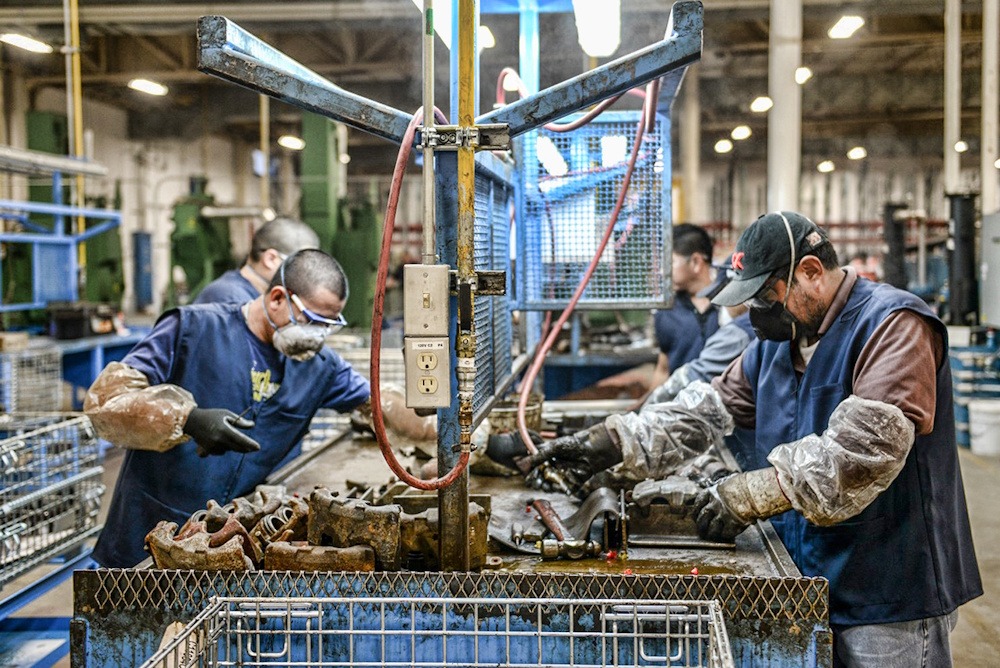
Meanwhile, tax revenue from credit and debit card transactions experienced a significant decline of 9% in real annual terms, continuing the pronounced downturn observed in July, which recorded a decrease of 11% in real annual terms. Social Security revenue, serving as an indicator of registered employment levels, has experienced a further decline of 1% relative to the previous year, resulting in a cumulative decrease of 4% thus far in the current year. One of the sectors that most accurately illustrates this absence of recovery in consumption and the downturn in employment is the local manufacturing industry. Businessman Martín Rappallini emphasised the need for “respect for those who produce” during a speech commemorating National Industry Day, where he highlighted the critical situation facing the industry. “We must put an end to the disparagement and attacks against those who produce. We may have differences, and we may even debate what policies Argentina needs, but respect must be a fundamental part of our democratic coexistence,” he said.
“The industrial sector, the UIA, is calling for a bridge – a bridge between the economy we are leaving behind and the competitive economy we want to build,” Rappallini added. While no specific individuals were mentioned, the remarks were unmistakably directed at Economy Minister Luis Caputo, who has referred to proponents of policies favouring industry as “idiots,” along with Milei, who has consistently disparaged industrial business leaders. One of the most contentious events occurred in 2024. Speaking at an event at the UIA headquarters, which also marked National Industry Day, Milei characterised industrialists as “parasites protected” by the state.
