
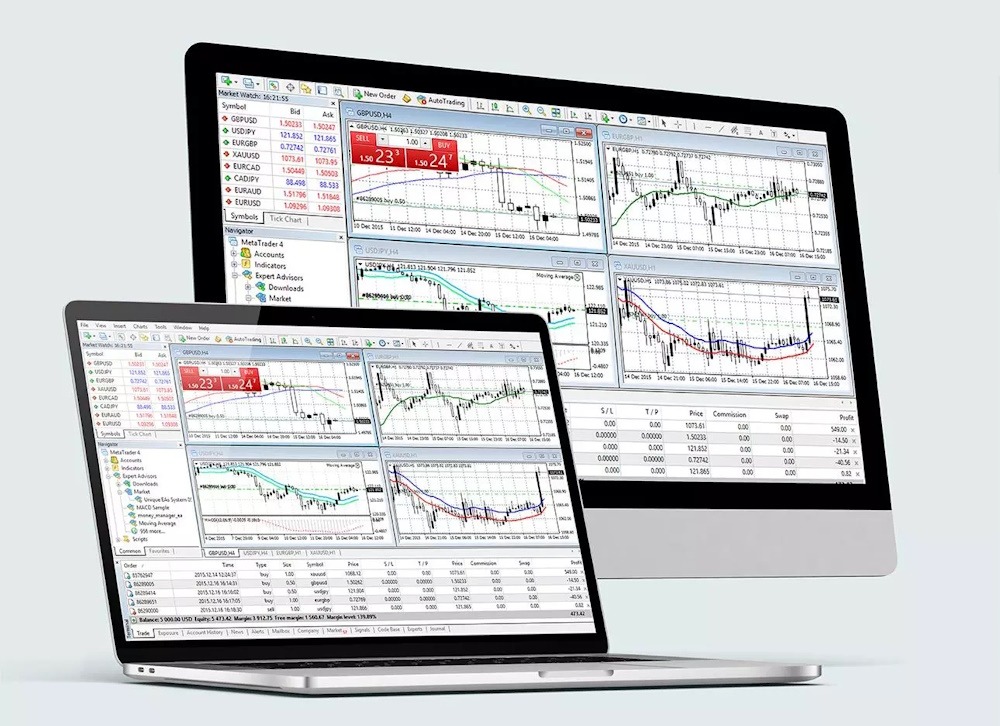
The Iran war has given trend-following EAs on MetaTrader 4 a run of directional catalysts in 2026. Whether automated systems can turn that volatility into returns depends less on the algorithm and more on the trader.
What happens to directional forex automation when the macro environment suddenly gets loud?
After a stretch of rate stability in early 2026, conditions shifted fast. Global FX turnover averaged $9.6 trillion per day in April 2025 according to the BIS Triennial Survey, up 28% from three years earlier. Tariff volatility around the Trump administration’s April 2025 trade announcements drove a portion of that growth. Now the Iran conflict and the energy disruption it created through the Strait of Hormuz have taken over, with central banks pivoting hawkish in response.
One metatrader strategy plugin executing directional currency positions through automated logic drawing attention from retail forex traders is Trendonex, an EA from Dubai-based fintech firm Avenix Fzco.
How Directional EAs Operate on MetaTrader 4
Trend-following EAs identify the direction a currency pair or commodity is moving and enter positions accordingly. Stop-loss and take-profit parameters handle risk on each trade. That principle isn’t new. What’s changed is the data resolution feeding these systems.
Trendonex focuses on XAUUSD (gold against the US dollar), optimizing entries with tick data from Thinkberry SRL’s Tick Data Suite backtested across price action to 2016. It operates on M30 and H1 timeframes – fast enough to catch intraday shifts, slow enough to sidestep high-frequency infrastructure costs. Avenix Fzco recommends at least $10,000 in starting capital and re-optimization every six months.
Real effort in automated trading isn’t the algorithm’s first configuration – it’s the ongoing recalibration.
What 2026’s Macro Volatility Means for EAs
Rate expectations flipped during the first half of this year.
The Fed has held at 3.50–3.75% for four consecutive meetings, but nine FOMC officials now project at least one hike before December. On June 11, the ECB raised its deposit rate by 25 basis points to 2.25% – the first increase since 2023. ECB Executive Board member Isabel Schnabel warned the risk of inflation expectations becoming de-anchored was growing, pointing to energy prices driven up by the Iran conflict.
WTI crude peaked near $113 per barrel in early April before a ceasefire framework dropped it toward $74 by late June. EUR/USD and USD/JPY both produced extended moves through Q1 and Q2 as traders repriced rate paths.
These are good conditions for the algorithm, at least in theory.
Traders using Trendonex have been adjusting parameters more frequently this year, exchanging optimized settings through the platform’s community forum. An EA tuned for 2024’s rate-cut cycle won’t perform the same way during 2026’s hawkish reversal.
What Retail Traders Are Getting From EA Automation
A 2026 Traders Union research study found that only 21% of retail traders using AI-driven tools reported a measurable improvement in profitability. Nearly half experienced no change, and 30% recorded worse results. Researchers pointed to a familiar gap: it’s not the tool, it’s the trader’s discipline. Manual overrides and inconsistent usage eroded gains the automation was designed to protect.
This pattern holds across the EA space – directional EAs are not passive income generators. They demand:
- Parameter re-optimization against recent price data
- VPS hosting for uninterrupted 24/5 operation
- Monitoring trade frequency against current conditions
- Understanding the underlying strategy before committing capital
| Factor | Effect on EA Performance | Trader Action Required |
| Energy-driven volatility | Stronger directional moves | Widen stop-loss to avoid whipsaws |
| Rate hike expectations | Sustained currency trends | Re-optimize for trending conditions |
| Tick data quality | Backtest accuracy | Use verified data providers |
| Broker execution speed | Slippage on entries and exits | Choose low-latency broker |
| Geopolitical news spikes | Sudden price gaps | Configure event filters |
Backtest Results and Live Performance
Something to note when it comes to EA marketing: there’s always a gap between backtest results and live performance.
Data from India’s National Stock Exchange in February 2025 put algorithmic trading above 53% of cash market volume for the first time, and competition for directional fills is only increasing. When an EA competes against institutional algorithms on XAUUSD at M30, it isn’t operating in the same conditions as its 2018 backtest.
That’s not a reason to avoid these tools.
It’s a reason to re-optimize every quarter instead of letting an old configuration trade live capital – and to treat EAs as structured decision frameworks rather than something that prints money.
Avenix Fzco publishes Trendonex through the MQL5 marketplace, where traders can access the EA alongside documentation and community discussion threads. The firm operates from its base in Dubai’s DMCC free zone – a hub that’s become increasingly popular with fintech startups focused on algorithmic trading tools and forex infrastructure.
Risk Disclosure
Forex trading involves a high degree of risk. Leveraged positions can amplify losses as well as gains. Traders should only commit capital they can afford to lose and should consult a qualified financial advisor before using automated trading strategies. Past performance of any EA or trading system does not guarantee future results.
