
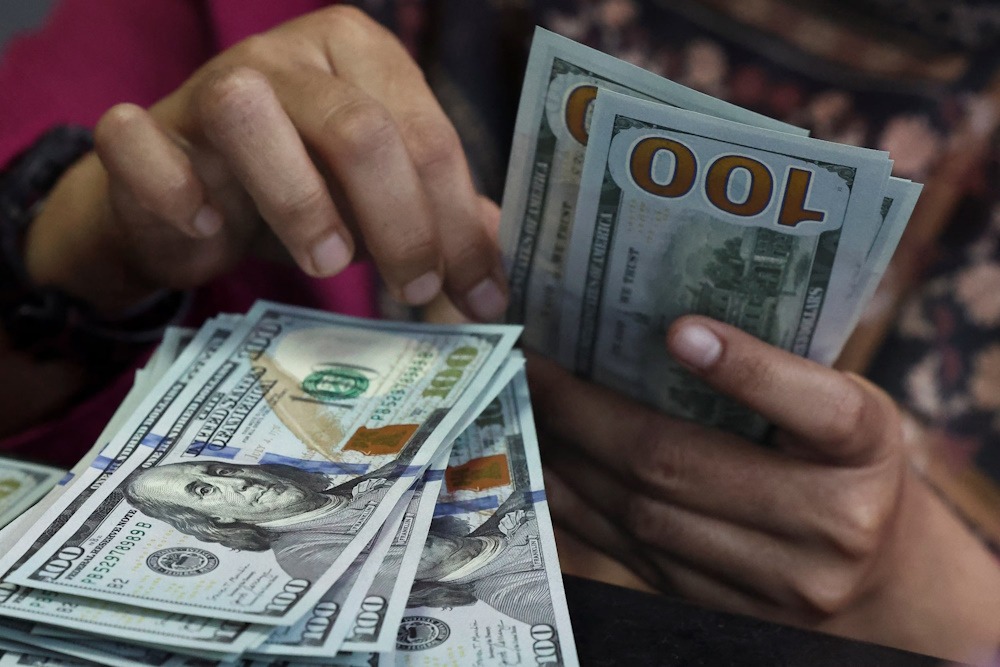
After lying dormant through the first half of the year, the dollar — that great Argentine obsession — experienced a resurgence in June, climbing more than 5% over the month to reach its highest level since October 2025. On June 30, the U.S. currency appreciated to 1,482 pesos in the wholesale market — the segment accessible to large corporations, financial institutions, and banks — reflecting a monthly increase of 5.3%. In the retail segment, the increase was marginally lower, recorded at 4.9%, concluding June at 1,500 pesos, as per the rate provided by Banco Nación, Argentina’s largest public bank. The blue dollar — the rate sold on the informal market — increased by 6%, reaching 1,515 pesos on the sell side. These increases signify a notable transition from the initial five months of the year, during which the dollar fluctuated between 1,350 and 1,450 pesos. Economist Federico Glustein stated that “a seasonal factor of demand and hedging typical of June and July” explains the move. He highlighted the disbursement of the year-end bonus — frequently directed towards dollar savings — the expenditures by Argentines who journeyed to the World Cup and vacationed overseas, and “the demand for dollars from companies and individuals for commercial purposes.”
That is occurring concurrently with “an easing of supply that is also seasonal, especially in the second half of the year, with lower selling by the agricultural sector.” The majority of Argentina’s agricultural production is exported during the period from March to June, coinciding with the peak influx of dollars into the economy. The broking Portfolio Personal Inversores contended that the rationale does not stem from agricultural activities. “The agro-export complex sold US$3.007 billion in June, equivalent to US$143 million a day, virtually in line with the US$141 million a day in May. In other words, supply from the main export sector wasn’t the problem,” it argued. For PPI’s analysts, two factors were decisive in driving up demand for dollars. On one hand, the transfer of dividends abroad became a focal point: outflows reached US$803 million in June, compared to US$476 million for the entire month of May. Glustein estimated a similar figure and stated that, thus far this year, they exceed US$2.5 billion — “the highest figure in the past 10 years.” The second factor PPI mentioned was a decline in corporate debt issuance abroad, which diminished the inflow of dollars into the country. “In June, corporate debt issuance fell to US$1.31 billion, from US$2.169 billion in May,” it estimated.
The broking Puente stated that the dollar’s movement does not indicate a shift in economic policy or the exchange-rate regime, “but mostly headwinds on the international front.” It was argued that “The global strength of the dollar, stemming from a hawkish read of the Federal Reserve, and the drop in oil prices put pressure on emerging-market currencies, and on net energy exporters in particular.” Glustein indicated that the dollar’s trajectory is upward and projected that it would settle in the 1,520-1,570 peso range by July, assuming current conditions persist. “On top of that, we’re a year out from the elections, and portfolios are starting to shift into dollars,” he noted.
While the inflow of dollars from farm exports is anticipated to cease its contribution to currency supply for the remainder of the year, a notable shift from prior years is observed: the surge in energy exports, which are not subject to seasonal fluctuations. “I think it can offset the historical dollar shortage of the second half — especially with seasonal demand from the cold in the global north,” Glustein said. He added, however, that “it will depend a lot on how the conflict in the Middle East is resolved, and where Argentina might stand in that international energy market by then.”
