
Elon Musk and Javier Milei met in February of 2025. More than a year later, the President remarked, somewhat humorously, that he had requested the businessman to present him with a Tesla, but that Musk had overlooked the appeal. Perhaps next spring, Argentina’s head of state will witness some of those luxurious, innovative cars traversing Avenida Libertador en route to Olivos – the company is currently gearing up for its entry into the market. The firm’s arrival, however, is unlikely to exert the same disruptive influence it could have at the onset of Milei’s administration: Argentina’s electric vehicle market has expanded rapidly, propelled by tax incentives, the influx of Chinese brands, and the positioning of these firms as technology companies rather than traditional automakers. Tesla is poised to enter the market of the Río de la Plata. In August, a high-profile event in Montevideo, Uruguay will mark the official launch, during which a dealership will be opened, as reported. It is likely that the firm will establish a presence in Argentina in the near future. Indeed, Tesla has officially registered an address: Calle Madero 900, 16th floor, and was documented as Tesla SRL in the Official Gazette on April 1, 2026. The firm has appointed Joaquín Lizarralde, an executive with a background in mobility and technology sectors, as country manager, responsible for overseeing operations in Argentina and Uruguay.
Beyond Milei’s fondness for Musk, the United States and a broader community captivated by the peculiarities of the world’s wealthiest individual, the market for electric and hybrid vehicles in the nation has experienced significant growth over the past two years. It has been influenced by multiple factors, primarily by the liberalisation of imports. Milei’s La Libertad Avanza administration allocated fifty percent of the zero-tariff import quota specifically for electric vehicles. Up to 25,000 units may be imported annually, and in 2026, the provision to carry over unused quotas from prior periods was implemented, thereby enhancing the total volume of imports. Consequently, brands including China’s BYD, BAIC, Changan, and France’s Peugeot, among others, have made significant strides with their offerings of plug-in, fully electric, and hybrid models. According to the latest report from the Asociación de Concesionarios de Automotores de la República Argentina (Argentine motor dealers’ association, ACARA), electric vehicle registrations experienced a remarkable year-on-year increase of 1,630 percent, escalating from a mere 50 units in June 2025 to 865 in the same month this year. The cumulative total already stands at 3,860 fully battery-powered units, reflecting an increase of 879.7 percent compared to the previous year, with brands such as BYD commanding nearly 70 percent of this niche market. The hybrid market experienced a significant increase in volume, with 6,479 units sold in June, reflecting a year-on-year growth of 307.2 percent, largely propelled by Toyota and BYD. This brings the cumulative total for 2026 to 38,245 sales. Together, this new segment surpassed 7,340 registrations last month, capturing a notable 17 percent of total car and light commercial vehicle sales in the country.
This level of adoption is beginning to extend electric vehicles beyond their traditional niche of “sophisticated, tech-loving customers,” as articulated by several dealerships that sell this type of car. High-net-worth individuals are acquiring plug-in vehicles as secondary or tertiary automobiles, seeking favourable terms, as noted in discussions with Perfil. One businessman who has established a significant presence in the sector in recent years, and who spoke to Perfil at one of his dealerships on condition of anonymity, elucidated the cost-benefit ratio: “I worked out the numbers for a client from Escobar [in Buenos Aires Province] who wanted to buy two cars. Over two years, she could save between US$80,000 and US$100,000.” The calculation entails a transition from petrol to electric power, with one crucial detail: in Buenos Aires City, electric vehicles are exempt from road tax during this period. Even so, over the past year, hybrid vehicles (and, to a lesser extent, fully electric ones) have started to penetrate the upper-middle-class market. Sales staff indicate that initial sale prices are comparable for similar models; however, in terms of ongoing operational expenses, utilising residential electricity proves to be significantly more economical: the cost per kilometre is approximately 85 percent to 90 percent lower than refuelling with petrol. For individuals utilising both technologies, expenditures on fuel decrease by 35 percent.
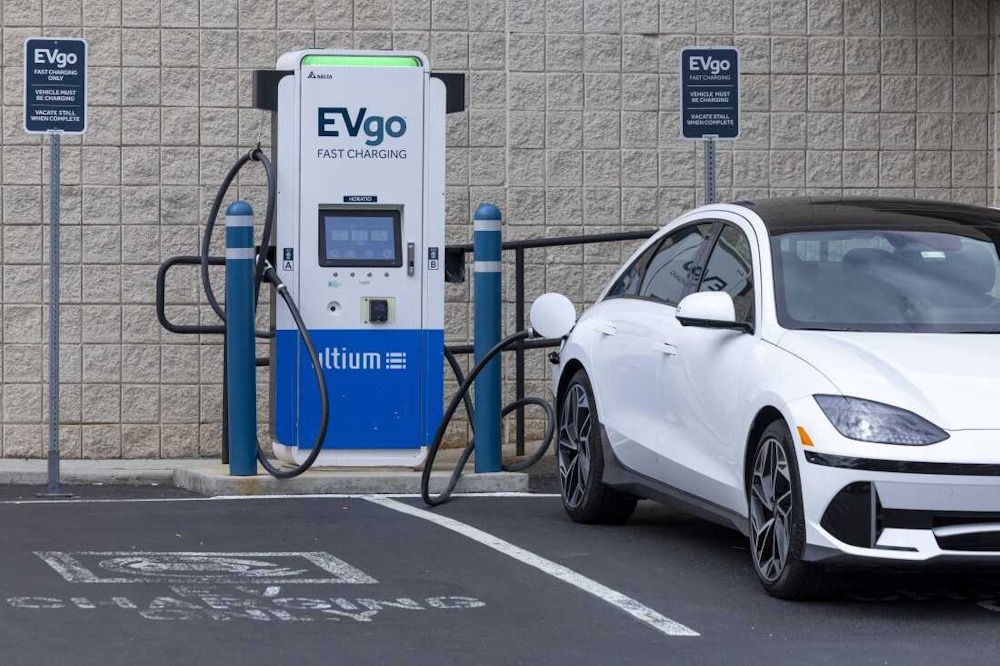
The ground seems adequately prepared for Musk’s company’s forthcoming entry into the market, although local conditions continue to impose constraints on this endeavour. In Argentina, electric vehicles are predominantly utilised in urban areas. In a nation characterised by extensive distances, the infrastructure for rapid charging at intermediate locations remains underdeveloped, resulting in inadequate range. Depending on the model and battery size, the most powerful vehicle available in the country can travel a maximum of 450 kilometres; however, this range diminishes with increasing speed. For hybrids that integrate petrol with mains charging, the electric range is reduced to 100 kilometres at the same speed. “Even if it’s really only 80 kilometres, by that point you already need to charge it,” a car salesman admitted. These cars typically feature an automatic switch that allows for a transition to combustion power, thereby extending the range—depending on the model, by as much as 1,000 kilometres. While local carmakers anticipated a gradual evolution of electromobility options, with 2030 as the target, the Covid-19 pandemic altered the landscape significantly. During the global emergency, China expedited processes that resulted in the traditional industry lagging by up to five years in terms of technology. The leap was the result of a strategy of vertical integration and state subsidies sustained over more than a decade, which enabled dominance in the global lithium supply chain and battery cell production – the most costly component of the vehicle.
By managing all aspects from fundamental inputs to final assembly within a highly efficient manufacturing framework, car manufacturers like BYD have succeeded in reducing development and production timelines to 50% of what is typically needed by conventional Western automakers. This lead in costs and production speed, combined with recent tariff barriers in the United States and Europe, generated a surplus of stock that China aggressively redirected towards emerging markets such as Latin America. In Argentina’s situation, the Asian supply shock was triggered by domestic regulatory incentives. The development of the electric charging network is currently limited and primarily focused in Buenos Aires City and the northern area of Greater Buenos Aires. An agreement between YPF and Tesla to install high-power chargers is anticipated by industry sources to propel the ecosystem forward, alongside the expansion of active companies such as Chargebox in the country. A shift that was previously anticipated to unfold over several years may now occur as soon as 2027.
