
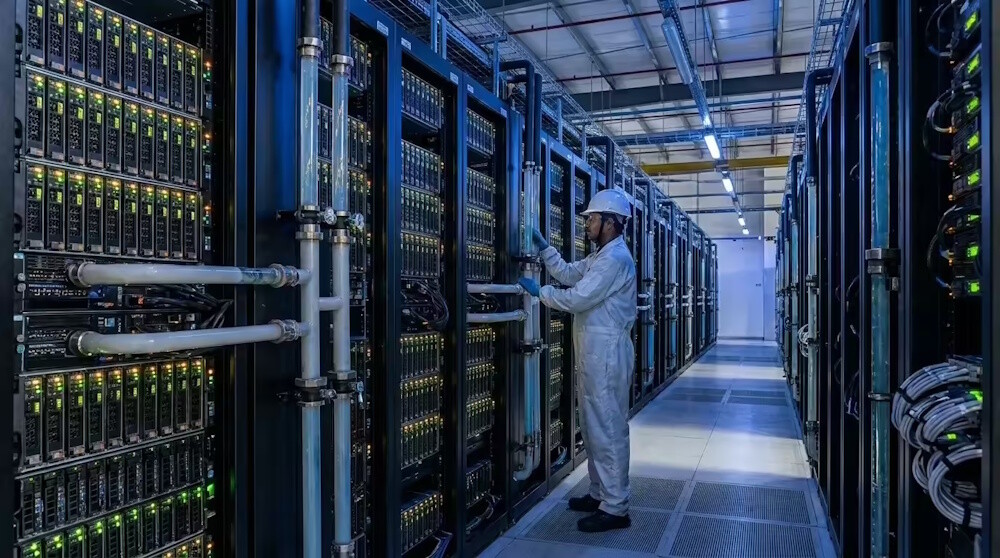
Javier Milei is resolute in his ambition to transform Argentina into a technology hub, actively traversing the globe to advocate for the nation’s benefits: extensive land, abundant water resources, low energy costs, and the assurance of a legal framework designed to meet the requirements of significant digital enterprises as they establish data-storage infrastructure. Data centers are currently a significant topic of discussion, both in Argentina and internationally. The President characterises them as a catalyst for billions of dollars in investment and economic development. The issue lies in the fact that the term “data centers” encompasses a wide range of entities, from long-established facilities to projects that currently exist solely as announcements. Once again, commitments appear to be outpacing actual developments. A data center is a physical facility engineered to accommodate technological infrastructure, encompassing servers, storage systems, and networking equipment, which facilitate the processing, storage, and distribution of substantial volumes of information. In reality, they represent no novel development. Data centers have been a fundamental component since the inception of businesses and governments’ requirements for specialised facilities to manage substantial volumes of data. However, the digital explosion, especially the advancement of artificial intelligence, has significantly altered their scale: they now demand greater processing and storage capacity and, most importantly, increased energy consumption. Argentina has already witnessed two significant announcements. In October 2025, just prior to the midterm elections, OpenAI and Sur Energy entered into a Letter of Intent to establish a data center in Patagonia, with a prospective investment reaching up to US$25 billion. As of now, a definitive investment decision remains unconfirmed, and the project’s location has not been established.
In July, Poland’s Green Capital unveiled intentions to establish a data center in Trelew, Chubut Province. According to the company, the initial phase aims to provide 300 megawatts of power, with a long-term goal of reaching 3,000 MW allocated for technological infrastructure. The company intends to finalise discussions with investors and potential clients by 2027, with construction anticipated to commence in 2028. Beyond these ambitious initiatives, it is important to recognise that data centers currently constitute a component of Argentina’s digital infrastructure, with the sector poised for further expansion. The proliferation of projects and announcements is generating a necessity to systematically arrange the available information and ascertain what truly exists in reality. Pablo Serdán, a lawyer and lecturer at the University of Buenos Aires, developed the Tengo Data data-centre observatory. The public register indicates that there are 67 data centers in Argentina, with 52 currently operational, one under construction, 13 announced, and one cancelled. The Cámara Argentina de Internet chamber group has initiated the process of compiling its own register. The organization, under the leadership of Ariel Graizer, has concentrated its efforts on data centers that are presently offering services to external clients. It has identified 14 facilities in this category, each with a capacity exceeding 1 MW, resulting in a total installed capacity of nearly 32 MW. These mapping exercises elucidate the sector and will delineate its requirements as it evolves.
Last month, the national Energy Secretariat instituted the Régimen de Demandas Extratendenciales (Extraordinary Demand Regime, XDEM) within the wholesale electricity market, mandating that significant projects must secure and finance their own energy supply. The objective is to avert the strain on current infrastructure and ensure a continuous supply of electricity for households, small and medium-sized enterprises, and businesses. According to information tracked by the Tengo Data observatory, which relies on verifiable sources such as news articles, official bulletins, company press releases, environmental impact assessments, and other public documents, nine operational and publicly announced data centers are linked to the development of Artificial Intelligence. Six projects are classified as “hyperscale,” indicating their business-critical and large-scale nature. Two of these projects focus on high-performance computing infrastructure, while one pertains to an operational data center, which is documented as “AI-ready.” Examining the facilities throughout Argentina, encompassing small and medium-sized data centers that cater to businesses and public institutions, reveals a distinct geographical concentration. Buenos Aires City comprises 18 of the 67 entries, whereas the adjacent Buenos Aires Province contributes an additional 10. Together, the two jurisdictions represent 28 facilities, which constitutes 42 percent of the overall total.
Southern Neuquén Province ranks second, with 12 entries, indicating both the presence of existing facilities and the volume of projects announced in recent years. The remaining projects are distributed among Córdoba, Santa Fe, San Luis, Salta, Chubut, Río Negro, Mendoza, La Pampa, San Juan, and additional provinces, along with several initiatives for which the specific locations have not yet been determined or made public. The concentration in and around Buenos Aires is not a mere coincidence. Data centers that cater to businesses and consumers must be strategically located near the sites of information generation and consumption. Distance directly influences latency, which is the duration required for data to move from one location to another. CABASE chair Graizer explains that this distinction also determines the type of facility required. “Some data centres need to be close to people because latency has to be lower. The ubiquity of the Internet means the little spinning wheel doesn’t freeze and you can scroll quickly through TikTok or Instagram,” he said. Facilities that cater to alternative functions, such as the training of AI models, may be situated at considerable distances from urban centers. They function based on distinct criteria. Patagonia presents a compelling opportunity for the technology behemoths. Indeed, certain announced projects are starting to outline an alternative landscape compared to the current one.
Among the 13 projects identified by Tengo Data, seven are situated in Neuquén, while two are located in Chubut and another two in Buenos Aires Province. One project identifies Neuquén, Río Negro, and Chubut as potential sites, whereas another is linked to the Malvinas Islands, referred to as the Falkland Islands by the UK. Among Milei’s supporters, the argument is clear-cut: Argentina lacks influence in the technological competition between the United States and China. The optimal strategy, consequently, is to establish the necessary conditions for the construction of data centers within the country and to capture a portion of the advantages as the major players shape the future. Conversely, detractors caution against the substantial resource consumption necessitated by these facilities, alongside the comparatively limited employment opportunities they generate. In the United States, opposition movements against data centers are increasingly gaining traction, with these constructions emerging as pivotal issues in local elections. Between these positions are those who acknowledge the opportunity yet seek investment to be paired with a transparent regulatory framework that safeguards the environment and considers the political and social ramifications. Storing data differs fundamentally from stockpiling grain. The discourse has already permeated domestic politics. National deputy Juan Marino (Unión por la Patria-Buenos Aires Province) is among those aiming to intervene directly, taking cues from the resistance that has started to form in the United States.
“We must take inspiration from the example of that popular mobilisation. We propose convening regional assemblies in the provinces and municipalities where these hyperscale data centres are intended to be built. We cannot allow our land, water and energy to be used to power the artificial intelligence that American monopolies use for Trump’s wars,” he said. The atmosphere in the United States is becoming increasingly charged. On July 18, a total of 142 protests against data-centre expansion were recorded across 42 states. Monitoring by the Data Center Watch watchdog indicates that the number of local opposition groups has reached 843 across 49 states as of September. During the first half of 2026, over 120 projects, collectively valued at nearly US$200 billion, faced blockages or delays in the United States. The dispute has extended to state legislatures, with proposals for moratoria introduced in 14 states. Concurrently, various governments are engaged in discussions regarding the equitable distribution of electricity costs and the infrastructure required to supply it among major consumers and other users. The arguments continue to unfold, and the issue is gaining prominence in public discourse. One thing, however, is already evident: Milei has made a definitive choice. The government’s strategy, as articulated by the President at the United Nations, is to facilitate the entry of significant digital infrastructure projects into the country.
