
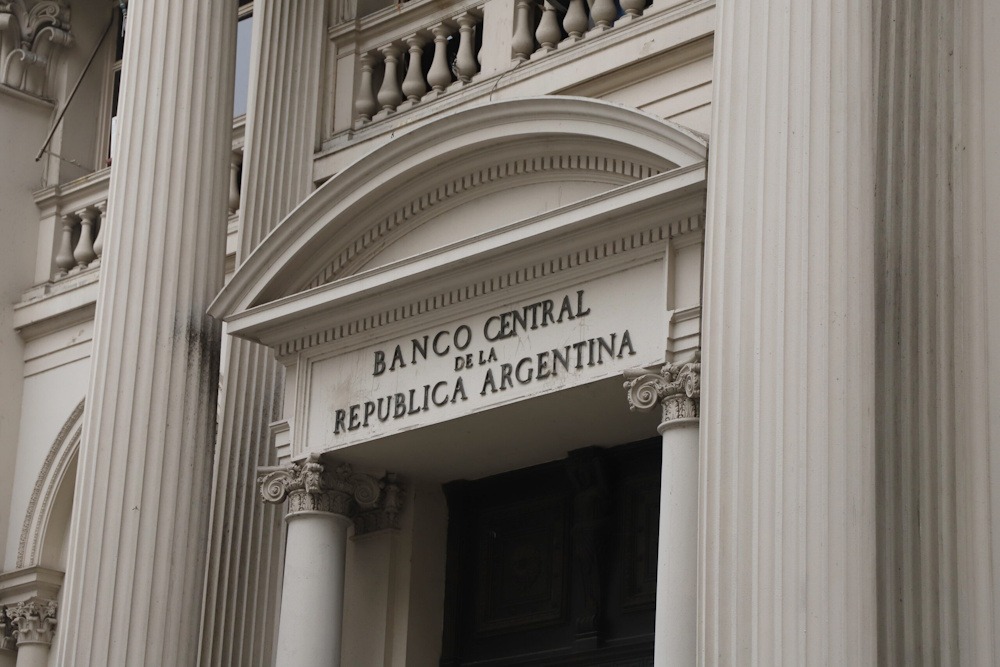
Argentina’s National Audit Office, the public-sector oversight entity, has expressed concerns regarding the administration of the Central Bank of Argentina under the leadership of Santiago Bausili, who is a close associate of Economy Minister Luis Caputo. In its most recent examination of the financial statements of the Central Bank, the source reported that transactions involving gold derivatives led to losses amounting to US$1 billion in 2025. The agency emphasised that, for hedging purposes, the BCRA “entered into dollar-settled derivatives transactions using part of its gold reserves as collateral or underlying assets.” These transactions culminated in a loss amounting to US$1 billion, disbursed in foreign currency. In a public statement, Juan Manuel Olmos said the institution had conducted transactions “speculating on a particular trajectory for international gold prices” and had “gotten the calculation wrong.” When gold prices increase, the BCRA incurs losses on these contracts; conversely, when prices decrease, it realises gains. In 2025, gold prices on international markets experienced a remarkable surge of 64%, reaching US$4,320 per ounce, which represents the most significant annual increase since 1979.
Olmos contributed to the ongoing debate by stating that, since the agency commenced its audit of the Central Bank’s financial statements, “a loss of this magnitude had never been recorded, nor had physical gold reserves ever been used for risk-bearing transactions.” Despite these criticisms, the source concluded that the financial statements fairly present, “in all material respects,” the Central Bank’s financial position and results in accordance with its accounting framework. The source also acknowledged that the BCRA gained more than AR8 trillion from the revaluation of its physical gold holdings. Those gains were partially counterbalanced by losses incurred on the hedging contracts. On a net basis, however, the Central Bank indicated that it continued to operate at a profit, as stated in a release on Thursday. Bausili’s institution contended that the evaluation of derivatives should be conducted in conjunction with the performance of the underlying asset they are designed to hedge, rather than in a vacuum. In its statement, the BCRA indicated that the transactions executed in 2025 were integral to a hedging strategy that encompassed the entirety of its gold position. According to the Central Bank, the aim is to safeguard international reserves from potential losses that may arise due to a substantial decrease in the value of one of its primary assets.
It was explained that in years when gold performs well, as it did in 2025, derivatives contracted as a hedge tend to yield negative results. “Like any hedging transaction, these instruments entail a cost,” the monetary authority said. The BCRA has also alleged that the current leadership of the AGN is attempting to undermine its management for reasons that are purely political in nature. The Central Bank criticized the AGN for acknowledging the hedging purpose of the transactions before describing them as speculative. “A financial transaction cannot be both a hedge and speculative at the same time,” it argued. It further accused the AGN’s leadership of seeking to “discredit the BCRA’s management” and maintained that such conduct “undermines the institution’s institutional integrity.” The BCRA also stated that these transactions have been a common practice since 2007. According to the institution, between 2007 and 2011, payments for similar hedges were nearly twice as large relative to the market value of its gold holdings as they were in 2025. It was noted that neither the AGN nor external auditors had expressed any objections during that timeframe.
Olmos also explained that the AGN is conducting a distinct performance audit of the BCRA’s physical gold reserves and their transfer abroad. In contrast to the audit of the financial statements, which scrutinises the figures for fiscal year 2025, this review centers on the management and transfer of gold. In 2024, Economy Minister Luis Caputo confirmed that Argentina had dispatched a portion of its gold reserves overseas, yet he refrained from disclosing specifics regarding the transaction or the destination of the assets. Last month, in a presentation to the Senate, Bausili affirmed that “part of the international gold reserves is deposited at the Bank for International Settlements in Switzerland.” Olmos states that the report will clarify “why the decision was made to transfer the gold abroad, where it was sent, and whether it generated any specific benefit for the Central Bank or for anyone else.” He added that the report is currently with the Central Bank, which is required to submit its response to the AGN.
