
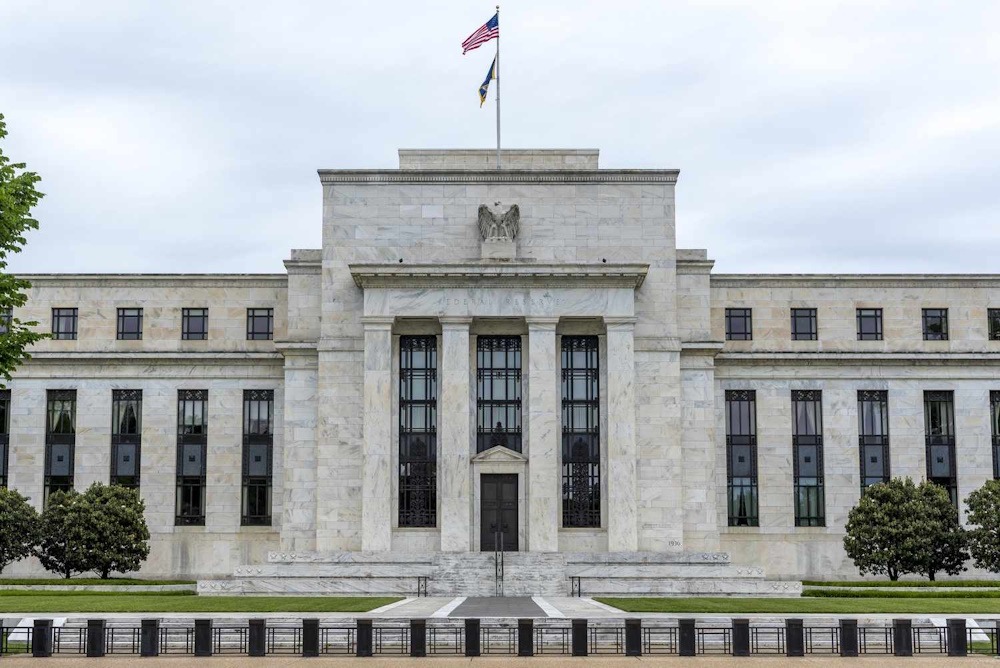
President Javier Milei’s administration was on the verge of achieving Argentina’s lowest country-risk rating since assuming power — a crucial step for accessing international debt markets — but recent data from the U.S. seems to have derailed those ambitions once more. On Friday, the Bureau of Labour Statistics unveiled its latest monthly count of new jobs added to the U.S. economy, commonly referred to as the jobs report. In May, the economy witnessed the creation of 172,000 new positions, surpassing market expectations by more than double. Additionally, April’s figures saw an upward revision: the initial reading was 115,000 — already surpassing initial projections — but was adjusted to 179,000. The data indicated a notable rebound in the U.S. economy. Wall Street, however, reacted negatively as this development provides the Federal Reserve with the flexibility to maintain interest rates at their current levels through 2026, or potentially increase them further to combat inflation.
That scenario would result in adverse effects for numerous nations, Argentina being one of them. Mariano Ortiz Villafañe stated that elevated Fed rates “represent a risk for fixed-income assets in emerging markets.” That includes Argentine sovereign bonds, he added. The timing is crucial, as it arrives at a juncture “when the compression of Argentina’s country risk is once again opening up the possibility of a return to the debt market.” Justina Gedikan noted that there are two potential impacts this could have on the Milei government. On one hand, it diminishes the “global appetite” for risk assets, including Argentine bonds. “A ‘higher for longer’ environment — interest rates that remain elevated for an extended period — fosters a ‘flight to quality’ — a shift toward safe assets — and diminishes interest in high-yield credit such as Argentina, which is vying against increasingly appealing Treasuries.” Conversely, this complicates the process of securing funding in global markets. “Even though Argentina doesn’t currently access voluntary international debt markets, the expectation of higher rates sets a higher floor on the cost of any future refinancing.”
Martín Cordeviola noted that the increase in U.S. rates “drives up the dollar” against the world’s major currencies, including the euro, the yen, and the yuan. That “correlates negatively with commodities and weighs on the outlook for those countries.” As the U.S. dollar strengthens, commodities priced in this currency become more costly for importers using other currencies. This dynamic can significantly impact global trade and pricing strategies. That slows demand and pushes prices down. Argentine country risk, as measured by JPMorgan’s EMBI+ index, saw a rebound today to 495 basis points, reversing Thursday’s downward trend in the face of a challenging international climate. It had reached 486 points, merely two above its lowest mark under the Milei administration, recorded in January. “At some point, Argentina is going to have to try to tap international markets to clear out the debt maturities of the coming years.” Cordeviola added that “So the fact that the total financing cost of a potential issuance is going up isn’t good news.”
In an interview, Gedikan stated that for Milei’s administration to tap into the international debt market without incurring prohibitively high interest rates, the country risk must fall within the range of 400 to 450 basis points. Economist Gustavo Ber expressed a more stringent view, estimating that it would need to decrease to 350 basis points. He stated that “as the credit profile keeps improving, the index should continue compressing toward regional levels over time.” Gedikan agreed, highlighting that the Central Bank’s reserve accumulation, fiscal consolidation, IMF backing, and Fitch’s recent upgrade are “partly cushioning the impact of the global environment.” She concluded “If the local fundamentals keep improving, country risk can continue to compress even in a less favourable external environment.”
