
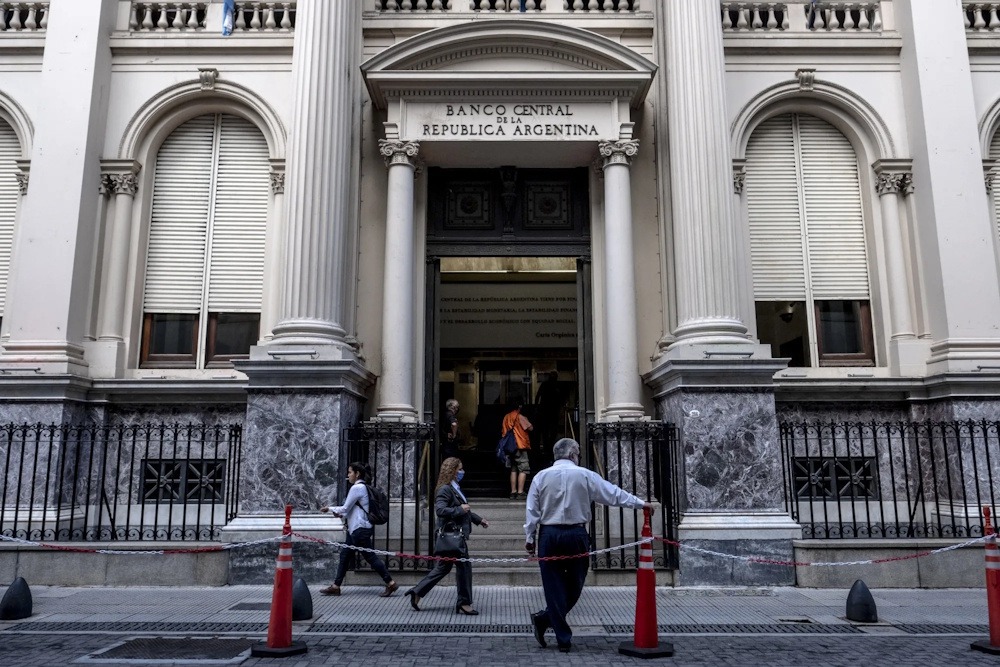
Less than halfway through the year, Argentina’s Central Bank has exceeded its US$10-billion target for dollar purchases, driven by a record crop harvest, an energy boom, and a significant increase in debt issuance by provinces and local companies. The monetary authority acquired US$43 million on Wednesday, as per official figures, surpassing the purchasing target established by policymakers in December. Daily interventions commenced at the beginning of this year. Argentine exports, assessed by volume, have attained a historic zenith under President Javier Milei, surpassing the prior peak in 2022 by 17 percent, as reported, with energy exports experiencing a remarkable increase of 92 percent. Rising oil production in Patagonia has transformed Argentina’s energy deficit into a surplus, thereby generating additional hard currency throughout the year.
Provincial governments, in contrast, are accessing global bond markets at an unprecedented rate not seen in nearly a decade. The stronger-than-anticipated inflow of foreign currency has enabled Milei to fulfil debt obligations without re-entering international capital markets, alleviating one of investors’ primary concerns: that despite the La Libertad Avanza leader’s efforts to eliminate a chronic fiscal deficit and control rampant inflation, the government might still be short of the dollars required to satisfy bondholders. “The pace of FX purchases since the reserve accumulation programme began in January has been remarkable,” wrote economist Ivan Stambulsky in a June 2 note to clients. “This ranks among the most robust streaks of USD purchases observed in the last quarter-century.”
Despite the record dollar purchases, Argentina’s net reserves – the difference between the Central Bank’s assets and its short-term liabilities – have not shown significant improvement. Milei has thus far declined to engage with international markets, citing elevated borrowing costs, which has resulted in dollars flowing back out to service debt. That clarifies why Argentina failed to meet its net reserves target during last month’s second review of its US$20-billion programme with the International Monetary Fund. In 2027, Milei is confronted with over US$30 billion in debt obligations. Economy Minister Luis Caputo has consistently asserted that all forthcoming obligations are secured by financing that remains undisclosed; however, the upcoming election is poised to challenge the peso’s recent stability. Central Bank data indicates that total foreign reserves are just above US$48 billion, while net reserves at market prices are approximately US$3 billion, as noted by Ramiro Blazquez.
“The relevant target is net reserves,” Blazquez stated. ‘Those are the reserves you can use eventually to stem a currency run during the electoral year, so further building up reserves would be wise’. As the Central Bank intensified its dollar acquisitions, sovereign bond spreads contracted and are currently approaching their lowest levels during Milei’s tenure. Fitch Ratings elevated the country’s debt rating last month, attributing this decision to enhanced expectations for reserve accumulation. “The milestone highlights Argentina’s significant progress in strengthening its external resilience, one of the areas of the macroeconomic program that had remained vulnerable through 2025,” stated Jimena Zuniga. “It is also encouraging that these purchases are occurring in the context of a strong current account.”
