
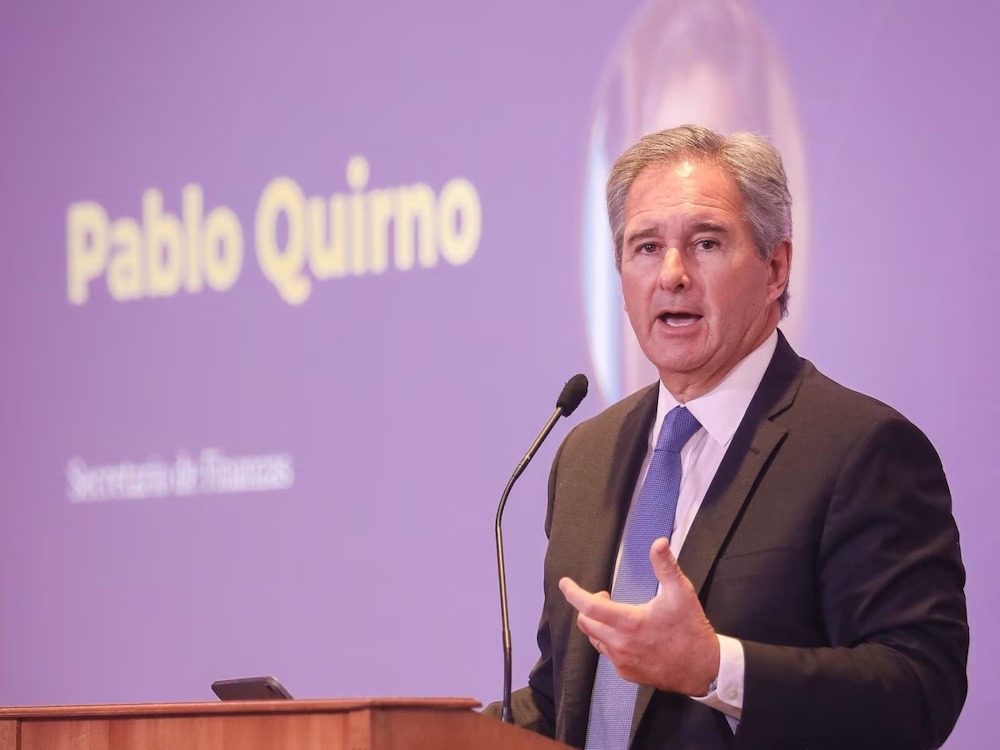
Uruguay and Argentina report advancements in negotiations aimed at resolving a dispute concerning a multibillion-dollar green hydrogen facility proposed on the Uruguayan side of a jointly held border river. Argentina’s Foreign Minister Pablo Quirno visited Montevideo for a second meeting with his Uruguayan counterpart Mario Lubetkin within a six-month period to deliberate on the US$5-billion initiative put forth by the multinational corporation HIF. “This meeting can only be seen as positive, as a substantial step forward in a process that still requires several more stages before it can be finalised,” stated Lubetkin. Uruguay has communicated to Argentina that it is in the process of evaluating the environmental impact study associated with the project. The company is evaluating alternative sites for a potential relocation of the plant, which constitutes one of the primary demands from Buenos Aires. The initially suggested location is situated in the northern region of Paysandú, just a few kilometers from the Uruguay River, which delineates the natural boundary between the two nations. The initiative has raised apprehensions in the Argentine city of Colón regarding its possible effects on the environment and the local tourism sector.
Quirno expressed approval of Uruguay’s decision to consider Argentina’s environmental observations throughout the review process. “Argentina has a highly conciliatory and pro-investment position. The region needs greater investment,” he said, adding: “We are seeking win-win solutions and trying to avoid future conflicts.” He emphasized that Uruguay “has every right to accept investments that meet its requirements,” while highlighting that its readiness to engage in dialogue aids in “avoiding conflicts.” Lubetkin stated “These are not facts, these are processes.” The Uruguayan foreign minister stated “What we began on November 26 was a process in which we explained to the Argentine authorities the basic aspects of this project, and they expressed certain concerns as well as strong incentives.” The minister emphasized the political dynamics of bilateral relations and the extent of dialogue reached between the two governments. He observed that there had been “many meetings” between both parties in recent months to tackle not only this issue but also other strategic concerns on the bilateral agenda. While a decision regarding the relocation of the plant remains pending, reports from local media indicate that it is highly probable that the move will occur within another area of the same department.
On Monday, Governor Rogelio Frigerio of Entre Ríos Province participated in a working meeting in Montevideo alongside Argentine and Uruguayan officials to further discussions. Officials from Argentina’s Foreign Ministry, members of the Uruguayan government, Uruguay’s environment and industry ministers, as well as the mayors of Colón and Paysandú, participated in the meeting, as reported by local media. In the course of the meeting, the Uruguayan government acknowledged that it is assessing alternative sites for the proposed synthetic fuel refinery in Paysandú, a decision prompted by concerns articulated by Argentina. The inclusion of the city of Colón within the project’s area of influence for the preparation of the Environmental Impact Assessment has also been confirmed.
Argentine authorities emphasized the importance of implementing all necessary precautions to mitigate potential negative impacts on economic activities in riverside communities associated with the sustainable utilization of the Uruguay River. Montevideo and Buenos Aires have engaged in diplomatic disputes historically regarding the establishment of industrial facilities adjacent to the Uruguay River. In 2010, the two nations settled a disagreement regarding the establishment of a pulp mill in Uruguay adjacent to the common river. Tabaré Vázquez, who served as Uruguay’s president, later remarked post-tenure that he had contemplated the potential for an armed conflict with the adjacent nation.
