
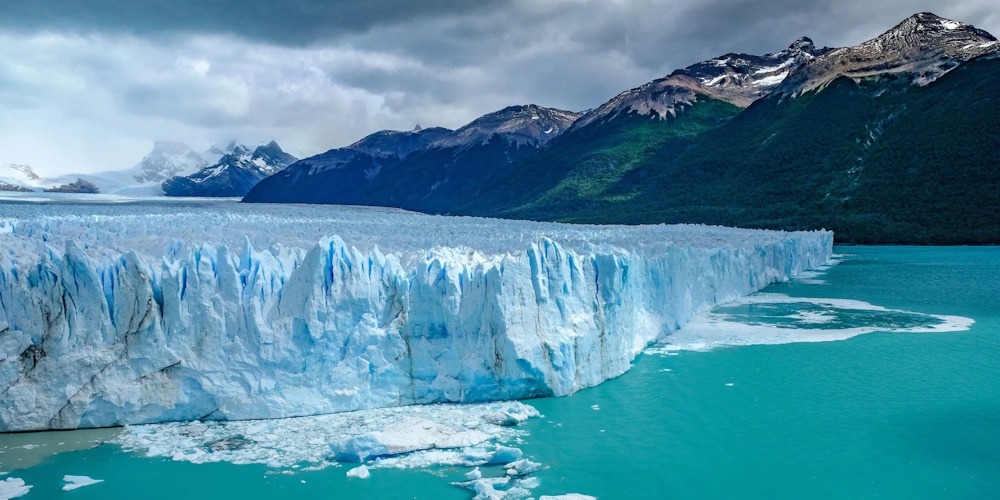
A federal court in Argentina has halted the implementation of President Javier Milei’s contentious amendments to the glacier protection law in Santa Cruz Province, marking the initial legal setback for the reform initiative. The ruling suspends Milei’s new law, which permits provincial governments to redefine protected zones and potentially open periglacial areas to mining and energy activities, awaiting further judicial examination. The injunction comes in response to a collective lawsuit initiated by the Concejo Deliberante of El Calafate, a town situated approximately 80 kilometres from the Perito Moreno glacier, an extensive ice formation that spans 30 kilometres in length and reaches heights of around 70 metres in Patagonia. The ruling, as reported, indicates that the plaintiffs aimed to declare the reform “unconstitutional, contrary to international agreements and null and void in absolute terms.” The reform to the so-called “glacier law,” which Congress approved on April 9 in the face of significant opposition from environmental activists, was promulgated by the Executive on Friday.
Environmental organisations caution that the measure may exacerbate the climate crisis, contending that mining or oil exploration in periglacial regions could jeopardize water sources. The court has issued a precautionary measure, promptly halting the law’s effects within its jurisdiction during the examination of the case, highlighting the “risk” associated with its possible implementation. “The potential implementation of a regulatory framework that diminishes environmental protection standards may facilitate activities that affect highly sensitive ecosystems, including glaciers and the periglacial environment. The consequences of such actions, if they occur, could be exceedingly challenging or even impossible to reverse,” the judge contended. The ruling, while limited to Santa Cruz Province, signals the potential for a broader wave of legal challenges anticipated to proliferate nationwide. The provincial government of La Pampa promptly filed its own injunction in federal court following the passage of the reform on April 9. This week, legal and environmental organizations have initiated a case before the Supreme Court, while Greenpeace supports a class action, with additional filings anticipated in at least six other provinces. The legislation, formally enacted through Decree 271/2026 as Law No. 27,804, signifies a notable transformation in Argentina’s environmental policy landscape.
Following a contentious and tightly contested debate in Congress, the government achieved passage in the Lower House with a margin of 137 votes to 111, leveraging support from allied blocs to attain quorum and advance the reform. The core of the reform lies in a significant alteration of the legal structure that regulates glacier conservation. The reform dismantles the centralized system established in 2010, reallocating authority to provincial governments to establish the technical criteria that dictate which ice bodies and periglacial areas warrant preservation. This “provincialisation” of environmental oversight substitutes a consistent national standard with locally established thresholds, implying that regions not meeting the new provincial criteria may forfeit their protected status and become susceptible to economic activities.
The transition signifies a significant regression for environmental organizations. Critics contend that the fragmentation of technical standards paves the way for the resurgence of mining and extractive initiatives in areas that were once protected by the National Glacier Inventory. The contention is swiftly transitioning from legislative chambers to judicial arenas. Civil society organizations and grassroots assemblies are organizing to participate in collective legal actions aimed at overturning the law. Their central argument posits that glaciers, serving as critical freshwater reserves that nourish river basins across various provinces, cannot be effectively managed in isolation by separate jurisdictions.
