
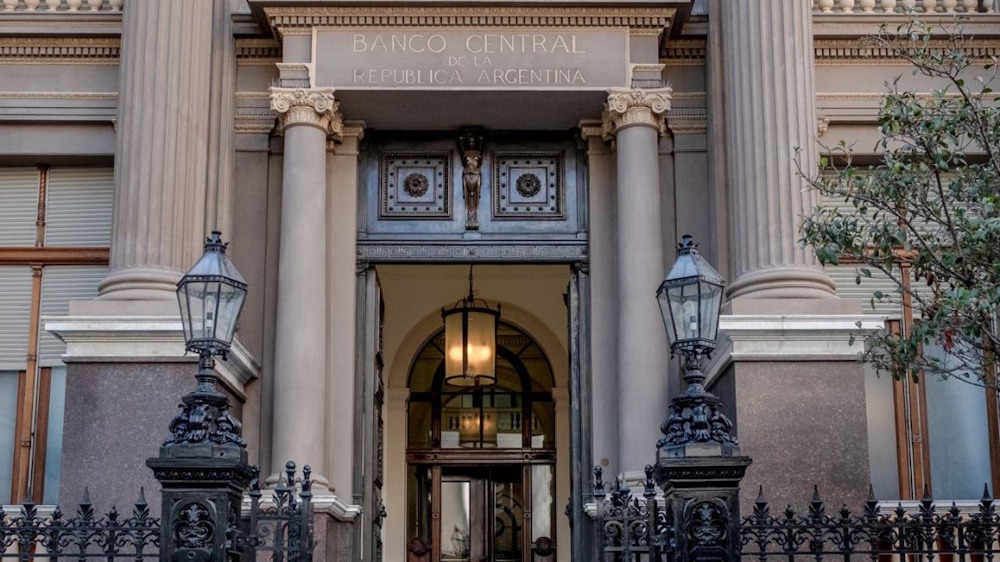
A wave of dollars flowing into Argentina is providing President Javier Milei with the opportunity to allow the peso to trade more freely, as the Central Bank’s previously depleted foreign reserves have reached their highest level since 2019. Despite Milei’s affinity for free markets, he has maintained strict control over the currency since assuming office, as reducing inflation has bolstered his support among voters. Some capital controls remain in effect, while other measures are beginning to relax. The Central Bank’s position in dollar futures, a mechanism employed by policymakers to bolster the peso, has decreased to US$2.1 billion. This figure represents approximately one-third of the level attained during the midterm elections last October and marks the lowest point since June 2025, as indicated by official figures released last Friday on the Central Bank’s website. The decline signifies a significant retreat from the robust measures that officials had implemented in the previous year to mitigate a peso depreciation, which included the sale of dollars, futures, and foreign exchange-linked securities.
In addition to those actions, the US Treasury purchased the Argentine currency last October to bolster Milei’s party ahead of significant midterm elections, which they subsequently won. “This is the moment of least intervention,” said Juan Manuel Truffa. “There is a very strong flow of dollars, and it is not explained only by the main harvest season, as it usually is every year. That allows the government to avoid being as present as it has typically been to keep the exchange rate in check.” The Central Bank has not only shifted from the dollar sales it engaged in prior to the October midterm vote, but has also been replenishing its cash reserves. Argentina’s foreign reserves have increased to US$47.9 billion, more than double the level at which Milei commenced his tenure, partly as a result of the country’s efforts to enhance its stockpile this year. Another US$1 billion also arrived this week as part of Argentina’s programme with the International Monetary Fund. The increasingly hands-off approach is also reflected in the declining sales of FX-linked bonds, an asset denominated in pesos that the government had utilised to satisfy demand from investors looking to hedge against currency losses while absorbing excess pesos.
Policy-makers observe a significant transformation in Argentina’s notoriously unstable currency, which has depreciated by 99 percent over the past decade. Once linked to the fluctuations of crop yields, the economy is now benefiting from a steadier influx of capital throughout the year, driven by increased oil production and the engagement of provinces and companies with global markets. “We see that this economy, fortunately, is reducing its dependence on seasonality,” Central Bank Governor Santiago Bausili stated. “That’s because it is decreasing its reliance on agriculture and because we are observing expansion in sectors that are less cyclical, such as energy and mining.” While domestic markets may not exhibit significant fluctuations based on agricultural outputs, a robust harvest this year has contributed to Argentina’s positive trajectory in dollar inflows, projected to reach US$30 billion in the upcoming six months.
According to Mariano Calviello, that windfall should enable the Central Bank to unwind its positions in an FX market where investors are showing reduced interest in hedging activities. “The market is pricing in very strong dollar supply in the coming months, which should allow the Central Bank to keep accumulating reserves,” Calviello stated. The risk, analysts caution, lies in whether Argentina’s economy – along with local demand for pesos – can truly gain momentum prior to the upcoming election cycle, which may reignite market anxieties once more. “What we still do not know is whether money demand is actually recovering,” said Juan Manuel Pazos. While he does not anticipate Argentina will face a shortage of dollars in the latter half of the year, he cautioned that the availability will be less than in the first half. “If money demand does not improve, sooner or later seasonality and demand for hedges will return.”
