
Luis Caputo, the minister of economics, said in April of last year that the upcoming months will be the finest for the Argentine economy in decades. A little over three months after that assessment, that scenario remains distant. Research centers, think tanks, and consulting firms monitoring the Argentine economy indicate that the initial half of 2026 experienced stagnation across various sectors, particularly those linked to domestic consumption. The sectors that continue to demonstrate resilience are those associated with the primary sector — energy, mining, and agriculture — which are witnessing record exports. The economic research center Orlando Ferres & Asociados (in Spanish, OJF) recently estimated that June experienced a monthly improvement of 0.4% and a year-over-year increase of 1.9%. Cumulative growth for the first six months of the year, however, stands at a mere 0.1%. OJF also reported a 6.2% year-over-year decline in gross investment for June. For the first half of the year, the decline is recorded at 7.6%.
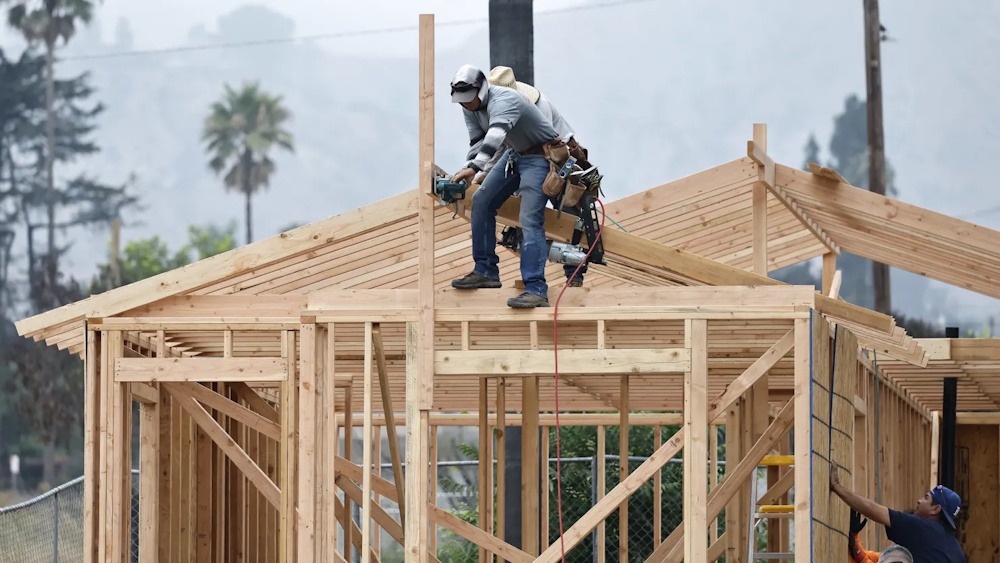
The consulting firm Eco Go estimated that economic activity in June grew by a mere 0.1% on both a year-over-year and month-over-month basis. Accumulated growth for 2026 indicates a decline of 0.5%. On a monthly basis, the notable rise in fishing (+27.3%) and the expansion in mining and quarrying (+1.3%) were particularly prominent. Argentina’s mining exports reached a record level in the initial four months of 2026, propelled by increasing demand for lithium, gold, and silver from the United States, China, and Switzerland. Meanwhile, manufacturing experienced a contraction of 1.8%, while construction saw a decrease of 1.2% once again. Consulting firm Equilibra estimated that economic activity increased by 1% year-over-year in June. The month-to-month variation, however, was zero, a figure standing “nearly 2%” below what was registered last March on the Monthly Economic Activity Estimator, the month in which this INDEC metric scored the highest ever since the current tracking started in 2016.
Equilibra estimated that the second quarter of the year exhibited a decline of nearly 1% relative to the first quarter. The decline was propelled by a 2.5% decrease in primary sectors and a 0.5% reduction in non-primary sectors. Economic activity for the first half of the year concluded with a 1.6% increase relative to the same period in 2025, an enhancement “entirely driven by primary sectors.” Indeed, absent the 11.6% increase in primary sectors in the first half of the year, economic activity would have contracted by 0.2% during that timeframe. OJF anticipates that economic activity in the upcoming months will “maintain a mild upward trend” driven by the momentum from the economy’s most dynamic sectors. Sectors lagging behind such as manufacturing and commerce are anticipated to exhibit gradual improvement, “as domestic consumption reflects a sustained improvement.”
Equilibra indicated that, contingent upon the validation of its June activity estimate, its growth projection for 2026 is “likely” to be 2%. In any case, that estimate is considerably lower than the 3.5% growth rate projected for Argentina by the International Monetary Fund in 2026. That does not imply the IMF lacks concern regarding the mixed performance of the Argentine economy. In her recent conference in Buenos Aires, IMF head Kristalina Georgieva tackled the challenge of an uneven economy, enquiring about potential measures to ensure that “growth in Argentina to be more broadly shared.”
