
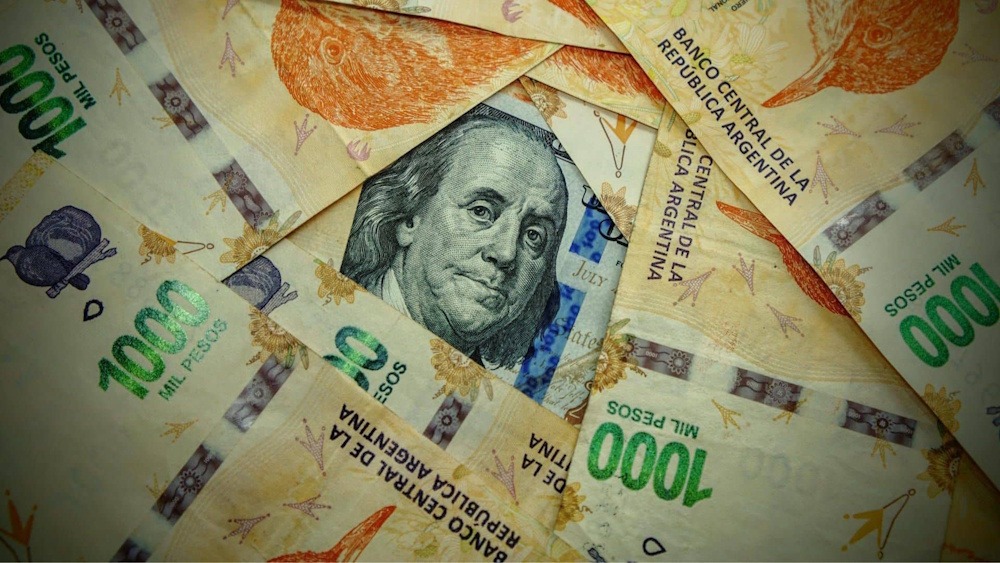
The demand for dollars in Argentina has reverted to levels reminiscent of the market sell-off experienced last year, despite the unexpected stabilising effect of the conflict in Iran on President Javier Milei’s currency policies. In July, Argentines’ acquisitions of US banknotes surged by 35 percent month-on-month, reaching US$3.4 billion. This figure marks the highest monthly total since the investor panic preceding last year’s midterm elections, as reported by Central Bank data. Dollar sales, meanwhile, decreased by 13 percent to a total of US$608 million. Remarkably, the peso has emerged largely untouched – an unusual feat for the historically volatile currency. Analysts indicate that elevated oil and agricultural prices resulting from the conflict in Iran have afforded Argentina an unforeseen influx of export dollars, which are essential for offsetting robust domestic demand and stabilising the currency. “The war saved us this year,” said Sebastián Menescaldi. The Middle East conflict “sharply improved the outlook by pushing up prices for Argentina’s main commodity exports.” Several unique factors contributed to July being an exceptionally robust month for dollar demand. Argentines have recently received their midyear bonuses, with approximately 64,000 choosing to travel to the United States, primarily to witness Lionel Messi and the Argentine national team embark on a remarkable journey to the World Cup final.
In addition to physical currency, Argentines engage in the acquisition of US dollars via capital markets, a practice referred to domestically as ‘Dollar MEP’ transactions. Including those purchases and credit-card spending abroad, total dollar demand surged to approximately US$6 billion, as indicated by the same Central Bank report. The official exchange rate has appeared relatively inexpensive in recent months following the peso’s appreciation against inflation, aided in part by the government’s ongoing restrictions and foreign-exchange interventions. The peso has experienced a depreciation of merely six percent against the dollar over the past year, in the context of an annual inflation rate of 34 percent. Following Milei’s termination of years of stringent controls in 2025, Argentine citizens now enjoy the liberty to purchase without limits, despite ongoing restrictions faced by companies. For individuals, the system evokes parallels with Mauricio Macri’s presidency, which culminated in a market meltdown in 2019. As polls indicate that Milei’s approval ratings are unstable – though slightly better than Macri’s at a comparable stage in his presidency – investors are inclined to purchase dollars while the opportunity remains. “This is a logical response from Argentines after seeing the failure of Mauricio Macri’s government,” said Juan Manuel Pazos. “People believe this is an exceptional window to buy dollars that could close at any moment.”
The data indicate an emerging mismatch. During the period when Argentina’s foreign exchange market operated without restrictions under Macri, the volume of dollars purchased and sold was approximately balanced. Under the current partial controls, individual dollar sales constitute merely approximately 20 percent of total purchases. “Dollar purchases are relatively high for the same reason we see sovereign risk above 500 basis points,” said Gabriel Caamaño. “People are still not fully convinced that this model is politically sustainable.” Even so, the implications of Argentines’ fixation on dollar savings appear less concerning at present than what the nation’s extensive history of currency crises might indicate. In addition to achieving unprecedented export levels, the market maintains equilibrium due to a significant influx of dollars generated by companies and provinces engaging in foreign debt issuance. The peso exhibited stability in July, experiencing a modest depreciation of 1.5 percent in August.
Foreign reserves increased by US$5.9 billion during the two-month period, surpassing US$50 billion. This rise was bolstered by purchases made by the Central Bank, alongside loans from international organisations and the issuance of government debt. The concern ahead is what transpires when those unusually favourable flows diminish. Agricultural dollar supply exhibits a seasonal pattern. Corporate and provincial debt issuance is diminishing in the face of a difficult global environment. Argentina is approaching the 2027 presidential election, a phase characterised by heightened uncertainty that generally prompts Argentines to convert their savings into dollars. Currently, Argentina possesses a sufficient supply of dollars to satisfy demand, in part due to investor confidence in Milei’s favourable prospects for re-election. The greater risk lies in a sudden shift in electoral expectations. “Argentines seem to believe Milei will win, and that is what makes the situation sustainable,” Pazos said. “But given Argentina’s history, they still prefer to buy dollars as insurance, just in case.”
