
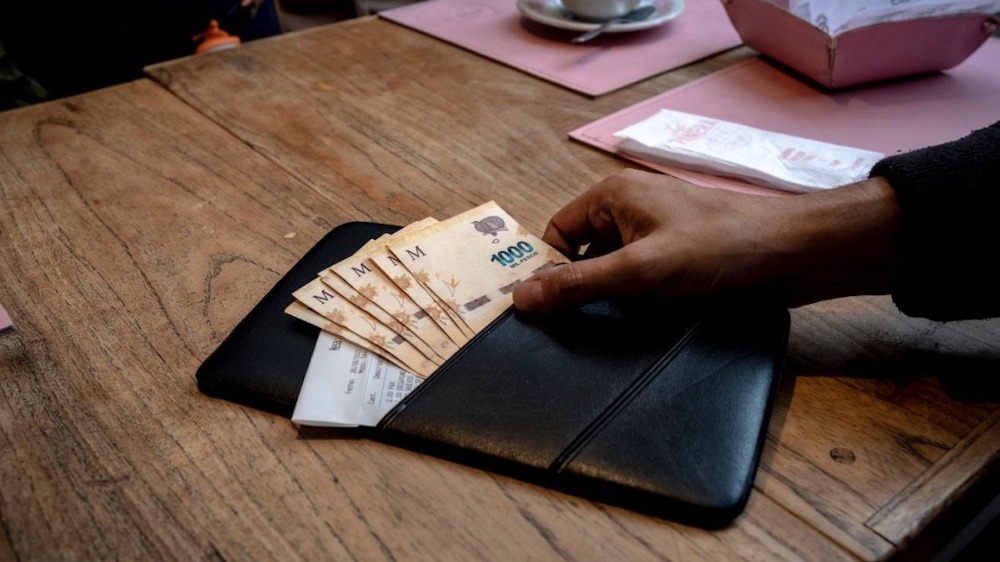
Reported wages in both the public and private sectors represent some of the most adversely affected indicators since the inauguration of President Javier Milei. Official figures indicate that wages have decreased by 8.2% since November 2023, although there has been a 1.1% recovery over the past three months. This gap is even wider when employing the inflation measurement methodology that the statistics bureau INDEC was set to implement early this year but was subsequently rejected by the economic team. Estimates from the Center for Research and Training of the Argentine Republic of the Argentine Workers’ Central Union indicate that the “alternative” consumer price index suggests a real loss of nearly 13% between November 2023 and June 2026. This result arises from an 8.5% contraction in private-sector wages and a 20.8% reduction in public-sector wages. “This is a very meager result,” the researchers explained in a recent report. The designation of the term “alternative” for the index is associated with a debate regarding the methodology of its implementation.
The current methodology employed by INDEC for weighting goods and services remains rooted in a framework established in 2004. This indicates that the consumption patterns of Argentines are no longer aligned with current trends. A new framework was developed last year to address this issue, drawing on the National Household Expenditure Survey conducted by INDEC between 2017 and 2018. The matter was deemed a priority, as even the International Monetary Fund underscored the necessity for an update. Initially, the economic team’s strategy was to roll out this new methodology in January. However, just a few days prior to its scheduled implementation, the government declared that it would retract the measure, citing that its execution would be postponed until the disinflationary process is finalised. State salaries have experienced the most significant impact from the economic plan. It is crucial to recognise that, although provinces aimed to prevent significant wage reductions similar to those experienced at the onset of Milei’s administration, the national government intensified the downturn.
This, however, did not prevent average wages in the provinces from exhibiting negative results beginning in August 2025. According to the researchers, this “highlights the difficulties in improving wages amid budgetary austerity.” Under the alternative IPC, national public-sector wages have diminished by 40.2% in terms of purchasing power since December 2023, whereas provincial public-sector wages have seen a reduction of 14.3%. CIFRA researchers also explained that real collectively bargained wages have also “been undergoing an almost uninterrupted process of deterioration in purchasing power over the past year and a half.” Following the sharp decline caused by the inflation spike in December 2023, real collectively bargained wages had managed to recover to their previous level by December 2024.
From that point on, however, a downward trend began, “fueled by the government’s policy of explicitly imposing a cap on collective bargaining agreements to mitigate the impact on prices.” The most significant reduction was noted in the minimum wage. Since the government took office, the decline has been nearly 41% according to the alternative IPC, as confirmed by CIFRA experts. Even when assessed through the official IPC, the purchasing power of the minimum wage has diminished by 60% compared to its level in 2015. According to estimates from the research center, it is also 20% below the levels observed in the 1990s. “This result is a consequence of the actions of the labor ministry, which – in the absence of an agreement within the national minimum wage council – systematically mandated nominal increases aligned with business proposals,” the report explained.
