
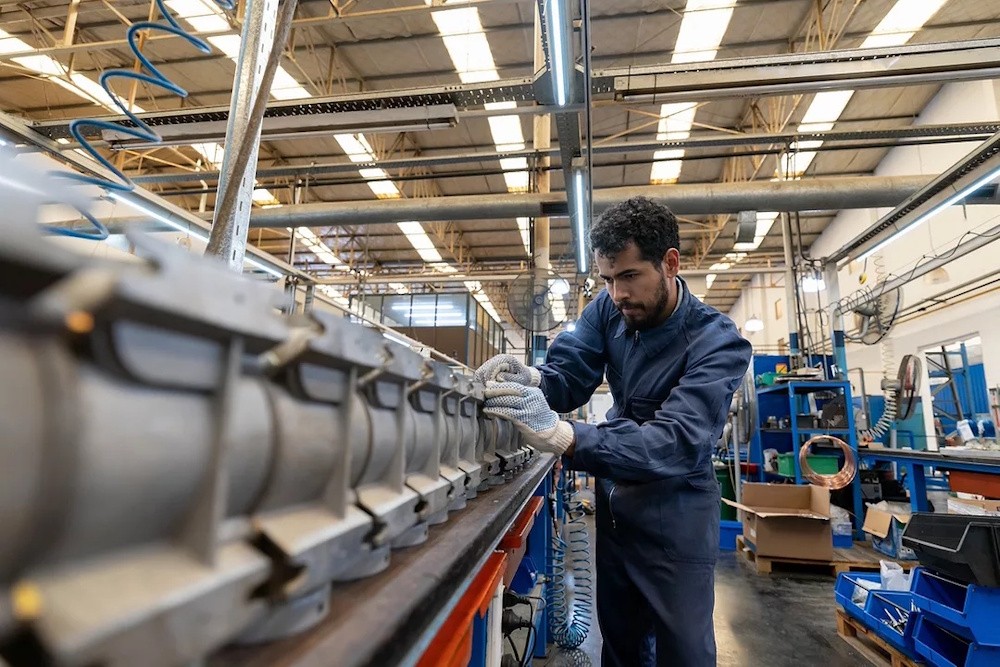
The manufacturing sector experienced significant challenges in July, exacerbating the ongoing crisis that has persisted since the introduction of President Javier Milei’s austerity plan. Official data from the statistics bureau INDEC indicates that industrial activity experienced a decline of 4.9% year-over-year in July. Cumulative decline in 2026 is recorded at 3%. The most alarming figure, however, was the 5% monthly decline, which reversed the slight increases seen in the previous two months. This represents the most significant monthly decline in a year and a half, following a 5.8% drop in March 2025. Additionally, it marks the third-largest monthly decline since the libertarian administration assumed power, with the most severe decline being 6.5% in December 2023, coinciding with Milei’s inauguration. The decline indicates that industrial activity has reverted to levels observed during the semester of 2024, a period marked by the significant impact of Milei’s fiscal austerity measures and the pandemic.
In a comparison of seasonally adjusted activity levels via the INDEC’s industrial production index, the sector’s performance registers at 112.3 points. In August 2020, the figure stood at 112.3. The manufacturing sector has experienced a decline of 9% overall in comparison to November 2023, which was the final month preceding the governmental transition. Of the 16 industrial sectors under analysis, 13 have recorded a decline in growth since Milei assumed office. In eight of those instances, the declines are in the double digits, as per estimates by consulting firm LCG derived from official data. The textile industry experiences the most significant losses at -41%, trailed by machinery at -29%, non-metallic minerals at -28%, other equipment at -27%, metal products at -25%, apparel at -22%, the automotive sector at -21%, and tobacco at -11%.
During that period, only the food industry (+3.3%), oil refining (+12.6%), and other transportation equipment – motorcycles – (+2.9%) exhibited growth. Consulting firm ACM reached a similar conclusion, stating that comparisons between July 2026 and November 2023 reveal a “incomplete and uneven recovery, with isolated winners and a broad segment that continues to lag behind.” Consulting firm LCG does not identify any “drivers” that would catalyse a recovery in the short and medium term. “The sector’s rising delinquency rates, depressed domestic demand, competition from imports, and dollar-denominated inflation are all factors dragging it down,” they argued. One of these factors is low activity in the construction sector, a significant consumer of inputs from local industry that is currently in recession due to the suspension of public works mandated by Milei.
Construction activity experienced a decline of 4.6% on a month-over-month basis and remains 25% lower than the levels observed in November 2023, as reported by LCG. ACM observed that in the forthcoming months, attention will be directed toward identifying which industrial sectors can sustain their existing levels and which may indicate a potential recovery. “[Sectors] that showed the greatest resilience in 2025 have a head start, while the sectors that lagged behind may continue to adjust for longer,” they stated. In this context, they noted that the direction of trade policy and progress on investment agreements “may open up opportunities for some supply chains, although they may also maintain competitive pressure in the most exposed segments.”
