
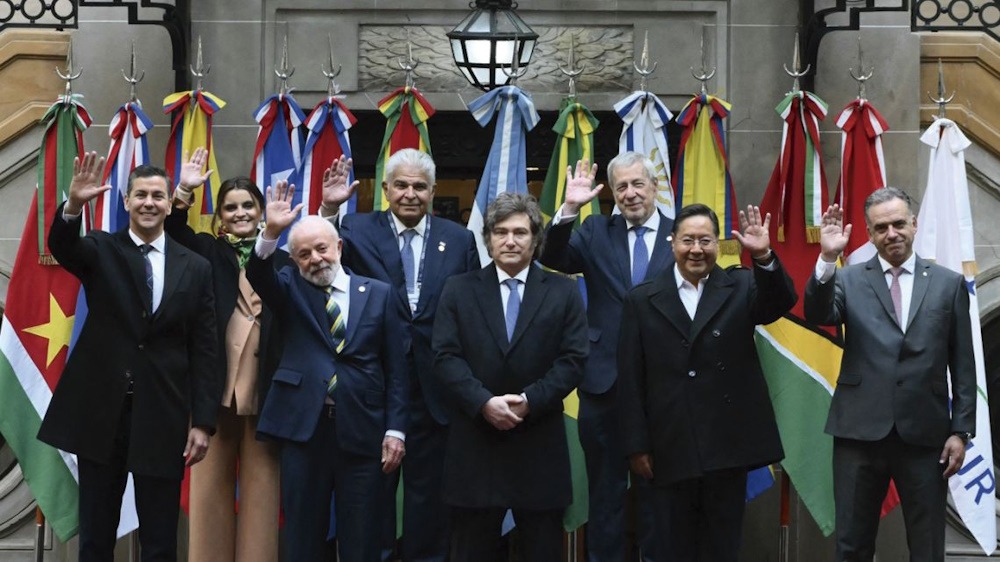
The South American bloc Mercosur — comprised of Argentina, Brazil, Uruguay, and Paraguay — is currently experiencing an unparalleled expansion in trade opportunities. Paradoxically, this outcome is largely attributable to the cooperation between Javier Milei and Luiz Inácio Lula da Silva, two administrations positioned at opposing ends of the ideological spectrum. Throughout much of its history, Mercosur has refrained from pursuing new trading partners beyond the confines of South America. The bloc’s most recent free trade agreements were concluded in 2007 and 2010, with Israel and Egypt, respectively. That has begun to evolve. In September 2025, Mercosur finalised a Free Trade Agreement with the European Free Trade Association, comprising Switzerland, Norway, Liechtenstein, and Iceland. Subsequently, in January, it entered into a similar agreement with the European Union, marking the most significant deal in the history of the South American bloc. Additionally, an FTA with Canada is anticipated to be finalised this year, while negotiations are ongoing with Singapore, Japan, Indonesia, South Korea, the United Arab Emirates, Vietnam, and El Salvador. Julieta Zelicovich, an international affairs analyst and professor at the Universidad Nacional de Rosario, stated that “the shift in Mercosur’s international strategy didn’t start now,” but is “the result of 10 years of a new negotiating approach.” She stated, “It was around 2016, at one of the summit meetings, that the presidents decided to move forward with what they called ‘updating the external agenda.’” In that context, “Mercosur decided to review the free trade agreements it had and start negotiating new ones.”
However, a challenge arose. Mercosur typically adopts a robust stance, particularly regarding the safeguarding of sensitive sectors, and actively engages in offensive measures in agriculture, a sector that is notably sensitive for its counterparts. That resulted in trade discussions that were challenging to finalise. The transition occurred in the aftermath of the pandemic and the alteration in U.S. trade policy. “The international context has compelled numerous counterparts, such as the European Union or Canada, to moderate their earlier negotiating stances and ultimately place greater emphasis on the Mercosur agenda,” she stated. Marcelo Elizondo, president of the Argentine Committee of the International Chamber of Commerce, stated that the transformation within Mercosur commenced with a modification in Argentina’s position. After Milei took office, the country demonstrated a willingness to embrace openness that it had not exhibited previously. He stated, “Uruguay has always favoured greater openness, and Paraguay too.” Brazil has oscillated in its positions, yet it has consistently shown support for the EU deal. “Argentina, for a considerable duration, maintained a highly insular stance.” In Brazil’s situation, several factors are influencing the outcome. Among them: “Lula da Silva’s effort to position himself as a player in the new geopolitics.”
Elizondo also observed that “there are many sectors in Brazil that used to be protectionist and have now grown and integrated with multinational companies that are pushing for openness, and that has also generated some support for opening up.” He stated, “Brazil realised it was putting Mercosur — an asset of its foreign policy — at risk by holding onto a closed economic stance while the other three partners were pushing to open up.” As the largest member of the bloc, Brazil “always holds a leadership position because of its size,” although he maintained that “the big push came from Argentina.” Federico Vaccarezza, secretary of the Europe Department at the Institute of International Relations at the Universidad Nacional de La Plata, presented an alternative perspective. He contended that “what matters to negotiators on the other side of the table is Brazil — Argentina doesn’t matter as much,” given that it represents merely “0.3% of world trade.” He also explained that “it’s not that Brazil didn’t want to go after these trade deals.”
What Brazil possessed was a perspective on timing — on when to pursue them. He stated, “Now it’s aiming to strengthen its productive and export capacity by opening up markets it didn’t have before, drawing in investment and giving the state an active role.” Looking ahead, Elizondo emphasised the significance of the Canada FTA in drawing investment. “It’s an economy characterised by significant complementarity, and there exists potential for collaborative investment initiatives.” Vaccarezza added that the deal “would be one of the most important, especially on mining.” Both also emphasised the necessity of liberalising markets in Asia. Elizondo remarked that “a deal with Japan would be very important,” in addition to one with South Korea. Vaccarezza also stated that “Vietnam is a really good opportunity to break into Asia with food and energy, and Indonesia is also a phenomenal market when it comes to energy.”
