
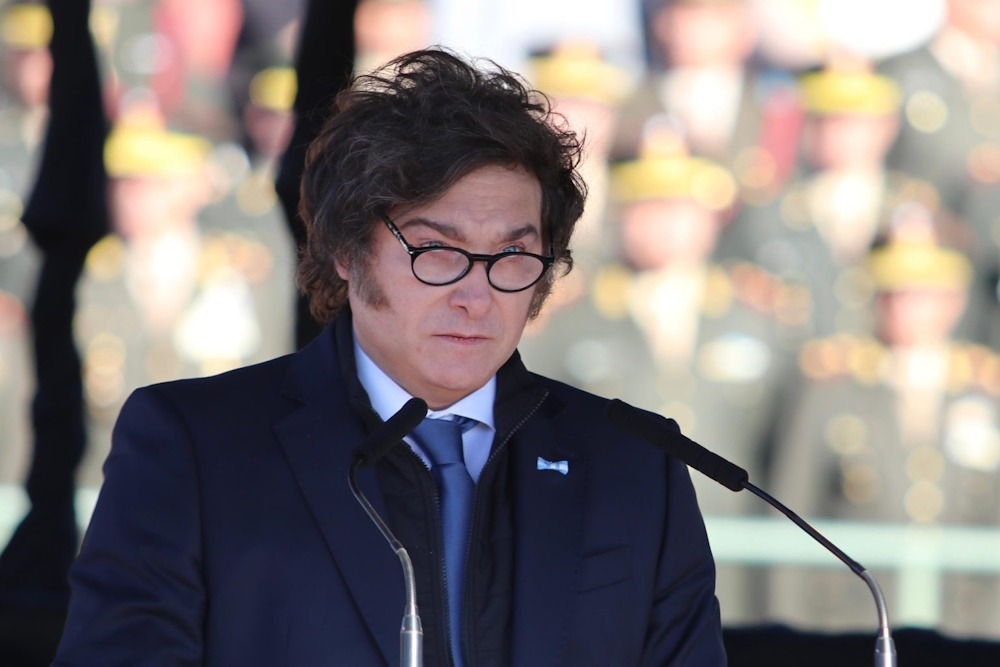
President Javier Milei declared from Israel midweek that his administration will submit an electoral reform bill to Congress which, among other modifications, will abolish the PASO primaries. The proposed reform is set to fundamentally transform Argentina’s electoral landscape. In addition to modifications in political financing, the proposal would implement the ‘Ficha Limpia’ or “clean slate” rule, which prohibits the candidacies of individuals who have been convicted of corruption. The ‘Ficha Limpia’ bill represents a persistent initiative advocated by various right-leaning political factions, particularly the PRO party. It nearly secured approval last year, but encountered obstacles in the Senate. Under the rule, individuals convicted in a second instance of crimes such as corruption will be ineligible to serve as candidates or party leaders – a threshold that would, for example, preclude ex-president Cristina Fernández de Kirchner from seeking office. The primary objective, however, is to eliminate the Primary, Open, Simultaneous, and Mandatory primaries on a national scale. While legislation was enacted in 2025 to suspend them for the national elections of that year, the complete elimination of these measures remains unverified. The ruling party contends that disputes regarding leadership and candidacies ought to be settled independently, without the involvement or backing of the state.
Interior Minister Diego Santilli recently asserted that eliminating the PASOs would result in savings exceeding “more than US$200 million.” Milei’s administration asserts that the PASOs should be abolished, while certain sectors consider it more judicious to postpone them once more. President Milei communicated the initiative for reform via social media platforms. He stated that the modifications would “end impunity” and prevent Argentines “from having to pay for the internal elections of the caste.” Milei further contended that a novel financing scheme would inhibit professional politicians from subsisting on public funds, asserting that the reform aims “to end privilege” within the political domain. “The vote of each deputy and senator on this bill will provide significant insights.” And “Those opposed will make it evident that they see politics as a business,” stated Lilia Lemoine. “No sincere political party can stand against this agenda.” This year does not coincide with an election cycle. “There are no excuses,” concurred Communications & Press Secretary Javier Lanari. A government team, spearheaded by presidential advisor Santiago Caputo and Legal & Technical Secretary María Ibarzábal Murphy, commenced efforts on the initiative several months prior.
The legislation further strengthens the criteria governing the establishment and functioning of political parties. To achieve legal status, entities must attain a requisite membership threshold, adhere to an established organizational framework, and exhibit a presence across multiple districts. Stricter controls are instituted for their ongoing viability; they risk losing their status if they do not conduct internal elections, engage in national elections, or achieve a minimum level of representation. Another key aspect is party financing, characterized by the introduction of greater controls and restrictions. Only parties that are officially recognized will have the capacity to obtain state funding, whereas contributions from anonymous or foreign entities, as well as those associated with sectors like unions or concessionaires, will be strictly forbidden.
Moreover, a limit will be imposed on private contributions, and enhanced transparency will be mandated in campaign expenditures. Public funding will be allocated in a manner that is both equitable and reflective of the votes garnered, aiming to achieve a balance between representation and fairness. It is also established that all transactions must be processed through controlled bank accounts, and the hiring of foreign services is restricted to prevent external influence. The objective is to restrict irregular contributions, enhance the traceability of funds, and allocate public resources based on more transparent criteria, balancing equity among parties with their electoral significance. The government successfully progressed with electoral reform, obtaining congressional backing for the implementation of the BUP single paper ballot for national elections, which was first utilized in last year’s midterms. The traditional system of multiple ballots continues to be in effect in Buenos Aires Province, where the Peronists triumphed over La Libertad Avanza in the provincial midterms held last September.
