
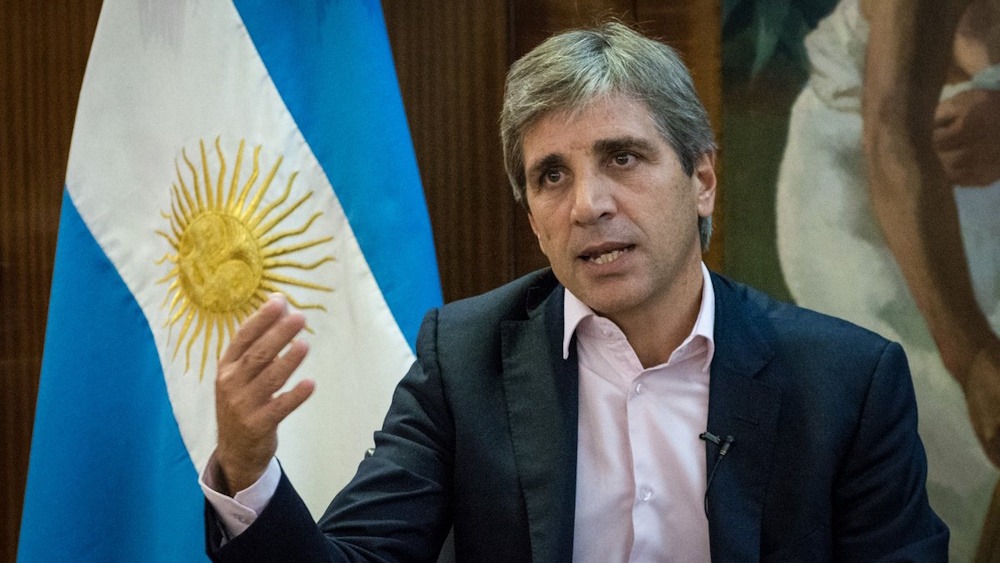
Economy Minister Luis Caputo announced on Monday that, in April, Argentina recorded a primary surplus of AR$632 billion and a financial surplus of AR$268 billion. The minister also reported the accumulated fiscal surplus for the initial four months of 2026. “In the first four months of the year, the [country] accumulated a primary surplus of approximately 0.5% of GDP and a financial surplus of approximately 0.2% of GDP,” Caputo stated on X. Interest payments on public debt, excluding intra-public sector obligations, amounted to AR$364,741 billion (US$260 million). Caputo stated that a fiscal surplus is “consistent with strict management of public spending, which ensures order in public accounts while resources continue to be returned to the private sector through tax cuts.” The minister stated “This dynamic will allow Argentina to achieve three consecutive years of financial surplus by 2026 while lowering taxes and honoring all state expenditures, something unprecedented in Argentine history.”
In April, total revenues reached AR$13.4 trillion, equivalent to US$13.5 million, reflecting a nominal increase of 29.6%. However, when adjusted for inflation, this represents a real decline of 2.1%. Primary spending amounted to AR$ 12.7 trillion, reflecting a nominal rise of 34.5% and a real increase of 0.8%. The difference was primarily influenced by capital expenditures, which amounted to AR$420 billion, reflecting a real increase of 68% relative to the previous year. Consequently, the primary surplus decreased by 16.5% relative to the figure noted in April 2025. Public accounts have concluded with a favorable balance for the fourth consecutive month. Confronted with diminishing revenues, Caputo has implemented spending reductions commensurate with the decrease in resources, while anticipating a reversal in the economic conditions that have led to the decline in tax collection.
A report indicates that the reduction in state revenue is primarily attributable to diminished economic activity, rather than fiscal policy actions linked to tax reductions. The report indicates that a mere 3% of the revenue decline can be linked to tax reductions. Among the taxes that have undergone changes year-over-year are fuel taxes and export duties. The remaining 97% of revenue is derived from taxes that have not experienced any alterations, encompassing tariffs, VAT, and income tax, among other sources. Nevertheless, a report suggested that by March 2026, the 12-month fiscal surplus would amount to 1.4% of GDP. To achieve the 1.6% target established with the IMF for this year, the government is required to sustain the existing equilibrium between expenditures and revenues until December.
The announcement follows a recent publication in the Official Gazette, revealing the government’s decision to reduce 211 programs spanning various sectors. The measure indicates that the savings total 2.8 trillion pesos, which is roughly equivalent to US$1.98 billion at the official dollar rate. A recent report indicates that tax revenue figures for April experienced a decline of approximately 4% in real terms. The decline was primarily attributed to a decrease in revenue from commodity export duties, particularly in beef and grains, which experienced a significant drop of 34.4% year-on-year in real terms, as per estimates from the Argentine Institute of Fiscal Analysis.
