
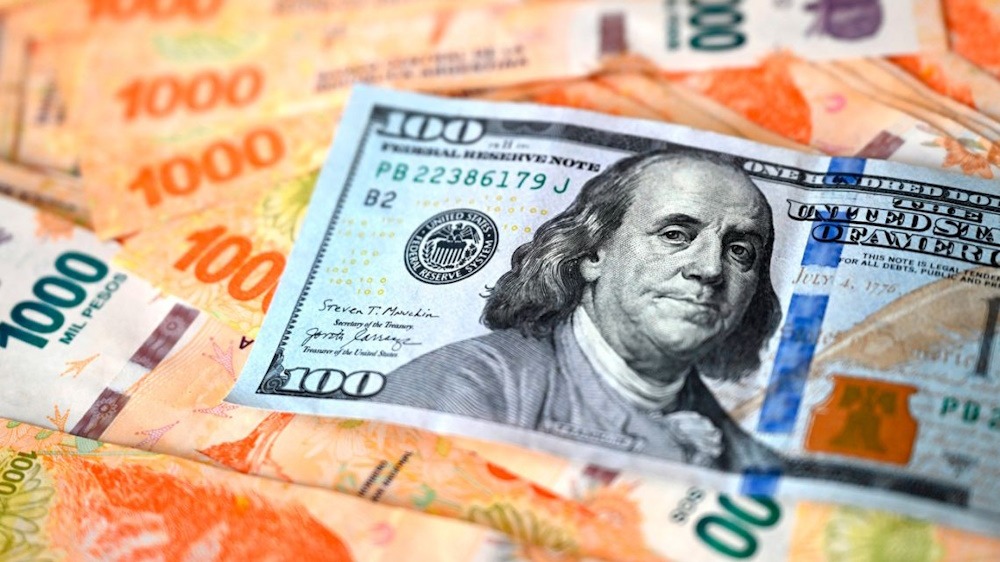
The government of Argentina has permitted companies lacking export revenues to secure loans in dollars. The objective is to capitalise on the influx of funds in United States currency that have recently entered the banking system, primarily due to government initiatives aimed at persuading Argentines to convert their hidden dollar savings into the formal economy. To facilitate this, President Javier Milei modified a regulation that had been established since the 2001 crisis, which limited access to dollar-denominated credit to firms capable of demonstrating income in that currency. The regulation aimed to restrict borrowers from taking on foreign-currency liabilities unless they had a natural hedge to mitigate exchange-rate risk. It was established to prevent a recurrence of the collapse of the Argentine banking system, akin to the event that occurred 25 years ago, which ignited one of the most severe economic and political crises in the nation’s history. However, the new regulation comes with a caveat: to qualify for these loans, companies must provide the backing of an export company as collateral. In the 1990s, this benefit was accessible to all firms. Until this provision took effect on June 12, the regulations mandated that banks confirm applicants for dollar-denominated loans possessed future revenue in that currency, alongside corresponding sales from the previous year. This requirement effectively eliminated the majority of firms that engage exclusively in domestic operations.
Iván Cachanosky stated that the measure’s objective of directing idle liquidity into productive credit represents a “step in the right direction.” According to economist Christian Buteler, the initiative was not a demand from businesses, but rather a government-driven proposal aimed at promoting a form of credit with interest rates lower than those available in pesos. “Dollar deposits have grown significantly in the financial system, and there is nowhere to channel them,” Buteler stated. Private-sector dollar deposits have surpassed US$39 billion, marking their highest level since the termination of the peg between the Argentine peso and the dollar, referred to as “convertibilidad,” which lasted for more than a decade and concluded in January 2002. Loans in dollars total approximately US$23.5 billion, reaching unprecedented levels.
Credit rating agency Moody’s cautioned that, although the measure could facilitate increased capital flow into the economy, the initiative must demonstrate its robustness in the face of heightened exchange rate fluctuations. “The primary borrower without foreign-currency income is exposed to a deterioration in its repayment capacity in the face of adverse exchange-rate movements, and the credit quality of the transaction becomes dependent on the financial strength of the guarantor exporter,” it explained in its report on the matter. Cachanosky stated that the effectiveness of the measure will largely hinge on the quality of the collateral mandated by banks, contending that robust guarantees are crucial to avert risks from permeating the financial system. He cautioned that without them, the impact is expected to be constrained, especially considering the modest scale of Argentina’s credit market. “It is a sensible measure for deepening financial intermediation and is consistent with the objective of making better use of the dollars already in the system,” he stated. “However, it necessitates exceptionally robust assurances.” He noted that the primary concern is not the regulatory change itself, but rather the potential for lending standards to deteriorate over time. “The risk is not the regulation, but that banks become less disciplined in assessing who they lend to,” he stated.
The decision evokes sentiments that extend beyond mere economic factors. The 2001 crisis, precipitated by the issuance of dollar-denominated loans to borrowers lacking dollar income or sufficient guarantees, constituted an economic, political, and social disaster that indelibly affected a generation of Argentines. During Carlos Menem’s presidency in the early 1990s, Argentina upheld a fixed exchange rate between the dollar and the Argentine peso, referred to as “convertibilidad,” or convertibility. While it was successful in managing prices — Argentina had recently come out of a phase of hyperinflation in the late 1980s — the system started to weaken after the “Tequila Effect” crisis in Mexico in 1995 and the “Caipirinha Effect” crisis in Brazil in 1997. To maintain viability, convertibility necessitated a continuous influx of dollars to satisfy local demand. However, as the decade advanced, the influx of foreign currency diminished due to Argentina’s rising costs in dollar terms relative to its neighbours, which had devalued their currencies to address the international financial crisis, rendering the country less appealing to investors. Consequently, Argentina ceased to attract foreign investment and was compelled to compensate for the shortfall in dollars through borrowing from multilateral lending institutions, such as the International Monetary Fund and the World Bank, while also implementing austerity measures that grew increasingly unpopular. By late 2001, under the presidency of Fernando de la Rúa, public discontent had escalated to a critical juncture. Simultaneously, escalating concerns regarding the stability of the peso’s one-to-one peg to the U.S. dollar prompted a surge in withdrawals from bank deposits. In December 2001, the government implemented the “corralito,” which restricted cash withdrawals from bank accounts to 250 pesos per week. The measure was succeeded by a new development that became known as “corralón.” In summary, this resulted in the compulsory conversion of dollar-denominated deposits into pesos at an exchange rate significantly lower than the market value following the collapse of the convertibility regime in January 2002, causing substantial losses for savers.
Jorge Carrera indicated that the Milei administration’s decision does elevate risks to the banking system, albeit only marginally. “It is a fairly moderate measure,” he stated, observing that mandating an exporting company to serve as guarantor is “far better” than the framework that existed in the 1990s. Carrera argued that one of the key lessons of the convertibility collapse was the peril associated with currency mismatches. “When the major devaluation came at the end of convertibility, the entire financial system was left in disarray,” he stated. “Borrowers were unable to fulfil their loan obligations, and as a result of these defaults, banks found themselves incapable of returning the funds deposited by their clients.” Economist Buteler indicated that the government seems to be striving for a system reminiscent of the 1990s, characterised by the widespread availability of loans in either pesos or dollars — a structure he referred to as “normal in a bimonetary economy.” He stated, “The problem is that it carries the same risk we saw in 2001: a currency mismatch after a sharp depreciation.” In such a scenario, borrowers earning pesos could experience a significant increase in the real burden of their dollar-denominated debts as the exchange rate escalates. Nonetheless, Buteler contended that the risk has diminished today as Argentina is no longer functioning under a fixed exchange-rate regime. “The exchange rate currently exhibits fluctuations,” he stated. “That does not mean there won’t be movements, but they are unlikely to be on the scale seen at the end of convertibility.”
