
A regional training on nuclear technology put on by the United States called the Foundational Infrastructure for the Responsible Use of Small Modular Reactor Technology program was recently held in Argentina. It was the fourth time that the program had been held in Latin America and the Caribbean. In September 2025, Argentina became the first Latin American country to join the program as a contributing partner. This marks the inaugural hosting of the event. The development follows the announcement from Javier Milei’s government regarding a shift in their nuclear policy, now emphasising the export of services and the attraction of foreign investment. Federico Ramos Napoli stated that Argentina possesses “more than 70 years of experience in the peaceful use of nuclear energy.” He stated that hosting the workshop in the country demonstrates a “commitment to collaborating with the United States” and its allies. U.S. Ambassador to Argentina Peter Lamelas stated that his country “is leading the development of advanced nuclear technology” and emphasised that the partnership with Argentina “generates jobs, investment, and new opportunities for both countries.”
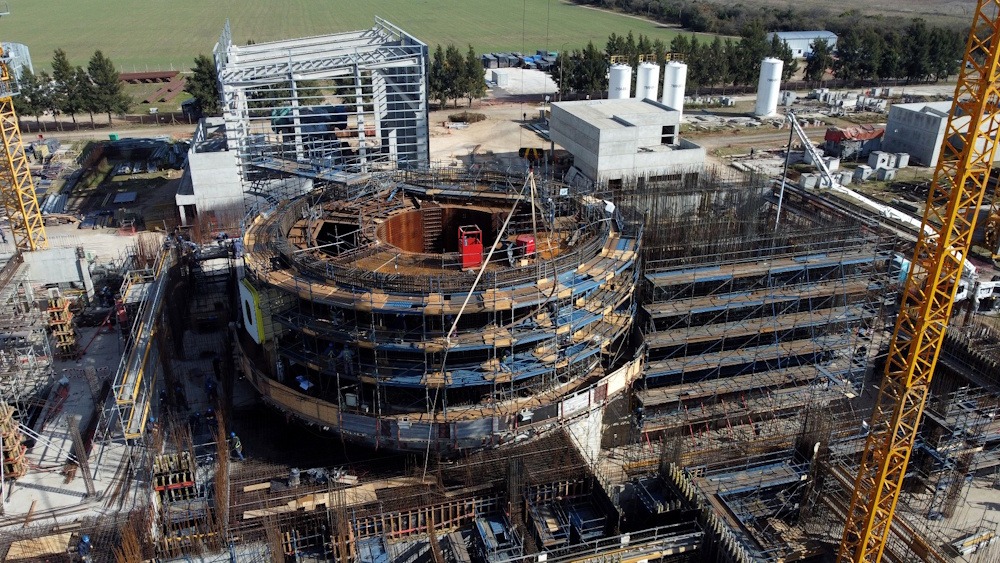
The workshop occurred from June 2nd to 4th and included Christopher Yeaw, who serves as the U.S. deputy assistant secretary of state for arms control and nonproliferation. “The nuclear energy technologies of the United States and our partners in this room are recognised as the safest and most advanced globally.” The U.S. official stated “That’s why we believe we are the partner of choice for countries looking to expand their civilian nuclear programs.” The event gathered specialists from Chile, Costa Rica, Ecuador, El Salvador, Jamaica, Mexico, Paraguay, Peru, and the Dominican Republic, along with representatives from other FIRST partner nations, including Canada, Japan, and the United Kingdom. The official statement from the Trump administration clarified that FIRST collaborates with nations “exploring their potential in nuclear energy, including the use of small modular reactors to meet their energy needs.” The emphasis on SMRs was also noted by Martín Porro, president of the National Atomic Energy Commission, who remarked that the event underscored “international recognition of Argentina’s capabilities to support the region in developing SMRs.” Argentina possesses considerable expertise in the SMR sector, attributed to its advancement of the CAREM reactor. It was intended to be the inaugural nuclear reactor conceived and constructed solely with Argentine technology; however, its progress was interrupted under the Milei administration.
In late 2024, the then-president of CNEA, Germán Guido Lavalle, stated in an internal memo that the design of the CAREM reactor lacked commercial viability. Moving ahead, he stated, the commission would explore additional SMR designs. That prompted the Milei administration to focus on the Argentine company INVAP, which holds the patent for the design of the ACR-300, another variant of SMR, in the United States. In March 2025, Demian Reidel announced that the government planned to construct four INVAP-designed reactors at the Atucha complex, with the first reactor anticipated to be operational by 2030. Since then — particularly following Reidel’s resignation in February of this year due to corruption allegations — there have been no official updates regarding the project. Indeed, the recent revision of Argentina’s nuclear policy, revealed last Sunday, did not reference that initiative. Nonetheless, the project seems to remain active and has not been put on hold. In May, Meitner Energy launched its initial public offering. The firm possesses a 40% interest in INVAP and retains the patent for the ACR-300. On its website, it states that the design is “the only SMR designed to be scalable and profitable.”
Nuclearis nuclear company CEO Santiago Badran informed that since its inception in the 1950s, the nuclear industry has “followed a trend of building ever-larger reactors, going from a few hundred megawatts to units of up to 1,700 MW.” He articulated that although those large plants have the capacity to provide electricity to millions, they possess a significant vulnerability. “If one were to fail and go offline suddenly, millions of individuals would be left uninformed.” Consequently, the strategy for constructing nuclear plants started to evolve in the 1990s with the emergence of the SMR concept — a progression “driven by the search for lower upfront costs, faster construction, and serial manufacturing.” He stated “Instead of relying on one powerful unit, multiple smaller units could be spread throughout the country, enhancing supply security.” Nonetheless, the profitability of SMRs continues to be a subject of examination. Currently, there are over 70 projects in development globally, yet only two have reached commercial operation: Russia’s KLT-40S, which has been operational since 2020, and China’s HTR-PM, which came online in 2023. Both projects have experienced extended development timelines, increased costs, and reduced capacity compared to initial projections. Despite that, Badran emphasised that the interest in smaller and smaller reactors has continued to increase in recent years. Currently, Nuclearis is in the process of developing a Micro Modular Reactor, “an even smaller category, between 10 and 50 MW, designed for remote applications, mining, and data centers.”
