
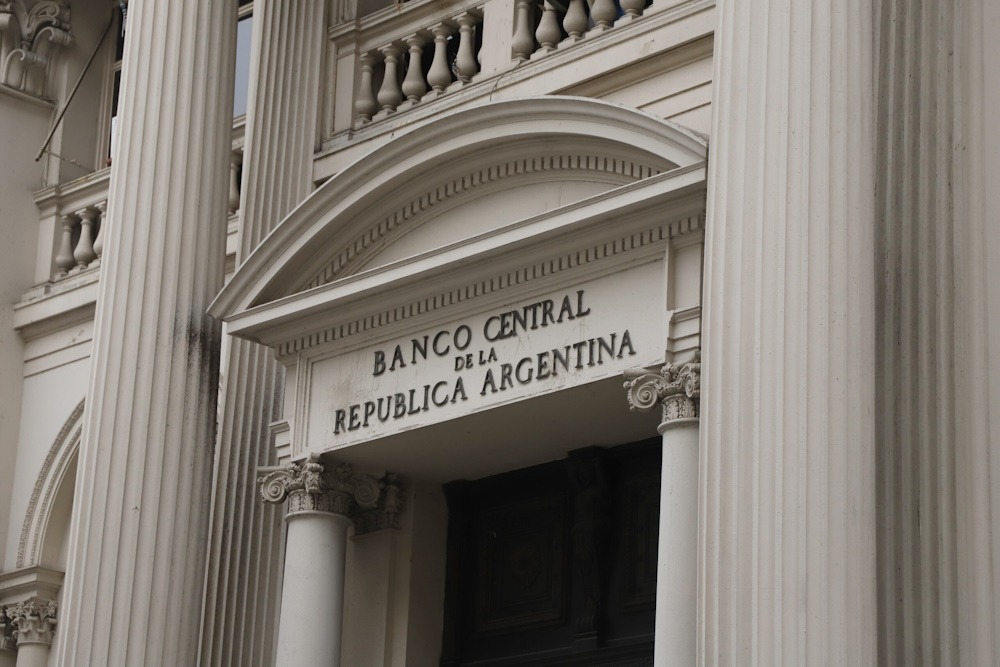
Argentina’s informal financial architecture is not a workaround — it is, for millions of people, the primary system. Decades of inflation, capital controls, and repeated currency crises have driven households and businesses to build parallel rails for storing and transferring value. These channels are technically sophisticated, deeply embedded in daily commerce, and increasingly intertwined with global fintech infrastructure.
Understanding how these rails work matters for travelers, investors, expatriates, and anyone trying to decode the gap between official peso data and economic reality on the ground.
Blue dollar exchanges and cueva networks
The cueva — literally “cave” — is Argentina’s informal foreign exchange broker. These unlicensed operators convert pesos to physical U.S. dollars at the parallel “blue” rate, which has historically diverged sharply from the official bank rate. The settlement mechanism is straightforward: a client transfers pesos via a local bank or wallet to an intermediary, who then delivers cash dollars or credits an offshore account, bypassing the Central Bank’s FX reporting system entirely.
Price discovery in the blue market runs through WhatsApp groups, financial news aggregators, and street-level networks concentrated in Buenos Aires’s financial district. The spread between the official and blue rates has narrowed somewhat since Argentina moved toward a managed float in April 2025, but the structural demand for dollar cash persists. When confidence in the peso wobbles, flow into cuevas accelerates regardless of formal policy shifts.
Digital wallets and fintech workarounds
Argentina’s Central Bank mandated QR interoperability through its Transferencias 3.0 framework, which allows any wallet — Mercado Pago, Ualá, MODO, and dozens of others — to pay any merchant at near-zero cost with instant settlement. This infrastructure has made digital wallets the dominant payment rail: they now account for 46% of Argentina’s online transaction value, with forecasts projecting that share will reach 59% by 2027.
The significance extends beyond convenience. Because wallets can be issued by non-bank payment service providers, users can receive salaries, settle invoices, and hold savings entirely outside conventional bank deposits. Within Argentina specifically, wallets also function as routers: a user can receive peso wages, instantly convert to a dollar-linked money-market fund, and spend through QR — never leaving a meaningful balance exposed to peso depreciation.
In that sense, crypto wallets are becoming essential vehicles in removing from formal banking systems. Online payers find them useful for peer-to-peer transactions, cross-border purchases, and gig economy earnings. In entertainment platforms, such as internationally verified crypto casinos, cryptocurrencies and blockchain‑based tech enable faster registration and increased data security.
Crypto assets as a store of value
Speaking of crypto, it’s good to know that Argentina ranks 15th globally and 2nd in Latin America for cryptocurrency adoption, according to the U.S. International Trade Administration. Bitcoin and USD-backed stablecoins — primarily USDT and USDC — dominate usage, functioning both as savings vehicles and as cross-border transfer instruments. The typical flow: pesos enter a local exchange, convert to stablecoins, move to a self-custodial wallet, and are later sold peer-to-peer for pesos at a rate reflecting the informal market rather than the official one.
This pathway is technically a capital export, but it occurs at the individual level and largely falls outside conventional balance-of-payments monitoring. The IMF has noted that in high-inflation economies, stablecoins increasingly function as everyday transactional and savings tools, not merely speculative assets — a characterization that fits Argentina’s usage patterns closely.
Hawala-style remittances and trust networks
Informal value-transfer networks in Argentina operate on the same trust-based logic as hawala systems used across South Asia and the Middle East. A client in Buenos Aires pays pesos to a local broker; a counterpart broker in Miami or Madrid delivers dollars to the recipient, with the two brokers settling their net positions periodically through cash, crypto transfers, or trade invoices. No money physically crosses a border.
These networks are particularly active among the Argentine diaspora and freelancers billing overseas clients. A consultant receiving U.S. dollars may instruct their client to pay a U.S.-based broker directly, avoiding Argentine banks and the official FX rate entirely. Settlement risk is managed through reputation and long-standing commercial relationships rather than legal contracts.
What each method costs in practice
Cost structures vary significantly across channels. Cueva operators typically charge a spread of 1–3% against the prevailing blue-dollar rate, with the rate itself often more favorable than any formal bank product. Digital wallet conversions into dollar-linked instruments carry implicit costs through fund management fees and FX conversion margins, usually under 1% for liquid instruments. Crypto on-ramps charge exchange fees of 0.5–1.5%, though P2P trades can narrow this further depending on liquidity.
As of mid-2024, 71% of Argentine adults held accounts with non-bank payment service providers, up from just 7% in 2019 — a figure that reflects how rapidly these semi-formal channels have scaled. Trust-network remittances are the least transparent on cost but often the most efficient for large transfers, where a fixed broker fee beats percentage-based bank wire charges. Each channel carries different regulatory exposure, counterparty risk, and liquidity profile, making the choice of rail as much a financial decision as a logistical one.
