
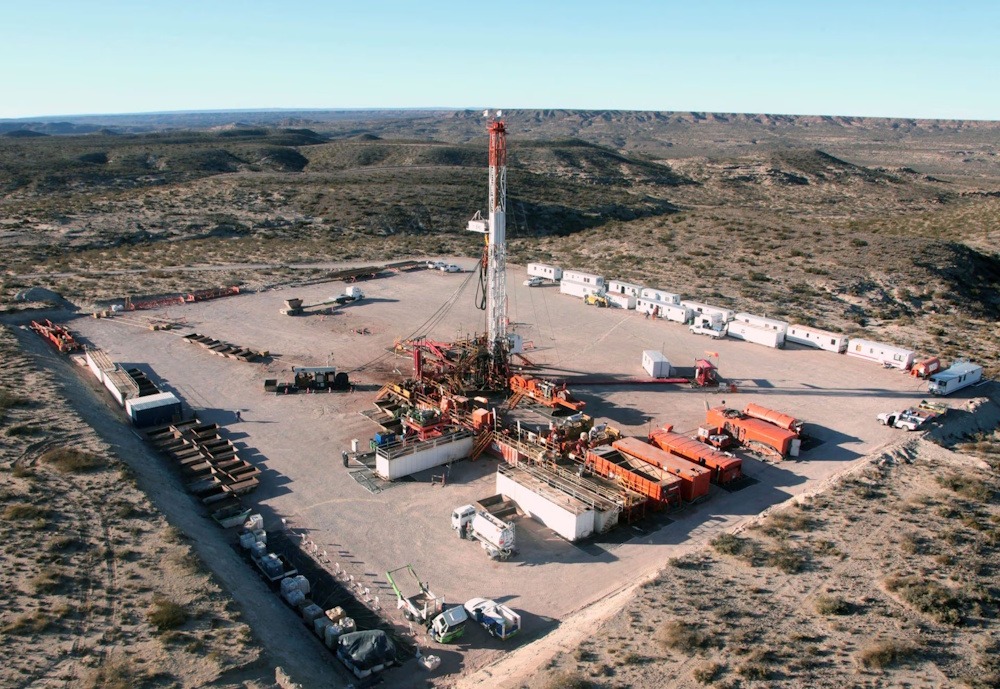
The exponential growth of the unconventional oil fields in Vaca Muerta, Neuquén, stands out as one of the most significant economic developments during the Milei presidency. The data presents a compelling case, especially within the oil sector. In the first quarter of 2026, the sector experienced a year-over-year growth of 16.2%, as reported by the latest Industrial and Mining Production Index from the INDEC statistics institute. Exports experienced a growth of 9.3% in 2025 relative to 2024, amounting to US$87 billion. Energy exports ranked as the fourth-largest category, totaling US$11.1 billion, which represented 12.7% of the overall figure. The Energy Institute at Austral University reported that production reached 878 million oil barrels per day in March alone. The figure indicates a 15.8% year-over-year increase, “consolidating the expansion trend driven primarily by unconventional developments.” Austral University stated “This sector exhibited a distinctive trend: export volumes increased by a notable 28.5% [year-over-year], indicative of the growth in domestic energy production from Vaca Muerta.”
This boom presents numerous advantages. One aspect is the diversification of Argentina’s exports, which have historically been linked to the performance of agricultural products. The trade balance of an economy in need of U.S. dollars is also being improved, which is essential for bolstering the Central Bank’s reserves and stabilizing the exchange rate. Nevertheless, a paradox emerges within one of the most vibrant sectors of the Argentine economy: the workforce in the industry is declining. According to data from January 2026, employment in the mining and oil sectors has declined by nearly 10% compared to the levels observed immediately prior to Milei’s assumption of office in November 2023. The total number of formal jobs has decreased by 8,071. “The issue with oil sector employment is that the jobs lost in the San Jorge River basin—the city of Comodoro Rivadavia—are not being offset by Vaca Muerta. That’s why the net balance is negative,” stated Daniel Schteingart. “Ultimately, average productivity in the oil and gas sector is rising due to increased production with fewer employees; however, what’s striking is that it isn’t even generating jobs.”
The issue stems from the transformation that Vaca Muerta has induced in conventional oil sector employment. A few months after assuming leadership of YPF in 2024, the Milei administration unveiled the Andes Project, an initiative aimed at streamlining and optimizing its assets, marking the initial phase of the 4×4 Plan. The initiative aims to increase the company’s value fourfold within a four-year timeframe and achieve exports totaling $30 billion by 2031. Project Andes entails the substantial abandonment of low-productivity “mature” fields situated in the Patagonian region and Mendoza. The objective was for YPF to focus its investments on the most productive unconventional oil and gas fields within Vaca Muerta. The San Jorge basin, situated in the Patagonian province of Chubut, emerged as one of the most severely affected areas. “Hydrocarbon production experienced a decline of 33% for gas and 20% for oil from 2017 to 2025. “The impact is palpable on direct and indirect employment, as well as duties provinces charge,” Fundar warned in a recent report. Estimates from private consulting firm Politikón Chaco, utilizing the latest official data, indicate that private-sector wage employment in Chubut experienced a decline of 5.9% from the inauguration of the government in late 2023 to January 2026.
Schteingart suggests that the trend of declining employment may “possibly be reversed because the situation in San Jorge will eventually stop having such a significant negative impact, and Vaca Muerta will begin to offset it.” The analyst emphasized that it is essential to consider the low level of job creation in those industries. Schteingart elucidated that the direct employment created by the oil and mining sectors totals around 90,000 positions. “That’s less than 1% of total employment,” he noted, emphasizing that this is due to the capital-intensive nature of these activities. This indicates that “they contribute significantly to GDP and exports, but relatively little to employment.” He concluded “They can provide you with dollars and tax revenue, but those sectors aren’t going to address the employment issue.” Recent official statistics indicate that Argentina’s unemployment rate reached 7.5% in the fourth quarter of 2025, an increase from 6.4% during the corresponding period in both 2024 and 2023.
