
The conclusion of Argentina’s staff-level agreement with the International Monetary Fund arrived with a nuanced message at the last moment, highlighting the challenges confronting President Javier Milei’s administration. The institution is compelled to react to a worldwide crisis and the implications of US elections, which may put to the test the financial support Argentina has secured. At the IMF’s Spring Meetings in Washington, the Fund’s staff completed the finalization of Argentina’s figures, yet stipulated a condition: the economic team is required to implement further measures prior to the disbursement of any funds. In the concluding remarks of the IMF’s official statement, the organization under the leadership of Kristalina Georgieva highlighted: “IMF staff welcomes the strong and constructive engagement with the authorities and their continued commitment to the programme, including through the implementation of corrective measures to address earlier setbacks. Upon completion of pending measures, the review will be submitted to the IMF Executive Board for consideration.” Among analysts in Washington, the consensus is that it is “highly unusual” for IMF staff to announce a staff-level agreement while simultaneously indicating that progression to the Executive Board is contingent upon further actions.
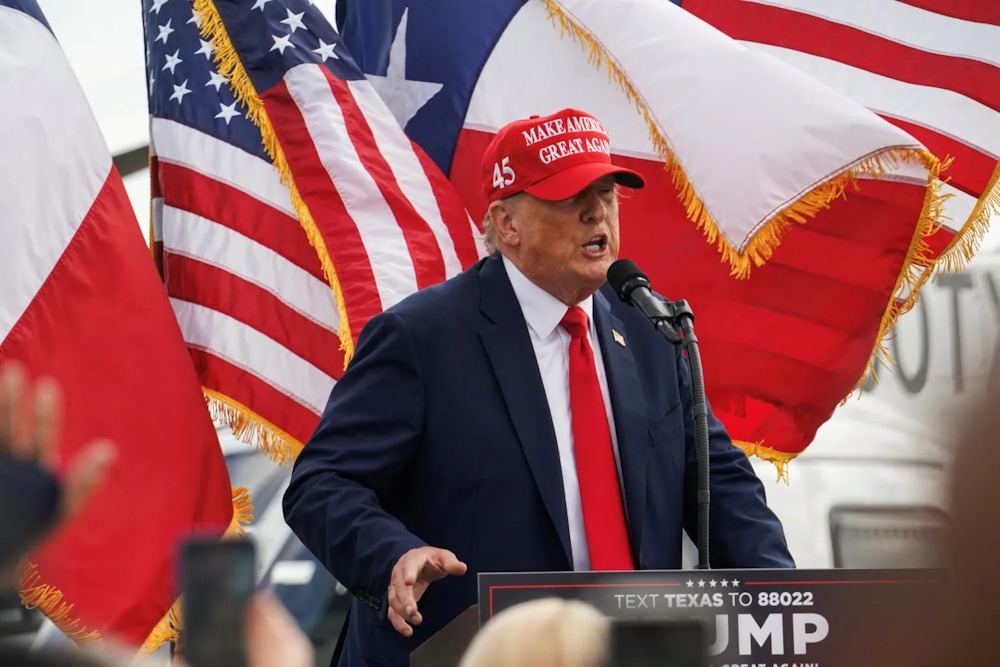
Sources indicate that the ‘asterisk’ in the statement may be associated with a particular action regarding capital controls, although they dismissed any possibility of a significant devaluation being sought. The Fund’s language suggests that corrective measures are nearing completion and that, upon achieving the final operational milestone, approval for disbursement will be forthcoming. At the heart of this bureaucratic delay is a significant power struggle; IMF staff are experiencing political pressure from the White House. An insider informed that the technical team is essentially “kicking” the decision upstairs to the Board, where the ultimate confrontation will take place. Washington’s support for Milei’s administration is clear-cut, yet motivated by immediate electoral considerations: US President Donald Trump requires foreign policy successes as he confronts increasing weariness on the home front. The approach to the November 2026 midterms in the United States is influencing the approval ratings of Trump, who is experiencing the fallout from a series of six consecutive local electoral defeats. In this context, the economic backing for Argentina has solidified and remains largely unchallenged at the US Treasury.
Remarks by US Treasury Secretary Scott Bessent at the Institute of International Finance suggested the influence of Washington’s economic leaders in exerting pressure on the IMF. “Argentina has been a remarkable achievement. “They are building reserves every day,” said Bessent. “Tens of millions of individuals have been elevated from poverty, and it is noteworthy to observe that the most impoverished and the youngest demographics supported the administration of Javier Milei.” There exists a sense of optimism in that regard. For IMF staff, US optimism stands in stark contrast to the sobering reality reflected in the data. The Fund has adjusted Argentina’s growth forecasts for 2026 downward in its most recent World Economic Outlook report. The current forecast indicates that GDP is expected to grow by 3.5 percent this year, which is a reduction of half a percentage point from the prediction made six months prior. Additionally, annual inflation is projected at 30.4 percent, almost double the earlier estimate. The Fund identifies the overheating as a consequence of a “negative supply shock” resulting from the conflict in Iran, which has led to increased global logistics costs.
Parameters
To ensure the programme’s sustainability, the IMF-Argentina staff-level agreement delineates stringent parameters across five critical areas, with a specific caution concerning the monetary framework managed by Central Bank Governor Santiago Bausili:
- Monetary policy: The primary area of contention – the Fund has advocated for enhanced operations via “upfront measures to contain interest rate volatility and improve monetary policy transmission and credit allocation.” Monetary policy is set to remain “appropriately tight,” aiming ultimately to broaden exchange-rate bands to improve flexibility in response to external shocks.
- Fiscal policy: Argentina’s zero-deficit target is reaffirmed as a non-negotiable anchor, consistent with a primary surplus of 1.4 percent of GDP this year, underpinned by spending restraint but with “sufficient space for targeted social assistance”.
- External position: The objective is to augment net international reserves by a minimum of US$8 billion in 2026, necessitating Central Bank acquisitions of at least US$10 billion throughout the year.
- Financing will involve a multi-faceted approach to manage foreign-currency obligations. This includes the issuance of local-law debt, asset divestitures, and external borrowing, which may be supported by multilateral financial institutions.
- Structural reforms: Measures will concentrate on enhancing formal employment and productivity within key sectors including energy, mining, and the knowledge economy.
It is significant that the IMF’s staff did not reference any request for a waiver from the Board regarding Argentina’s ongoing inability to achieve its reserve accumulation targets, a benchmark it has now failed to meet for the second consecutive occasion. The Executive Board is set to evaluate Argentina’s situation by May, coinciding with the due date of US$805 million owed to the Fund. In order to prevent additional pressure on its reserves, the Board must convene and authorize the disbursement prior to that date. However, the timing of political developments seems misaligned with the pressing requirements for financing. The gap between the staff-level agreement sign-up and the Board’s formal meetings has been increasing. Historical patterns indicate that the Fund’s bureaucracy tends to decelerate as Argentina’s programme grows increasingly fragile.
