
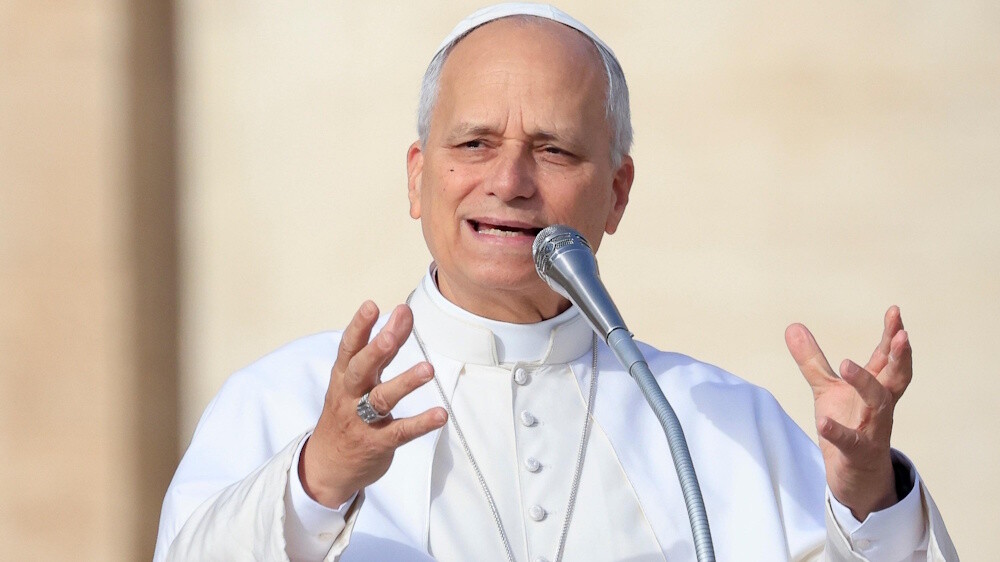
Pope Leo XIV presided over a Mass attended by two-and-a-half million individuals in Argentina on Monday. Subsequently, he called for the safeguarding of society’s most vulnerable members during his meetings with disabled individuals and victims of clerical abuse. The Mass in the Palermo neighbourhood of Buenos Aires attracted the largest congregation of Leo’s papacy thus far, as the faithful journeyed from distant locations to witness the 71-year-old, shortly after his recent lung cancer surgery. Enthusiastic crowds gathered along a lengthy stretch of Avenida del Libertador, with excitement peaking as large screens broadcasted visuals of the pope’s procession through the city. “It was very moving,” said mechanic Héctor Solis. “We were at the vigil last night, from midnight, and were surprised by how many people were already there,” he told. Throughout the capital, merchants offered T-shirts, caps, and flags emblazoned with Leo’s image, while his likeness was featured on alfajores and jars of dulce de leche, as Argentines celebrated the first papal visit to the nation in decades. “There is a great deal of emotion here,” said 60-year-old Carlos Fuentes, who had come 1,500 kilometres.
Emotional scenes unfolded in the evening as Leo emerged on the balcony of the archbishop’s residence to acknowledge the crowds assembled below. “Thank you, Buenos Aires. Thank you, Argentina. May the Lord’s blessing reach the heart of each one of you!” he said, leaving many of the faithful wiping away tears. The trip is perceived by many as a form of homecoming, paying tribute to Leo’s Argentine predecessor Francis, who has not returned to the country since ascending to the papacy. Leo became emotional as he paid tribute to Francis, calling him “our beloved” Pope. Many in the crowd were visibly moved too. Teacher Gonzalo Trejo said the pontiff was prioritising the Church’s social doctrine “which Pope Francis championed.” Leo also privately met five victims of clerical abuse, hearing from each individually about their suffering at the hands of the clergy or within ecclesial institutions in Argentina. The private audience came in response to criticism from a network of clergy abuse survivors in Argentina, who allege that the Church has not upheld its commitments to a policy of “zero tolerance” toward abusers. Leo expressed his “commitment to strengthening measures for protection” within the Catholic Church and expressed his closeness to other victims he had not been able to meet, the Vatican said.
The US-born pontiff has devoted a significant portion of his 12-day tour of South America to advocating for the rights of the marginalised and oppressed. Earlier Monday, he visited the Pequeño Cottolengo home for people with disabilities in the Buenos Aires suburb of Claypole, where he asserted that a nation’s advancement ought to be evaluated based on its treatment of its most vulnerable citizens. His remarks addressed a delicate matter in Argentina, where disability organisations and religious leaders have criticised the human toll of President Javier Milei’s austerity measures. Resident Marta Torres, who is blind and has cerebral palsy, recounted to Leo her prolonged quest for “a place to live,” a journey marked by the challenges of being abandoned by her mother in childhood. At Cottolengo “they helped me stop feeling rejected,” she said. “Here, I feel so happy.” Leo said disabled people were “not a burden on society” but “a blessing.” He also commended communities that maintain the dignity and inclusion of individuals frequently marginalised by society. “Places like this have much to say to our societies, which are often driven solely by the pursuit of economic success or the cult of outward appearance,” he said. Founded by an Italian saint, the 50-hectare (124-acre) Cottolengo complex is one of Argentina’s best-known Catholic charitable institutions, described by the Vatican as a “city of charity.”
The Pope’s packed schedule – which Leo refused to reduce following his surgery – included a meeting on Monday with business leaders, workers, and trade unions, who are expressing discontent regarding Milei’s labour reforms that restrict the right to strike. Leo praised the “indispensable” role played by unions “when they defend those who have no voice and resist the commodification of labour.” He urged them to assist precarious workers specifically. Approximately 45 percent of the workforce in Argentina is engaged in informal employment, which is characterised by the absence of pension contributions and formal labour protections. The stop constituted a segment of Leo’s inaugural journey to Latin America as pope, encompassing visits to Uruguay, Argentina, and subsequently Peru, where he resided for nearly two decades prior to his election.
