
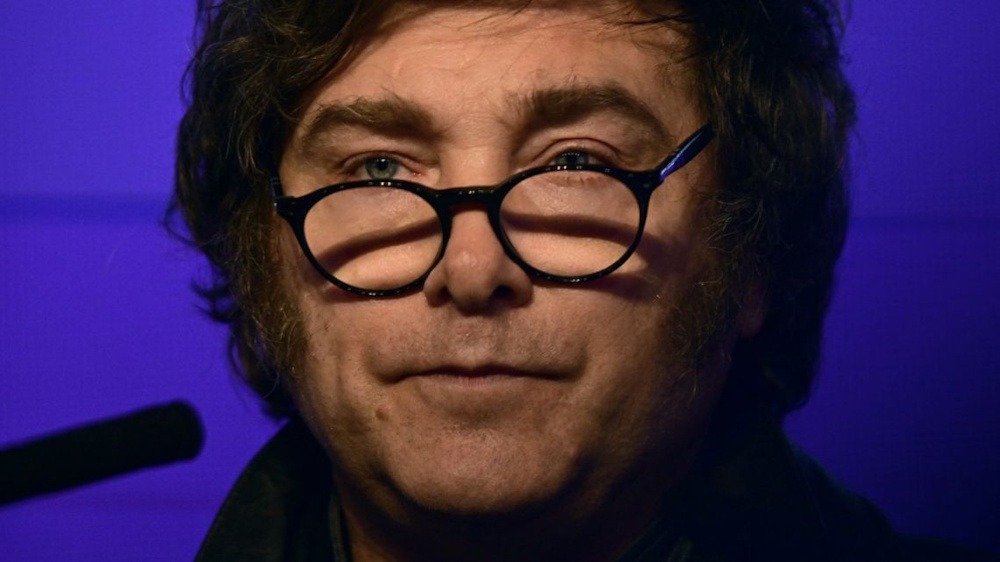
President Javier Milei understands more than anyone that the paramount objective in life is to steer clear of unforced errors. It is noteworthy that the application of that rule to the case of Manuel Adorni, his now former Cabinet Chief, was delayed significantly. Adorni’s rags-to-riches narrative captivated the public for more than three months, ultimately resulting in a loss of a quarter of Milei’s approval ratings. Better late than never, indeed. Next year, we may observe in hindsight how the President organised his re-election team during the World Cup amidst the twilight of the Adorni disaster. It is uncertain whether we will proceed, but it appears that this aligns with his current intentions. The arrival of Diego Santilli to the Cabinet Chief’s Office indicates a pragmatism stemming from a scarcity of reliable individuals within his libertarian ranks, coupled with the recognition that he requires an additional infusion of “the caste” to reconcile the means with the objectives of his administration. Milei needed to halt the Adorni haemorrhage. He did, albeit seemingly against his will. This is a positive indicator for Milei’s prospects; however, it is important to highlight that a significant portion of the key figures in his libertarian administration are former members of Mauricio Macri’s PRO party, who were part of the ex-president’s government from 2015 to 2019. This is something Macri had hoped for upon Milei’s election in 2023.
This also influences the projections for the upcoming elections next year. By persistently adhering to Adorni, Milei was estranging his centrist allies, including PRO and a select group of non-partisan provincial governors, some of whom identify as Peronists, such as Salta’s Gustavo Sáenz, Córdoba’s Martín Llaryora, or Catamarca’s Raúl Jalil. If that trend had continued, division in the centre-right of the spectrum would have emerged as the most likely scenario for the upcoming year. Macri and Senator Patricia Bullrich, along with Vice-President Victoria Villarruel, who has now positioned herself in opposition to the government, were observing a potential scenario where Milei’s approval ratings could decline to a critical threshold, thereby paving the way for another conservative candidate to emerge. This is not the case yet; June polling data indicates a modest recovery from May, sufficient to stop the decline, although it does not suggest a shift in trend at this point. If this team is to facilitate Milei’s re-election, it will need to recalibrate the government’s narrative. This week highlighted a significant disparity between the narrative of macroeconomic achievement for the nation and the microeconomic struggles faced by individuals.
Economy Minister Luis Caputo announced on social media that the country achieved a new record in oil production, reaching 903,000 barrels per day in May 2026. He also continued to announce benefits for oil companies under the RIGI investment program, with 20 projects now approved to receive tax breaks and 21 currently under review. In a concurrent development, the newly appointed government spokesman, Adrián Ravier, made his inaugural appearance at a press conference where he defended the significant hikes in utility rates. He advised Argentines to don warm clothing at home as a means to minimise the use of heating. “There is no such thing as a free lunch,” stated Ravier. Milei must address this political script gap to secure a first-round victory in 2027. Despite his unforced errors, the odds remain favourable for him, particularly as a strong agricultural sector and a thriving energy sector are providing the necessary hard currency to maintain stability during the electoral season. However, the President persists in emphasising both historical and prospective narratives, neglecting the current situation.
This week, he stated that if he secures re-election, citizens might anticipate “huge salaries” by the time he concludes his term in 2031. The opposition, in turn, is bolstering the government’s “don’t look back” narrative. Rather than moving towards cohesion, the Peronist party is exacerbating its internal divisions and leadership challenges, which complicates the potential candidature of Buenos Aires Province Governor Axel Kicillof, its most prominent national figure aside from the house-arrested former president Cristina Fernández de Kirchner. The opposition retains a singular prospect: to resolve its leadership contest during the PASO primaries scheduled for August 2026. If Santilli fulfils his primary responsibility as Cabinet Chief, which involves achieving their elimination, the challenges faced by the Peronists could escalate to an irreversible stage.
