
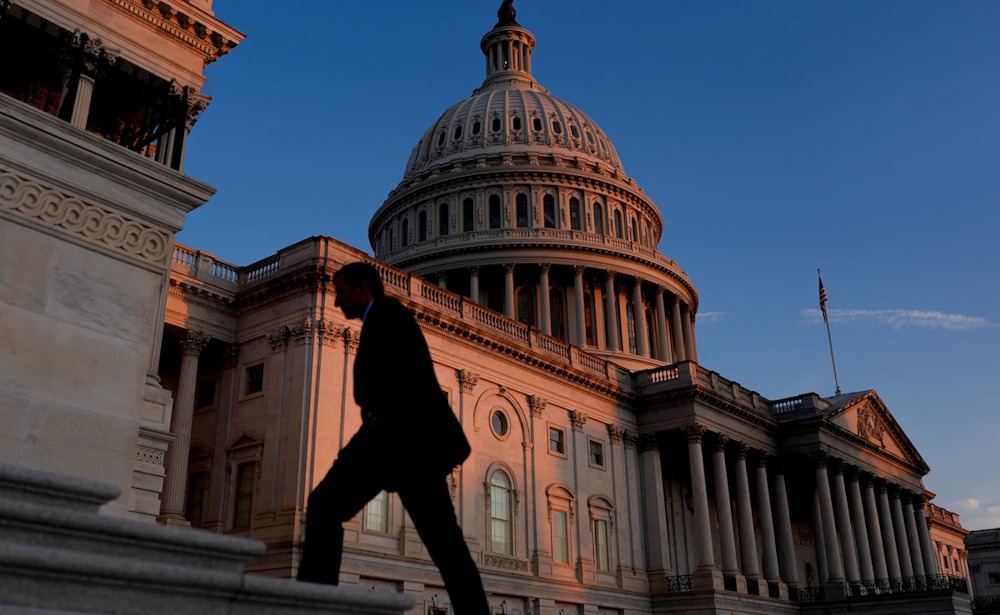
The United States Congressional Research Service, a nonpartisan public policy research institute within the U.S. Congress, released a report last Friday suggesting that lawmakers legislate “specific limitations” on the fund used to carry out bailouts similar to the one Argentina received. The conclusion is part of a brief authored by two economists regarding the Exchange Stabilization Fund, the emergency reserve fund utilized by the Department of the Treasury to support the Milei administration. In October 2025, Treasury Secretary Scott Bessent declared that the United States would extend a currency swap line to Argentina, amounting to US$20 billion through the Central Bank. The announcement included a purchase of the country’s USD-denominated bonds alongside a standby credit line, thereby reinforcing the relationship between Argentine President Javier Milei and U.S. President Donald Trump. The Exchange Stabilization Fund was established by Congress in 1934 with the objective of preserving the fixed-dollar exchange rate.
Following the United States’ departure from the gold standard in 1971, the fund’s application was broadened to include support for foreign governments, certain transactions with the IMF, and the stabilization of U.S. financial markets. The brief commences by stating that the financial assistance to Argentina in 2025 has “renewed debates about the ESF’s function and purpose.” Upon examining the fund’s background, the authors highlighted that Argentina’s US$20 billion bailout represented the second largest application of the ESF in a foreign context and was “opposed by some members of Congress because it appeared ‘to be an effort to unduly influence Argentina’s democratic elections.’” The report, authored by macroeconomic expert Marc Labonte and international trade specialist Rebecca Nelson, concludes with a set of policy recommendations.
The report underscores President Donald Trump’s characterization of aid to Argentina as “based on ideological rather than financial grounds,” a stance that has “raised questions about whether more limitations on the ESF are needed.” The authors noted that U.S. Congress “could legislate more specific limitations” on the ESF’s use, such as “capping its size, limiting how it can be used, or requiring congressional approval when the Treasury Secretary initiates interventions.” They noted that lawmakers might also evaluate new reporting requirements aimed at enhancing the “flow of information” from the administration to Congress. Should deputies seek to bolster the fund as an instrument for crisis response, they might consider augmenting the resources of the ESF. The bailout faced significant scrutiny during its implementation in the United States. In October 2025, Congressman David Scott addressed a letter to Treasury Secretary Scott Bessent, requesting information regarding the utilization of the ESF in the establishment of the swap line with Argentina’s Central Bank. A letter co-signed by 11 members of Congress described the decision as “reckless,” according to the lawmaker.
In the aftermath of the bailout, Elizabeth Warren, alongside other U.S. senators, put forth the “No Argentina Bailout Act” bill. The objective was to avert the Treasury from “bailing out Argentina’s financial markets and its global investors while American families are struggling at home and the Trump administration is shutting down our own government.” Bernie Sanders, a current U.S. senator who endorsed the bill and previously campaigned as a presidential candidate in the 2016 Democratic primaries, condemned Trump for removing “15 million Americans off health care […] because we don’t have enough money” while simultaneously allocating “US$20 billion to bail out the right-wing regime of Argentina.” And “We cannot allow that to occur.”
