
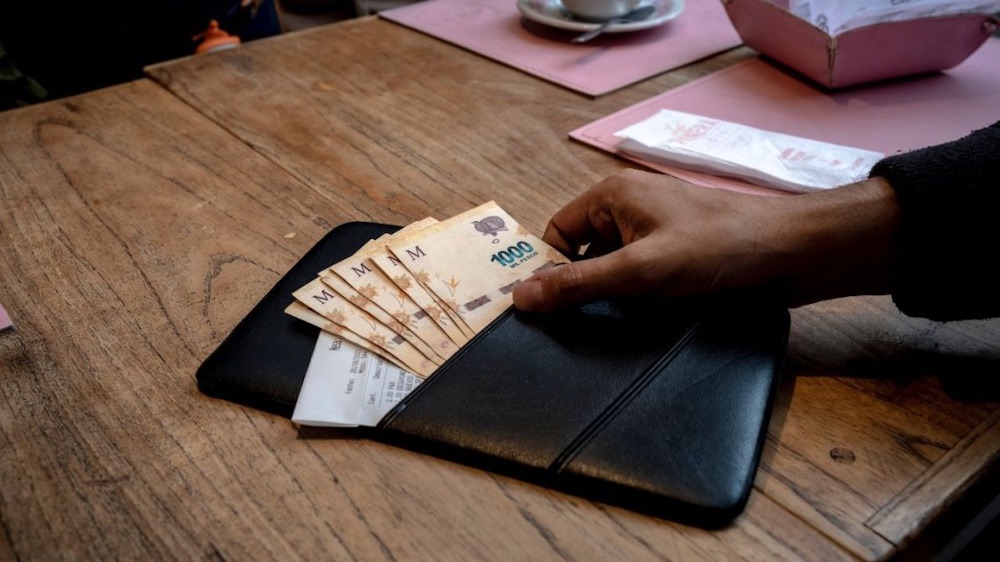
Alejandro Lamas notes that dollar bills can become surprisingly damp and odorous after being tucked away under a mattress for years. He has accumulated numerous stacks from Argentines to whom he has sold used cars over the years, making him somewhat of a connoisseur. Present him with a fake, and he can discern its authenticity with just a single touch. This skill remains as crucial for him today as it was four decades ago when Lamas sold his very first used car in Buenos Aires, and it appears it will continue to be significant moving forward. President Javier Milei’s recent initiative to encourage Argentine savers to place their funds in dollar-denominated accounts is facing challenges in gaining momentum, underscoring the profound distrust that citizens continue to harbor towards both the government and financial institutions. Nearly 25 years following a financial crisis that resulted in the government’s coercive conversion of dollar deposits into pesos, which subsequently plummeted in value by 75 percent, efforts to rebuild confidence have shown minimal progress. When individuals have surplus funds to set aside for unforeseen circumstances or significant expenditures, they tend to acquire dollars, with a considerable number opting to hold them in cash. “Some individuals continue to experience fear,” Lamas remarked at his location, where a nearly new Toyota Corolla Cross was priced at approximately US$30,000. “Governments here have engaged in a variety of unpredictable actions historically – what basis is there for trust?” Officials estimate that approximately US$170 billion remains outside of banking institutions.
Utilizing even a small portion of that within the formal financial system could potentially revitalize South America’s second-largest economy and catalyze the growth that Milei assured would follow the acceptance of stringent austerity measures after prolonged periods of debt-driven expenditure. While Wall Street has welcomed Milei – rewarding his fiscal discipline by purchasing bonds and other assets – a new set of incentives known as Fiscal Innocence has yet to catalyze a significant change among savers. Since its introduction in February, dollar deposits have increased by less than US$1 billion. The initiative seeks to motivate Argentines to reintegrate undeclared savings into the financial system by simplifying reporting obligations and markedly lowering the likelihood of examination by tax authorities. The tax agency stated earlier this year that individuals who deposit dollar savings “won’t be asked for explanations.” The demand for dollars continues to exhibit strength. Every month, Argentines purchase approximately US$2 billion in foreign currency, a figure that can surge to over US$6 billion during times of political tension, such as elections. Officials project that approximately 10 percent of these acquisitions are retained in cash, concealed at residences or in safe-deposit boxes, or transferred overseas. “It’s a revolutionary law, but you can’t impose things by force,” Milei stated in a recent interview, expressing a degree of frustration. A representative from the Economy Ministry addressed inquiries by highlighting data indicating that dollar deposits have reached their peak since at least 2001.
Argentina’s culture of hoarding is deeply ingrained, exhibiting unique local characteristics. The older US$100 bills, known as cara chica or small face, are characterized by a smaller portrait of Benjamin Franklin. This series ceased issuance approximately 30 years ago. They generally transact at a modest discount compared to newer cara grande bills within Argentina’s informal market, which takes place on street corners, at mall kiosks, and in back-alley shops, particularly in areas such as the Calle Florida shopping district in Buenos Aires. Managing cash flow has become instinctive for local retailers, particularly those dealing in high-value products, as consumers tend to utilize cash during their purchases. “Argentine shopkeepers possess a keen ability to identify counterfeit US dollars, surpassing even that of Americans,” Lamas stated. Often, he remarked, it boils down to touch – gliding fingers over the bills to assess the paper, a skill refined over years of handling aged notes. “It’s a skill you acquire swiftly in this environment – even if a bill is aged and tattered, you can discern it immediately.” Marcelo Capobianco, a butcher in a working-class Buenos Aires suburb and a supporter of Milei, states that the greenback has consistently functioned as his financial safeguard, particularly during periods of political turmoil. “When the opposition began to secure victories in elections last year, it caused significant concern, prompting a rush to purchase dollars once more,” he stated. “When your money loses value, everyone runs to the dollar – no one here saves in pesos, and if you do, it’s game over.”
The skepticism that Argentines hold towards banks can be traced back to the financial crisis of 2001, during which the government, in a bid to retain dollars within the economy, enacted the ‘corralito’ measure that transformed dollar deposits and restricted cash withdrawals. The subsequent years were marked by ongoing currency crises, surges in inflation, and political turmoil, which solidified a tendency to save beyond the conventional financial system and to acquire dollars as a safeguard against devaluation. The Central Bank permits a gradual depreciation of the currency, which has experienced a 99 percent decline in value over the last ten years. Economy Minister Luis Caputo has consistently emphasized that the situation has changed, encouraging Argentines to deposit their savings into the formal financial system. He presents it as a mutually beneficial situation: Argentina has the opportunity to enhance economic activity, while savers can earn returns on cash that would otherwise remain idle at home. “Many individuals store their money at home, allowing it to depreciate, when they could deposit it in a bank,” he stated during a recent local television interview. The apprehension regarding a resurgence of government extravagance, he noted, is restraining numerous individuals, particularly with the presidential elections approaching in 2027. Banco Nación has also embraced the initiative, incorporating a touch of humor.
The lender has introduced advertisements with the slogan “Lighten Your Mattress,” showcasing worn-out beds expressing their inability to sleep due to being “stuffed” with their owners’ anxieties. Undoubtedly, trust in the Milei administration stands at the highest level for any government in decades. Dollar deposits in the banking system have surged to nearly US$40 billion. “The dollars coming in through fiscal innocence are still trickling in,” stated Adrián Yarde Buller. “The potential is enormous given the scale of assets Argentines hold outside the system, but it will take more than this law to change behaviour. You need to rebuild trust in institutions – and that takes time.” Lamas expresses his alignment with the government’s assertion that saving in banks is secure. He allocates the profits generated from his business into deposits. However, he understands that for numerous individuals, the impact of past wounds lingers. “It’s been 25 years since the corralito and people still remember,” Lamas stated. “Fifty years of instability shaped the character of Argentines – it will require another 50 years of effective governance for them to move past it.”
