
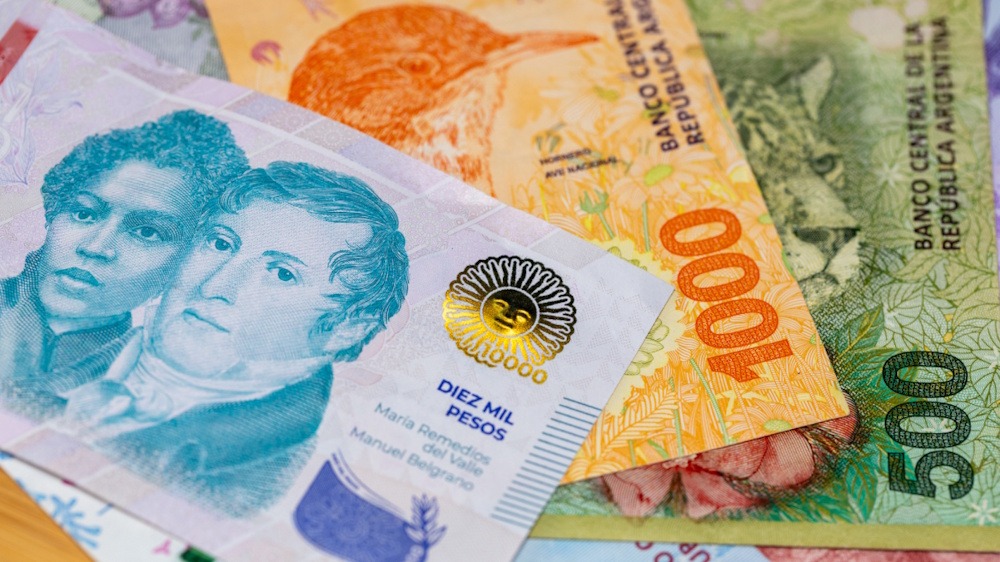
The evident decline in Argentine salaries is a trend that has been in place prior to President Javier Milei’s administration. It is important to highlight that wages experienced a more pronounced decrease during the final year of the Alberto Fernández administration (2023) and the initial years of the libertarian government. A recent report indicates that wages have declined by 20% over the past eight years, marking the worst performance in the region of Latin America. Analysts concur that the downturn is closely associated with the broader economic environment. “Given this macroeconomic behavior, it would have been quite unexpected for wages to increase or even hold steady,” economist Luis Campos stated in an interview. In a similar vein, analyst Federico Pastrana attributed it to a “macroeconomic crisis and the falling of gross domestic product per capita.” In 2025, GDP experienced a growth of 4.4%, succeeding declines of 1.3% in 2024 and 1.6% in 2023. The indicator experienced a rebound of 10.4% in 2021 and 5% in 2022, following a significant decline of 9.9% that occurred after the conclusion of Mauricio Macri’s administration in 2019 and the onset of the pandemic. Since 2017, income has experienced a downward trend, with significant declines occurring in the aftermath of the currency crisis of 2018–2019 and the subsequent pandemic. This was exacerbated by inflation, which continued to diminish purchasing power.
“Although several consecutive years of economic growth were achieved after the end of the convertibility regime (1991-2002), Argentina was not able to sustain that process beyond 2011,” noted data center Argendata. Public sector wages experienced a decline of 35.23% in real terms from 2017 to 2025, as indicated by INDEC’s wage index and CPI. Throughout that timeframe, the sole years in which they did not decline were 2017 — marginally surpassing inflation — and two years under Alberto Fernández (2021 and 2022). Private sector wages, in contrast, experienced a decline of 18.94% in their purchasing power from 2017 to 2025, with significant reductions noted towards the conclusion of Mauricio Macri’s tenure (-11.69% in 2018 and -6.16% in 2019). The Milei administration has experienced a cumulative real decline of 1.55% since assuming office. The conclusion of 2025 presented challenges for workers in both the public and private sectors. The former experienced a decline of 0.76%, whereas the latter decreased by 2.13%. Under Milei, their purchasing power has decreased by 17.03% and 1.55%, respectively. The region, on the other hand, is undergoing a phase of subdued growth, with an average annual expansion of approximately 2%, thereby constraining advancements in employment and income levels. However, Argentina’s average annual wage reflects the region’s most significant decline, with an 18.8% decrease in purchasing power from 2018 to 2024.
In contrast, Mexico and Costa Rica occupy the top positions in the ranking, achieving gains of 22.4% and 11.6%, respectively. The increase of over 20% in Mexico’s average annual wage is noteworthy, particularly in the context of Latin America’s historical inflationary pressures. Carlos Ramírez stated that “minimum wage was tied to inflation for many years” without any actual gains. The scheme underwent modifications in 2016. “Beginning in 2016, Mexico initiated an increase in its minimum wage that outpaced inflation; however, it was only with the inauguration of Manuel López Obrador that this movement gained significant momentum,” Ramírez elucidated. Compensation increases have consistently ranged from 20% to 25% per annum, driven by a political initiative aimed at enhancing income levels. “They began to escalate it swiftly due to political motivations,” he added. The outcome has been a remarkable rise in historical context, albeit with economic subtleties: “They were eight years in which minimum wage grew at double digits, which has led to more than a 100% increase,” Ramírez explained. This process largely elucidates Mexico’s superior relative performance in contrast to the declining purchasing power observed in Argentina. Campos and Pastrana, however, both observed that wage increases should ideally coincide with economic growth. Mexico experienced a growth rate of 1.4% in 2024, followed by a further increase of 0.8% in 2025. Ramírez noted that there is currently a heated debate in Mexican society regarding the impact of wage increases on inflation, particularly in services. He also noted that “employment has grown much less” and that the Mexican economy has exhibited weak performance in recent years. “Wages have been growing well above inflation while productivity has not increased,” which could be making the economy “more rigid,” the expert concluded.
Costa Rica experienced an 11.6% enhancement, positioning it as the second-best performer in the region. World Bank data indicates that GDP has been expanding at approximately 4%. Wage increases in 2022 and 2023 approached 8%, as noted by analyst Daniel Suchar Zomer. “We have remained outside the target range for 30 months, with nearly 26 months experiencing inflation rates around 0%, or even slightly negative.” He explained “The consumption basket has become cheaper month by month, leading to an appreciation in wages.” Suchar Zomer noted that Costa Rica experiences a “restrictive inflation rate, with interest rates surpassing inflation — even exceeding the regional average, which has resulted in individuals from other countries exchanging dollars for local currency, thereby exerting pressure on the exchange rate.” Suchar Zomer noted that deflation has not significantly affected the economy, as Costa Rica maintains “strong ties with the global economy through free trade zones, exports, and tourism.” He articulated “Although a deceleration might be observed in areas beyond free zones, consumption levels continue to be satisfactory. Indeed, we rank as the second fastest-growing nation in Central America, achieving growth rates exceeding 4%.” In light of these regional instances, the conclusion is unequivocal: for enduring wage growth in Argentina — and in the majority of nations — macroeconomic stability is a prerequisite. In the absence of sustained growth coupled with elevated inflation, the recovery of wages continues to be a challenging prospect.
