
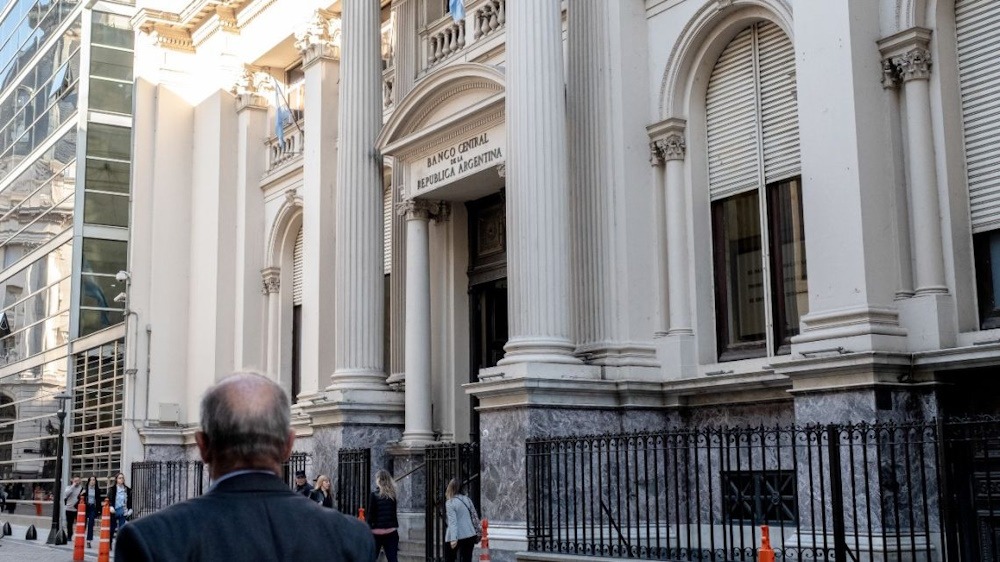
The Central Bank of Argentina (BCRA, for its Spanish acronym) achieved its 2026 dollar-buying target with the International Monetary Fund in merely six months, driven by robust performance in the agriculture and energy sectors. As of the end of last week, the BCRA had acquired US$10.1 billion in 2026, exceeding the US$10 billion full-year target — a significant achievement that positions Milei’s government favourably to fulfil its IMF reserves accumulation objective for the first time since assuming office. Last week, Economy Minister Luis Caputo addressed the accomplishment. “In a highly favourable scenario, we anticipated that, assuming optimal conditions, the Central Bank might acquire US$7 billion throughout the year. However, maintaining the current pace could result in acquisitions totalling US$24 billion.” He added that by 2031, “the energy and mining trade balance will reach US$60 billion — that’s US$40 billion more than today.”
The research firm 1816 stated, “The market has been waiting for some time for the moment when energy would become as important to the balance of payments as farming, and that future has already arrived.” The same report elucidated that the revenues generated from oil, gas, and mining during the initial four months of the year equalled those from grains and oilseeds, amounting to US$8.1 billion for each sector, as per the data provided. “These numbers make it more than clear that energy and mining are the future — but they’re also the present and the recent past,” 1816 stated. The most recent data seems to corroborate that assertion. Mineral and hydrocarbon output recorded its second consecutive monthly increase in April, reaching a new peak, as reported by INDEC’s Mining Industrial Production Index. The market is currently observing the government’s overarching objectives regarding dollar accumulation. Ignacio Morales stated in a report that “the market is now weighing the room to push toward more ambitious targets.”
Despite the BCRA having purchased the US$10 billion it aimed for in the full year, it still faces the obligation of servicing local and foreign debt, which continues to deplete its reserves. For that reason, the BCRA’s acquisition of dollars does not necessarily equate to an increase in reserves. That indicates the BCRA must persist in purchasing foreign currency to fulfil the accumulation target established by the IMF. By the end of the year, it must increase net reserves by US$8 billion. Market estimates indicate that the BCRA’s net reserves have accumulated to a range of US$5.6 billion to US$7.9 billion. “Bear in mind that Argentina missed its 2025 accumulation target by US$10.5 billion, which is why the fund sharply lowered the target levels for this year,” 1816 stated.
In alignment with that perspective, the research firm LCG noted that “after the easing that came with the second review by the IMF, the effort needed to meet the December target looks smaller in this context.” In this context, 1816 remarked that the objective of increasing reserves by US$8 billion this year “wasn’t easy at all and, at this point, looks very achievable.” Both consultancies estimated that the June reserves accumulation target has already been exceeded by US$2 billion. Eric Ritondale stated that the full-year net reserves accumulation target “is now nearly 70% met, with more than six months to go before year-end.” For that reason, he anticipates an overshoot of between US$2 billion and US$3 billion by year-end in relation to the IMF program target. It would mark the inaugural occasion on which Milei’s administration fulfils this commitment.
