
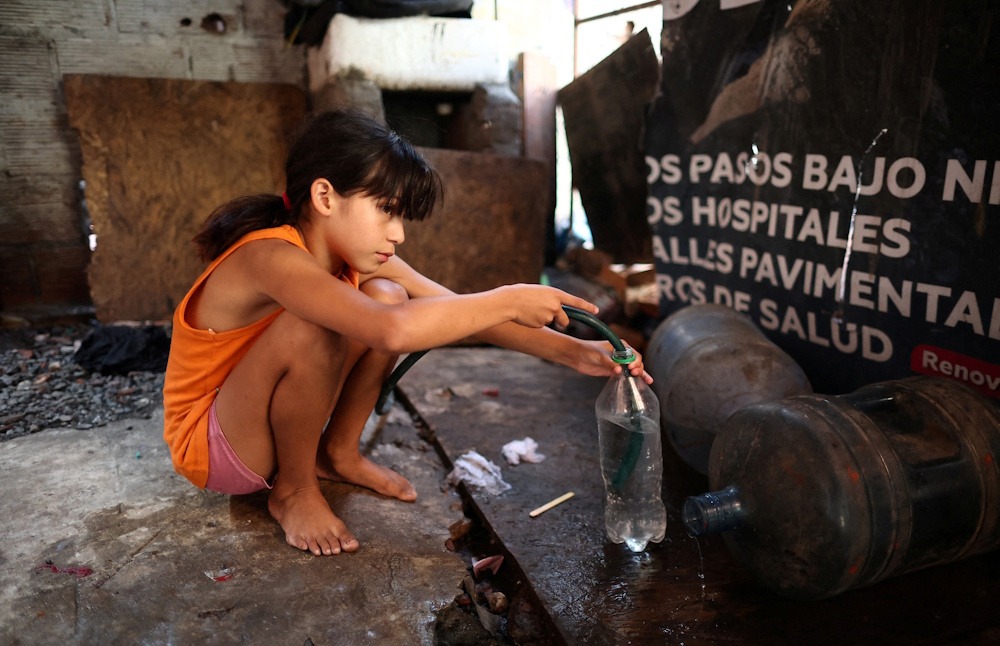
Child poverty in Argentina decreased to 42.3 percent last year, marking its lowest point since 2018, as reported. In a report released on Tuesday, the Argentine branch of the UN agency for children indicated that by the conclusion of 2025, 5.1 million children and adolescents were residing in impoverished households, a decrease from 6.3 million in 2024. The organisation’s figures pertain to the latter half of 2025, indicating that four out of ten children and adolescents in Argentina – specifically, 42.3 percent of all minors – resided in impoverished households, with 9.4 percent experiencing extreme poverty, as detailed in the report derived from governmental data.
Source cautioned that the declining trend observed in the same period of 2024 could potentially reverse in the first half of 2026, forecasting that child poverty might increase to approximately 44.4 percent. According to the report, factors such as alterations in household incomes, the pricing of essential goods and services, labour market dynamics, and social transfers will be pivotal in assessing whether the recent enhancement can be maintained. According to source, among the 5.1 million children and adolescents residing in poverty, 1.1 million were experiencing extreme poverty. The number of children in extreme poverty decreased by 52.7 percent relative to the latter half of 2024, according to the organization.
The report also emphasises educational inequality as a significant factor contributing to social disparities. In households characterised by low educational attainment, the incidence of child poverty stands at 68 percent, escalating to 74.8 percent in instances where the primary earner is unemployed. Source identified that child poverty impacts 52.8 percent of households led exclusively by women. Meanwhile, 70% of households with children indicated that they have, at some point, employed various strategies to enhance their income. These strategies include borrowing funds, liquidating personal assets, or acquiring goods through credit purchases. Another concerning finding was that 42.8 percent of children experience at least one non-monetary deprivation, encompassing deficiencies related to housing, sanitation, access to water, living conditions, education, or social protection.
The report indicates that, without cash transfer programmes, the rate of extreme poverty among children would be six percentage points higher. Ultimately, the research substantiated that poverty exerts a more pronounced impact on children and adolescents compared to the broader population. In the latter half of 2025, the overall poverty rate was recorded at 28.2 percent, with a significantly higher rate of 42.3 percent observed among children and adolescents. A comparable disparity was observed in extreme poverty, impacting 6.3 percent of the overall population in contrast to 9.4 percent of minors. UNICEF has issued a warning regarding a likely rise in child poverty in the first half of 2026, contending that the economic recovery remains tenuous and has not yet solidified.
