
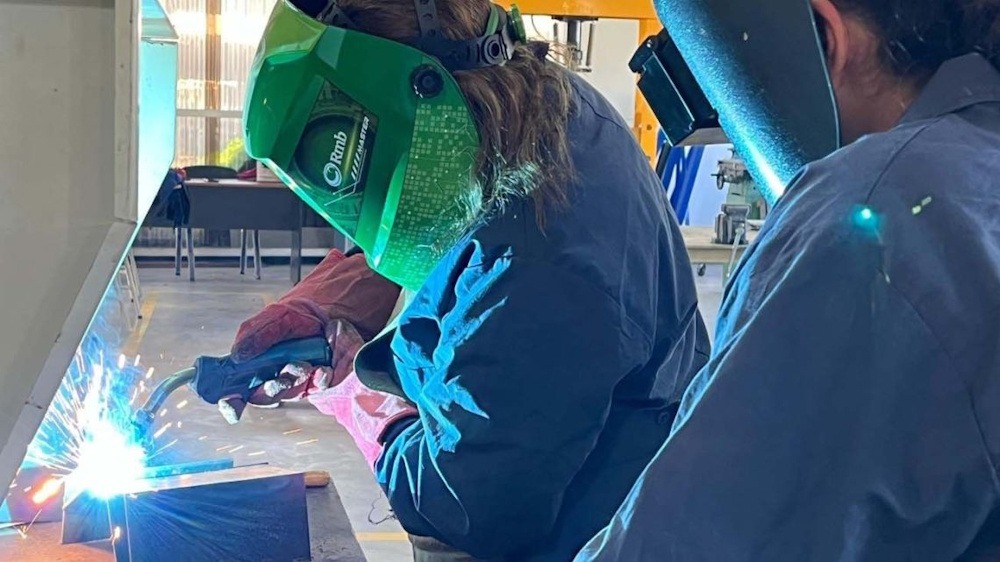
Argentina’s economy is at an unusual juncture. In contrast to numerous previous periods in the nation’s recent past, the fluctuations of the U.S. dollar — historically the primary focus of economic discourse — have shifted away from being the focal point of current discussions. Inflation is not either. Although it remains elevated relative to the rest of the region—registering at 1.9% in June—it has exhibited indications in recent months of returning to a downward trend. That does not imply, however, that President Javier Milei’s economic model is devoid of critique. Instead, criticism has pivoted toward the sectors most intimately linked to domestic consumption: manufacturing, construction, and retail. These entities are also among the largest employers in the country. Not every segment of the real economy is facing difficulties. The oil and gas sector is currently witnessing a significant upswing, propelled by the notable rise in production at Vaca Muerta. Other labour-intensive sectors, however, have faced significant challenges. These sectors encompass retail, construction, and manufacturing — with manufacturing arguably the most affected by the administration’s economic model. Between November 2023 — the month preceding Milei’s assumption of office — and June 2026, data from Argentina’s national statistics agency indicates a decline in industrial output of 7%. Industrial capacity utilisation is presently at 58.4%. One of the most prominent cases was the closure of tyre manufacturer Fate, established in 1940 and historically regarded as a symbol of Argentine industry. In recent days, Economy Minister Luis Caputo attempted to minimise the challenges facing the industry, labelling critics as “idiots.” And “It sounds as if we had been experiencing an industrial boom, that between 2011 and 2023 the economy was thriving, and that industry was highly competitive and growing spectacularly. The reality was exactly the opposite,” he said. During that period, Caputo added, the sector contracted by 10%, “despite being subsidized through utility rates paid for by all Argentines.” Retail has faced challenges in its recovery due to persistently weak consumer demand. Supermarket sales experienced a decline of 8.47% from November 2023 to May 2026.
The decline has been particularly pronounced among small retailers. According to the Argentine Confederation of Medium-Sized Enterprises (in Spanish, CAME), sales at small and medium-sized businesses experienced a decline of 24% from November 2023 to June 2026. The government has consistently maintained that the decrease in consumption via traditional retail channels is indicative of evolving consumer habits rather than a fundamental collapse in demand, highlighting instead the swift growth of e-commerce. Private consultancy Scentia estimated that online purchases increased by 34.8% during the first half of 2026. However, the same report indicated that this growth was insufficient to counterbalance the overall decline in consumption, which fell by 2.9% year-to-date. Construction has also faced significant challenges. Since Milei took office, activity has decreased by 20%, as reported by INDEC data. The decline is a direct consequence of the libertarian government’s decision to halt public infrastructure spending as part of its effort to achieve a fiscal surplus. Together, the three sectors constitute almost 38% of employment in Argentina. Retail accounts for 19.2% of total employment, with manufacturing following at 10.8% and construction at 8.4%. The government contends that swift expansion in extractive industries, including mining and oil, will ultimately compensate for employment declines within those sectors. Currently, primary industries represent a mere 0.9% of total employment in Argentina. The government maintains a positive outlook. Deregulation Minister Federico Sturzenegger predicted several months ago that millions of people would relocate across Argentina to take advantage of opportunities created by these industries. In the context of Neuquén, it is estimated that the development of Vaca Muerta could potentially draw in 1.5 million new residents over the forthcoming three decades. Mining projects, meanwhile, could result in an influx of one million people to Catamarca and an additional 800,000 to San Juan.
According to the think tank Fundar, Argentina has experienced a decline of 28,262 companies since Milei assumed office — representing 5.5% of the nation’s businesses. The decline, the steepest recorded during the first 29 months of any Argentine administration, is one of the factors contributing to rising unemployment and worsening job insecurity. In the first quarter of 2024, the unemployment rate stood at 7.7%, reflecting an increase of 0.8 percentage points compared to the corresponding period in the previous year. The latest official figures from INDEC indicated that unemployment has risen to 7.8% in the first quarter of 2026. Simultaneously, informal employment has persisted in its upward trajectory, now accounting for 44.2% of the workforce — the peak level since the fourth quarter of 2023, when the existing methodology was implemented, as reported by consultancy Analytica. And “The level of informal wage employment in the first quarter was the highest since the end of 2007, comparable only to the fourth quarter of 2008 and the second quarter of 2022,” the firm said. Analytica emphasised that “looking only at the unemployment rate can be misleading,” due to the significant deterioration in the quality of employment. “Formal employment declined by 166,800 jobs while informal employment increased by 379,600, resulting in a net increase in low-quality employment,” the consultancy noted. This trend has also driven an increase in the number of individuals employed as app-based delivery drivers and ride-hailing drivers. According to the App-Based Workers Union (Sitrarepa, for its Spanish acronym), approximately one million individuals are currently engaged in work facilitated by digital platforms. Even within the formal economy, workers have faced increasing pressure. Between November 2023 and May 2026, registered private-sector wages experienced a decline of 3.6% in real terms, as per estimates.
The losses have been even more pronounced for public-sector employes, with their real wages experiencing a decline of 17.8% since Milei assumed office. Federal government employes have experienced the most significant impact, enduring a 36.5% decline in purchasing power. Provincial public-sector workers, meanwhile, have experienced a decline of 9.8%. The minimum wage has also been one of the most adversely affected under the libertarian administration. Estimates from the Center for Research and Training of the Argentine Republic, which is associated with the Argentine Workers’ Central Union, indicate that the minimum wage has experienced a decline of over 40% in its purchasing power since Milei assumed office. This has unfolded alongside a phenomenon rarely observed in recent decades: a significant rise in household loan delinquency has attained unprecedented levels. Estimates from consultancy 1816 indicate that the household default rate peaked in May, with 12.8% of all loans classified as delinquent. The upward trend finally paused in June after 19 consecutive months, albeit only marginally, with the delinquency rate easing to 12.7%. Central Bank head and Caputo’s right-hand man, Santiago Bausili, acknowledged during a press conference this week that household delinquency “is a problem” but argued that it is approaching a turning point. “These processes are slow. I compare them to digestion,” he said. “They have their own dynamics, which are very difficult to accelerate. They follow their own timeline,” Bausili added, once again ruling out any government bailout for indebted households, saying it is ultimately a matter between private parties.
