
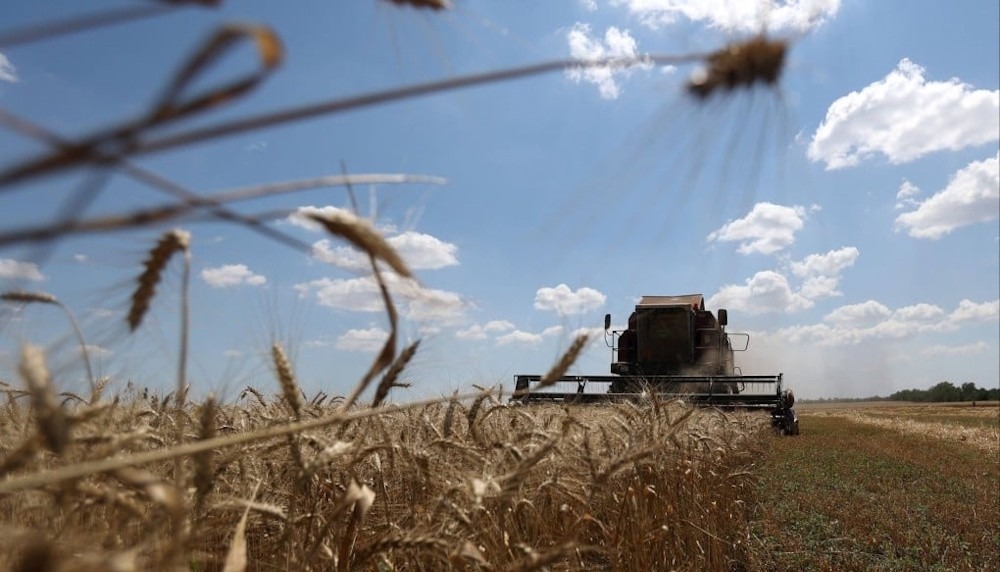
President Javier Milei has received encouraging news regarding the outlook for 2027, as preliminary assessments from the agricultural sector indicate a potential record in grain production for the upcoming year. Projected production is 158 million tonnes, according to estimates from the Buenos Aires Grain Exchange, a prominent trade association within the Argentine agricultural sector. This represents a 0.5% increase relative to the 157 million tonnes recorded in 2026. According to this data, the exchange anticipates that economic activity associated with the agro-industrial sector will amount to US$54 billion, reflecting an increase of nearly 6% compared to the previous cycle, while exports are expected to reach US$41 billion, marking a 6.9% rise. Ramiro Costa, general manager of the agricultural chamber, clarified that these figures are not yet definitive. “They represent the potential we see today and will depend on how the weather and production decisions evolve over the coming months,” the economist remarked. Despite the robust growth in mining and oil and gas production in terms of output and exports, the agricultural sector continues to be the primary source of foreign exchange for the Argentine economy. Between January and August 2026, primary products and agricultural-based manufactured goods – excluding meat and meat products – represented slightly more than 50% of the US$67 billion in goods exported by Argentina.
Among the favourable indicators for the upcoming crop year, the chamber highlighted the decrease in agricultural export duties enacted by the government several months prior. Milei announced the reduction last May during a ceremony commemorating the 172nd anniversary of the Grain Exchange. In that speech, he confirmed a reduction in tax rates for wheat and barley from 7.5% to 5.5%, set to take effect in June 2026. In the context of soybeans, he pledged to implement a gradual reduction starting in January 2027 and extending through 2028, contingent upon revenue trends. During the presentation, the organization’s president, Ricardo Marra, stated that moving progressively toward the elimination of export duty taxes was “essential,” not only because it “improves producers’ bottom line,” but also because it “creates better incentives to produce, invest, adopt technology, and export.”
While the businessman maintained a generally optimistic tone, Marra also expressed some reservations. He asserted that growth necessitates competitiveness, which “does not end at the ranch gate.” Marra outlined several obstacles that must be addressed to enhance production and exports in the coming decade, emphasising the need for improvements in infrastructure, including roads, railroads, access to ports, and waterways. “We also need to continue expanding market access and the international integration of our agribusiness sector, removing barriers, forging agreements, and ensuring that Argentina can compete in an increasing number of markets with products of higher value-added,” he noted. Marra’s comments gain importance when one considers that one of Argentina’s key competitors in the international agricultural products market is its Mercosur partner, Brazil.
The agricultural rivalry between Argentina and Brazil was clearly highlighted during the unveiling of the chamber’s third edition of the Mercosur Outlook, which provides a forecast for the regional agricultural sector extending to 2036. According to the chamber’s estimates, Mercosur, comprising Brazil, Argentina, Uruguay, and Paraguay, currently exports food valued at US$197 billion annually. Brazil holds the position of the world’s foremost exporter, with Argentina ranking third. The bloc accounts for 59% of global soybean exports and 36% of global maize exports. Mercosur projections indicate an increase in cereal and oilseed production, escalating from nearly 535 to 591 million tonnes, reflecting an 18.7% growth. The planted area is projected to increase by 9.6%, while exports are expected to rise by 18.1%. Corn is projected to spearhead the increase in volume, contributing an additional 52 million tonnes, with 64% of this growth originating from Brazil. Subsequently, soybeans would account for an additional 34 million metric tonnes, with 75% sourced from Brazil, while wheat would contribute an extra 5.3 million tonnes, predominantly from Argentina at 74%.
