
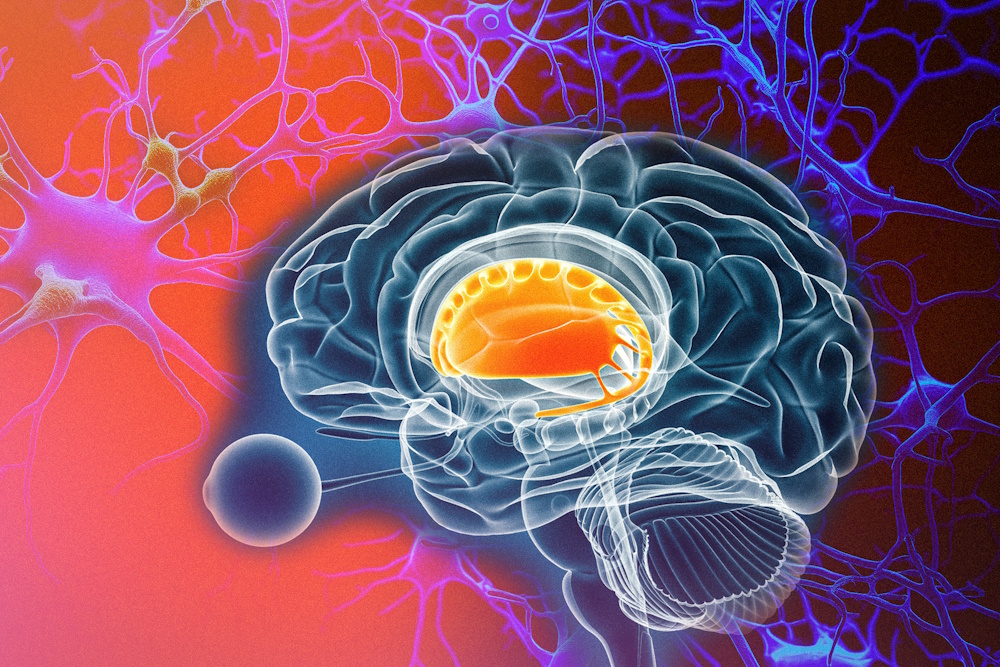
Your brain doesn’t distinguish between almost winning on a pokie reel and watching a stock price increase. Dopamine fires identically in both cases, which explains a lot about modern financial behavior and slot machines.
Your phone buzzes.
It’s a price alert – your portfolio dropped 1.4% since breakfast. You check it again 12 minutes later even though nothing changed, and you know you’re going to check it a third time before lunch. That impulse, the automatic thumb-swipe to an investment app, sets off the same dopamine pathway as watching three reels slow down on a slot machine.
The neurological overlap between gambling and compulsive portfolio monitoring is well documented.
There’s a reason popular casino platforms put so much effort into structuring their pokie environments around clear bonus terms and transparent wagering requirements. For example the Voltrush welcome bonus comes with deposit limits, loss limits, wager limits, and self-exclusion tools.
When you look at how carefully the casino industry now thinks about responsible play, it becomes obvious that the designers of these environments understand the power of this dopamine loop.
Why Your Brain Can’t Tell It Lost
In 2009, Dr. Luke Clark and his team at the University of Cambridge ran a study scanning the brains of volunteers while they played a computerized slot machine. Results published in the journal Neuron found that near-miss outcomes activated the ventral striatum – the brain’s reward center – in a pattern nearly identical to actual monetary wins.
Two cherries and a lemon produced a dopamine response almost indistinguishable from three cherries, even though the financial outcome was a total loss.
Clark described the finding in direct terms.
In the University of Cambridge press release accompanying the study, he confirmed that “the brain responds to near-misses as if a win has been delivered,” even when the outcome is a clear financial loss. Reward circuitry doesn’t distinguish between almost winning and actually winning.
Here’s the underlying problem: our reward system evolved to handle skill-based activities like throwing a spear or catching a ball, where almost succeeding really does mean you’re getting closer.
Slot machines hijack this.
The difference is that almost winning on a game of pure chance is statistically meaningless – but your ventral striatum doesn’t care about the distinction.
A follow-up study by Chase and Clark in 2010 extended these findings to regular gamblers. Those with severe symptoms had much stronger midbrain dopamine responses to near-misses, and the correlation was linear – the worse the habit, the louder the brain’s reward signal fired in response to what was, on paper, a straightforward loss.
Portfolio Checking Is the Financial Version
Behavioral economists Shlomo Benartzi and Richard Thaler identified the financial parallel back in 1995.
Their concept – myopic loss aversion – describes investors who check their portfolios so frequently that they constantly encounter small, short-term losses. Because humans feel losses about twice as painfully as equivalent gains (a finding from Kahneman and Tversky’s prospect theory), frequent checking produces chronic distress that warps decision-making.
Benartzi and Thaler’s research through the National Bureau of Economic Research found that investors behave as if they’re evaluating their portfolios on roughly a one-year cycle, even when their actual investment horizon is decades.
This mismatch between evaluation frequency and time horizon is where the damage happens. Anyone who checks currency exchange rates ten times a day during a volatile period knows the feeling.
And the dopamine component works in reverse compared to slot machines.
With pokies, a near-miss gives you a reward signal you didn’t deserve. Portfolio checking does the opposite – a small temporary dip gives you a pain signal you didn’t need, and the urge to act on it is almost as strong. Both outcomes distort behavior in opposite directions, which is the part that rarely gets discussed.
Slot players play too long. Portfolio checkers sell too early, often within hours of a dip that would have corrected by the following week.
Hans Breiter at Northwestern Medical School has noted that the dopamine response to financial anticipation mirrors the response observed with drug use – it’s the uncertainty itself that activates the reward circuit, not the outcome.
How the Two Loops Compare
| Feature | Slot Machine Dopamine Loop | Portfolio Checking Loop |
| Primary trigger | Near-miss visual feedback | Small price movement |
| Dopamine response | Fires on almost-wins | Fires on price uncertainty |
| Behavioral result | Continued play past rational limits | Repeated checking past useful frequency |
| Distortion type | Overestimation of winning probability | Overreaction to short-term loss |
| Frequency | Seconds between spins | Minutes between price checks |
| Exit difficulty | High – variable reinforcement schedule | Moderate – loss aversion anchoring |
Useful up to a point, that comparison. Where it falls apart is in how people relate emotionally to each activity – and if they’re even ready to call it a problem.
An investor checking a stock price at 11pm will almost always deny it’s compulsive.
A pokie player at 2am often knows they’ve crossed a line, even if they can’t stop. The self-awareness gap between the two loops is wider than the neurological gap ever was, and that’s worth sitting with for a minute.
Smartphones Removed the Friction
Mobile devices turned both loops into always-available behaviors. Before apps, you had to walk into a venue to play pokies or call a broker to check a price. Now the VoltRush mobile platform loads in seconds. Robinhood sends live alerts at 4am about after-hours price changes nobody asked for. The friction that once protected people from their own impulses has disappeared.
Specific features that amplify the dopamine cycle in both environments:
- Live alerts timed to price volatility or new game availability
- Color-coded profit/loss displays that mimic win/loss animations on pokie reels
- One-tap access to repeat your last action – another spin or another trade
- Social feeds where other users post their wins, creating comparison pressure
- Achievement badges tied to trading milestones or deposit thresholds
VoltRush handles this well. Its welcome bonus page discloses terms upfront, and on its responsible gambling page, players can take a range of measures. These include tightening deposit limits immediately (increases require a 24-hour cooling-off period), setting loss limits and wager limits, taking time-outs from one day up to three months, or opting for self-exclusion up to permanent closure.
These tools exist because the casino industry recognizes what the brokerage industry hasn’t fully acknowledged yet – that the dopamine loop doesn’t stop operating just because you’re aware of it.
Awareness Alone Isn’t Enough
Knowing how the dopamine loop operates doesn’t immunize you against it. Clark’s 2009 study demonstrated that even healthy volunteers who rarely gambled experienced the near-miss reward response.
It’s pre-conscious – it fires before you have time to evaluate the outcome rationally.
That’s what separates a dopamine loop from a bad habit.
There’s a parallel in financial markets too. Behavioral finance researcher Brad Barber at UC Davis published data in 2009 demonstrating that individual investors who traded with the highest frequency produced the lowest net returns, and the gap wasn’t small. Overtrading, driven by compulsive checking, cost the most active group several percentage points annually.
For pokies specifically, Australia is worth paying attention to. It has one of the highest concentrations of slot machines per capita globally, and per-player losses remain among the steepest in the world.
High access combined with high loss, plus a dopamine circuit that can’t distinguish between winning and almost winning – that combination is exactly where responsible gambling tools prove their value. VoltRush’s player protection tools, from deposit caps to self-exclusion, are designed around this reality.
Responsible Gambling Notice
Online gambling is a form of entertainment, not a source of income. Players should set personal deposit and time limits before every session. Gamble responsibly and only with money you can afford to lose. 18+ only.
Author Bio
David Fox is an experienced iGaming writer covering online poker, casino technology, gambling trends, and digital gaming culture across international markets. His work focuses on player behavior, platform innovation, and the changing relationship between gambling and online entertainment.
