
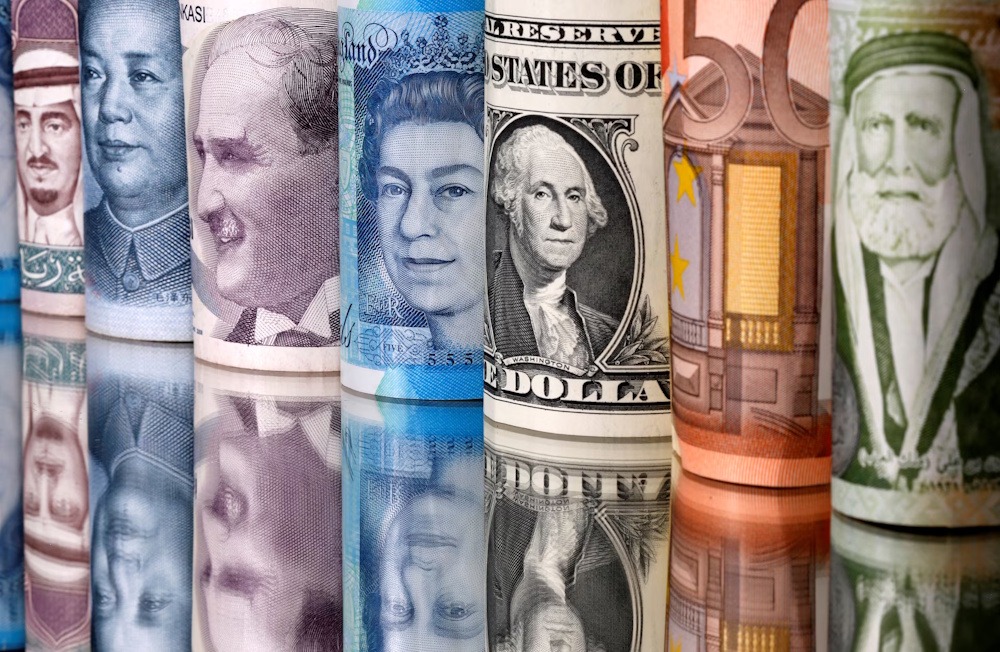
In a manner reminiscent of the coordinated efforts seen during Javier Milei’s administration last year, Washington has engaged in a collaborative initiative with Japan aimed at stabilising the yen, which has recently reached its lowest value in four decades. The operation —which involved a massive purchase of yen— elevated the value of the Japanese currency and exerted pressure on the Japanese stock market. On Monday, the Nikkei 225 experienced a decline of 1.02%. “We will not hesitate to conduct further coordinated intervention,” Finance Minister Satsuki Katayama told reporters on Monday. The yen surged over 1%, reaching 155.20 per dollar following the announcement — marking its highest level since early May and significantly above the four-decade low of nearly 164 recorded last month. It currently trades at 156.66 per dollar. The joint action was the first since the coordinated operation of 2011, after Japan’s devastating earthquake. According to estimates, “the Japanese probably sold US$70 – US$80 billion over the last three days” to keep their currency from depreciating further. “Why now? Perhaps US Treasury Secretary Scott Bessent had felt that the weak yen was undermining JGBs, which, in turn, was weighing on Treasuries,” the Dutch bank’s experts said.
A photo captured Bessent’s notepad during a cabinet meeting on July 31. It read: “To Do. Buy Japanese Yen (JPY) US$5-10 bil.” Even so, ING said the intervention “does not change the fundamentals of a Fed close to hiking and Tokyo running a loose set of monetary and fiscal policies, which are weighing on the yen.” The bank said it “struggle[s] to see” that bilateral action bringing the yen below 155 per dollar, though it explained that it “does serve as a containment exercise,” keeping investors from pushing the yen past 160 and “buying time for Tokyo to introduce more yen-positive policies.” Financial analyst Gastón Lentini elucidated that for an extended period, in an effort to mitigate the depreciation of the yen, the Japanese government has engaged in the sale of U.S. Treasury bonds. Japan is, in fact, the largest holder of Treasuries globally. “When it needs to buy yen, it sells those bonds, which drives the price down and pushes the yield up. In other words, when they want to defend the yen, they indirectly affect U.S. interest rates,” Lentini said. The analyst explained that those rates determine, for example, the cost of Americans’ mortgages. “If you’re 30 years into debt at 3%, but now you have to pay 7%, as an American citizen you’re not going to be happy — and you’re probably going to be worried,” he said. He noted that the U.S. deficit tops 5.9%, on top of rising oil prices driven by the war and Japan selling Treasury bonds.
“Bringing inflation down looks difficult,” Lentini said. He added that if the Fed raises rates to contain inflation, “it could simply speed up the process that makes all U.S. debt harder to service.” Furthermore, should the Federal Reserve opt to increase interest rates, it would impact the global economy, fostering a risk aversion among investors that could adversely affect Argentina’s country risk—particularly as the nation seeks to re-enter the international debt market. Due to its historically low interest rates, Japan has long served as a prominent source of financing for global financial markets, leading to the phenomenon known as the yen carry trade. Consequently, any determination made by the Bank of Japan regarding interest rates, or by the Japanese government concerning its fiscal policies, holds significant relevance for the global economy. A more restrictive environment driven by a sharp BoJ rate hike, for instance, could limit global liquidity, impacting risk assets and emerging markets — such as Argentina’s — initially. Conversely, an excessively lax fiscal policy under Sanae Takaichi’s administration may cast uncertainty on the sustainability of Japan’s sovereign debt.
“The intervention could force a reduction in carry positions funded in yen and generate volatility in Asian stocks, credit and emerging-market currencies,” said Felipe Barragán. He stressed, however, that the ability to produce a “lasting” appreciation of the yen will depend on it being accompanied by “an effective convergence of monetary policies.” And “As long as U.S. rates stay well above Japanese ones, the fundamental incentives to rebuild those positions will persist,” he added. On Friday, the Bank of Japan maintained its interest rate at 1%, aligning with market expectations. Its statement cautioned that core inflation is likely to rise “clearly above” 2% in the latter half of fiscal 2026, referencing increasing crude prices, the depreciation of the yen, and the transmission of wage increases to prices.
