
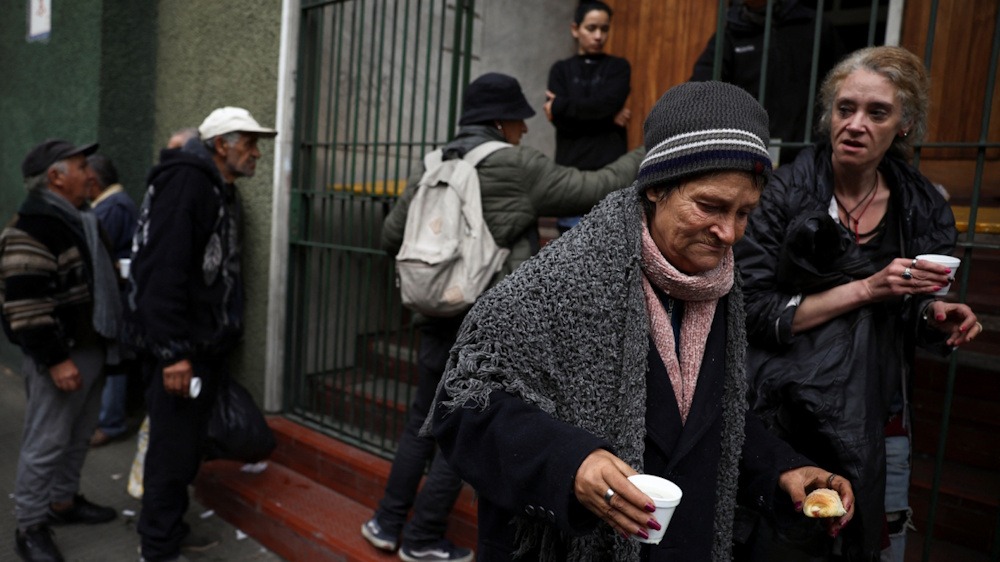
Poverty and destitution in Argentina have seen a notable decline over the past year; however, the current levels still exceed those reported by official statistics, according to a credible watchdog. A report released on Thursday by the Social Debt Observatory of the Argentine Catholic University indicates that poverty was recorded at 36.3 percent, while extreme poverty reached 6.8 percent by the conclusion of the third quarter. A report indicated a significant year-on-year decline from the respective figures of 45.6 percent and 11.2 percent recorded in the same period of 2024. The watchdog’s data indicates that poverty decreased by 9.3 points relative to the same period last year and by 8.4 points from the third quarter of 2023, immediately prior to President Javier Milei assuming office. “Correcting the calculation due to the improvement in income collection, the real fall in monetary poverty under the current administration would only be” 2.1 percentage points, and corrected poverty would be around 35 percent (using values corrected from the collection of the second quarter of 2025). The sectors that experienced recovery “were the lower middle segments that had been excluded by inflation and devaluation” in the initial months of 2024, stated Agustín Salvia.
In recent years, poverty measurements, esteemed by experts, have consistently registered several points higher than those reported. Experts indicate that the distinction lies in the methodology of poverty measurement – while the government relies on a strictly monetary value, the academic team employs a multi-dimensional framework. The report’s poverty data derive from an examination of monetary deprivation (income poverty and destitution) alongside additional indicators, including economic stress and food insecurity. A report conducted by the observatory, alongside information spanning the years 2010 to 2025. Latest official figure indicated that poverty stood at 31.6 percent in the first half of 2025, compared to 38.1 percent during the same period in 2024. An update is unlikely to materialize before the new year at the earliest.
Salvia asserts that “there is an overestimation” of household purchasing power in the official measurement, which relies on an outdated basic basket that reflects the spending structures of 2004-2005 and fails to adequately account for the significance of utilities in a family’s expenses. “In any case, poverty fell, extreme poverty fell, food insecurity fell and economic stress eased,” said Salvia, in comparison to 2024 and even 2023. Nonetheless, the report raised concerns regarding “structural poverty that has not changed.” Salvia remarked that it had been “alleviated thanks to the increase in income-transfer programmes,” such as the Universal Child Allowance, indicating that income poverty has consistently hovered around a structural floor of approximately 25 percent of the population, with extreme poverty remaining around five percent, over the last twenty years.
The lower third of Argentina’s social structure is characterized by a population ensnared in poverty, primarily due to informal, precarious, or subsistence employment, alongside a structural reliance on public transfers, cautioned the expert. Since assuming office in December 2023, President Javier Milei has successfully reduced inflation significantly, albeit through stringent fiscal measures, while also preserving and even augmenting family allowances. In Argentina, inflation reached 107 percent during the initial ten months of 2024, subsequently declining to 24.8 percent in the corresponding timeframe of 2025. Despite the positive measurement, the report’s authors depict a nation that has experienced macroeconomic stabilization in 2024-2025, yet simultaneously faces heightened economic, social, and subjective stress, particularly among the most vulnerable sectors. The study indicates that the country is experiencing “an unstable transition,” characterized by recent improvements that coexist with ongoing deficits in structural poverty, informality, and psychological well-being.