
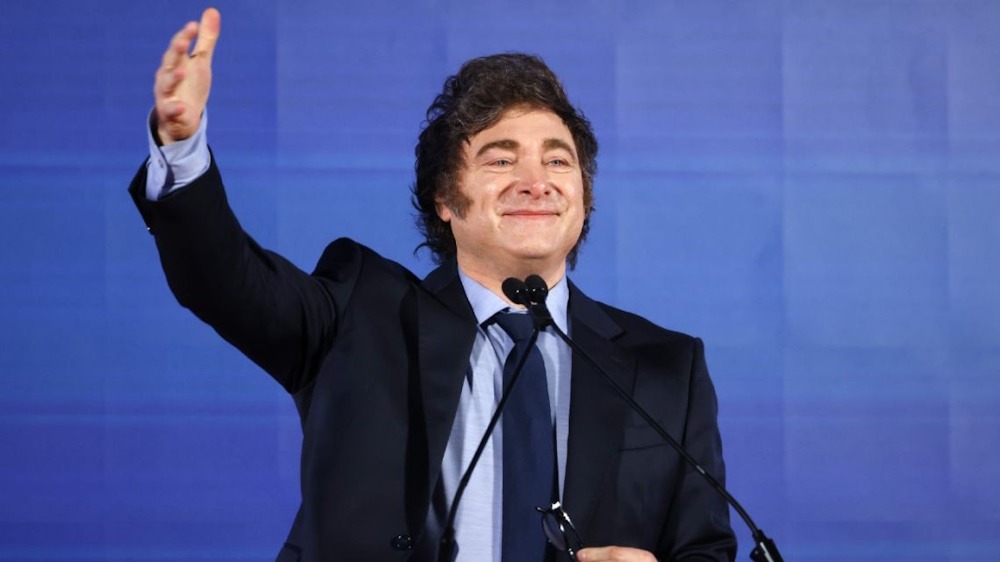
President Javier Milei’s administration has significantly reduced inflation — from 211% annually in 2023 to 31% in 2025 — and achieved two consecutive years of fiscal surplus, a feat not accomplished in Argentina since the initial Kirchner administration nearly two decades prior. However, his popularity has been declining for several months. The decline cannot be attributed solely to corruption cases involving members of his cabinet. The situation also illustrates the impact of the significant fiscal reductions that Milei has enacted and persists in implementing on the Argentine economy. The renowned “chainsaw” represents a strategy aimed at reducing public expenditure to maintain control over inflation. It carries political ramifications as well — and these are beginning to show signs of fatigue. The consultancy firm highlighted in a recent report that Argentina experienced a fiscal deficit annually from 2009 to 2023, with the exception of a minor surplus in 2010. “As we have seen in recent Argentine history, an economy that systematically spends more than it collects piles up debt or prints pesos, which puts pressure on the exchange rate and inflation and undermines its capacity to grow,” the analysts wrote. “Excessive reliance on this instrument eliminates the possibility of deploying it when the economic cycle most necessitates its use: should the fiscal deficit become persistent, the economy will ultimately become reliant on it.”
Consequently, “today it is all the more necessary to sustain a surplus to make up for the imbalance built up over that decade and a half of overusing the tool.” Hernán Herrera informed that upon Milei’s assumption of office, public works spending was at 1.6% of GDP — positioning it as “the main multiplier in the economy.” Herrera stated “Since he took office, it has averaged 0.4% a year.” A significant portion of the overall expenditure reduction is attributed to the decline in public works investment, positioning it as the most substantial element of Milei’s austerity measures. The trend intensified this year: capital expenditures in the first quarter of 2026 decreased by 86% compared to the same period in 2023. Epyca noted that national public-sector wages have experienced a decline, losing 37% in real terms since 2023. Universities and scientists have experienced significant reductions in funding. Since Milei assumed office in late 2023, university faculty have experienced a decline in their purchasing power by 33.7%. The science and technology budget has experienced a significant reduction of 95% in real terms; funding allocated for fellowships has decreased by 39%; the National Council for Scientific and Technical Research has seen a 14% decline in its researcher count from 2023 to 2026; additionally, the National Meteorological Service has reported 140 job cuts.
The Health Ministry experienced a decline as well, with personnel in the HIV unit reduced by 40% and those involved in vaccination programs decreasing by 31% throughout 2025. The reductions have persisted into 2026: public-sector wages experienced a decline of 6.1% in the first quarter, while university faculty salaries saw a decrease of 7% during the same timeframe. Expenditures on PAMI — the public agency responsible for delivering health and social services to retirees — alongside social security, experienced a decline of 41.6% in real terms during the first quarter of this year. Social programs experienced a decline of 29.8% in real terms, while transfers to the provinces plummeted by 50.9% during the same period. The austerity program implemented by Milei’s administration is unprecedented in Argentina’s contemporary democratic era, Herrera stated. “It is accurate to state that Menemism in the 1990s restructured industry and local production in a comparable manner; however, the severity of the cuts during that period remains largely unremembered.” The issue of the political sustainability of a fiscal squeeze of this magnitude has been a persistent concern for Milei’s administration since its inception. As his approval ratings decline and he enters his third year in office, the question is being raised once more.
Herrera posits that if additional cuts lead to further reductions, accumulating alongside declining consumption, output, and employment, public discontent is likely to intensify. “I believe that a lasting adjustment is not viable in the long run, as societal acceptance will not be forthcoming,” he stated. “If you must dismantle everything to rectify the macroeconomic situation, at what juncture are you genuinely addressing the macro?” Epyca acknowledged that “it’s worth recognizing when a government focuses on balancing the public accounts, rather than brushing off the consequences as leaders of past administrations did,” but stated that Milei’s surplus “is real in an accounting sense and artificial in an economic one.” The consultancy contended that the surplus “is being held in place by squeezing state capacities that aren’t easily rebuilt” and is reinforcing a dynamic that “makes it ever harder to reach the very goal it claims to pursue: an economy that grows, creates jobs and collects enough for the state to function without the chainsaw.”
