
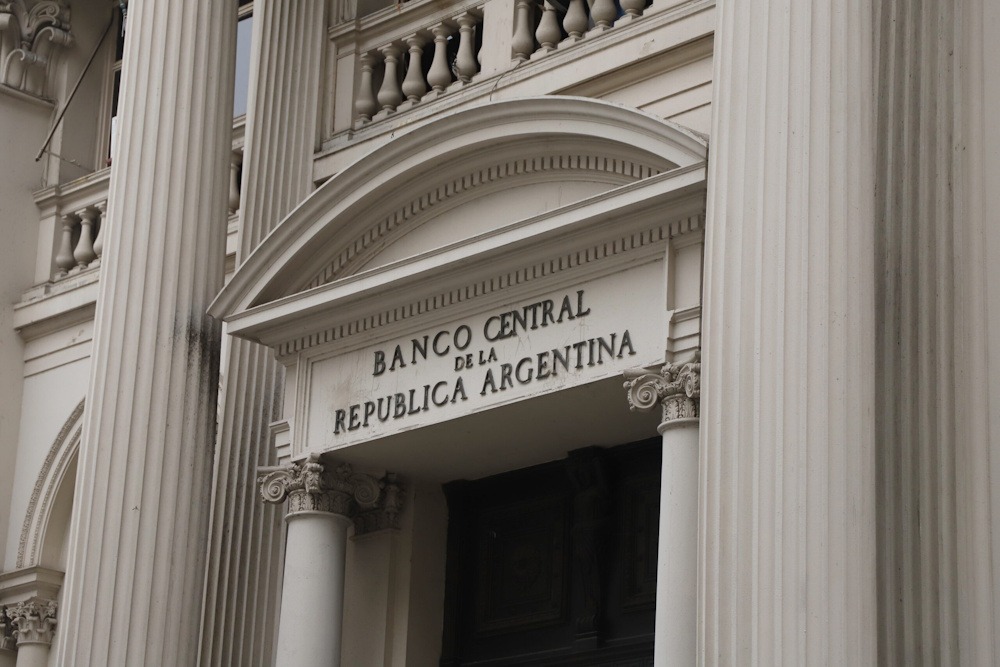
Following years of financial turmoil, Argentines typically prefer to store their money in various unconventional locations rather than in banks – whether it be beneath the couch, buried in the backyard, or secured in fortified bunkers. One former politician notably concealed funds at his nearby convent. The nuns provided assistance. President Javier Milei successfully persuaded almost 300,000 Argentines to participate in a tax amnesty program, which mandated that deposits exceeding US$100,000 must remain intact in bank or brokerage accounts until January 1, 2026, to evade a tax levy. Subsequently, individuals in Argentina possessing CERA accounts will gain the ability to transfer their funds, serving as a litmus test for the populace’s trust in the libertarian administration, while also representing a potential turning point in the saving behaviors of Argentines. “Changing the ‘under-the-mattress’ culture in Argentina will take years,” stated Sebastián Domínguez, chief executive of SDC tax advisors and a professor at the University of Buenos Aires. “Something has clearly changed – it’s not the same as two years ago – but Argentina’s history is hard to erase.” “It requires a series of elections to maintain this trajectory.” Informed by historical crises, particularly the 2001 collapse that saw dollar deposits transformed into pesos overnight, millions of Argentines choose to hoard cash at home, fully cognizant of the swift decline in financial conditions. In October, a market sell-off prompted locals to hastily acquire greenbacks, driven by concerns over a potential political shift ahead of the midterm elections.
The political landscape appears to be shifting in Milei’s favor following his party’s success in the midterm elections and the recent congressional backing he received to enact the first annual budget in several years. Inflation has significantly decreased during his tenure, and pre-election speculation regarding a peso devaluation has subsided. Milei possesses an additional strategy to retain savings within the banking system and encourage the influx of more undeclared funds into the economy, thereby supporting growth. Congress has recently enacted legislation known as the Fiscal Innocence Law, which notably increases the minimum thresholds that must be met before Argentina’s tax authority can take action against citizens for tax evasion and other financial offenses. The primary objective is to promote increased utilization of undeclared funds without the apprehension of future legal examination. “There’s nearly US$200 billion sitting under mattresses that could be earning interest and generating credit,” Economy Minister Luis Caputo remarked at a conference with local investors in December. “It lacks rationality, yet the majority of Argentines engage in this behavior – and a transformation is necessary.”
Since Milei assumed office two years ago, private sector dollar deposits within the financial system have more than doubled to US$36 billion, marking the highest level since the banking crisis of early 2002. While this represents a positive development, it remains a mere fraction of the estimated US$204 billion in cash that Argentines are reported to hold outside of banks, as indicated by a Central Bank report from the previous year. Argentina’s most recent significant tax amnesty occurred during the tenure of the market-oriented administration of Mauricio Macri, which initiated a program in 2016 that garnered even greater amounts, reaching approximately US$120 billion. However, an economic crisis ultimately undermined his presidency by 2019, and dollar deposits plummeted once the leftist Peronist movement regained power and imposed stricter capital controls. Under Milei, the conclusion of the CERA lockup represents a “particularly important test,” according to local broker Grit Capital Group in a note to investors, which further indicates a “meaningful possibility” that households and companies may relocate capital abroad once the restrictions are removed. “Confidence is building, but the default choice for high-net-worth Argentines remains to keep their dollar savings offshore,” stated Walter Stoeppelwerth.
The tax agency reported that the amnesty generated nearly US$24.5 billion in CERA special accounts. During a recent press conference, Central Bank Governor Santiago Bausili indicated that the funds currently locked in the system, which may be eligible for withdrawal beginning in January, are now “well below US$20 billion.” Neither the Central Bank nor the tax agency provided responses to inquiries regarding updated figures or the government’s potential preventive measures. Certain analysts anticipate that Argentines will shift a portion of their freely available funds into investment portfolios, noting that the increase in dollar deposits is noteworthy in a nation where the banking system is inherently limited. The ongoing growth is indicative of confidence in Milei’s economic program, stated Pilar Tavella. “At this point, there appears to be no pressing need to withdraw funds,” she stated. “There will be some movement, but we anticipate it to remain within limits.”