
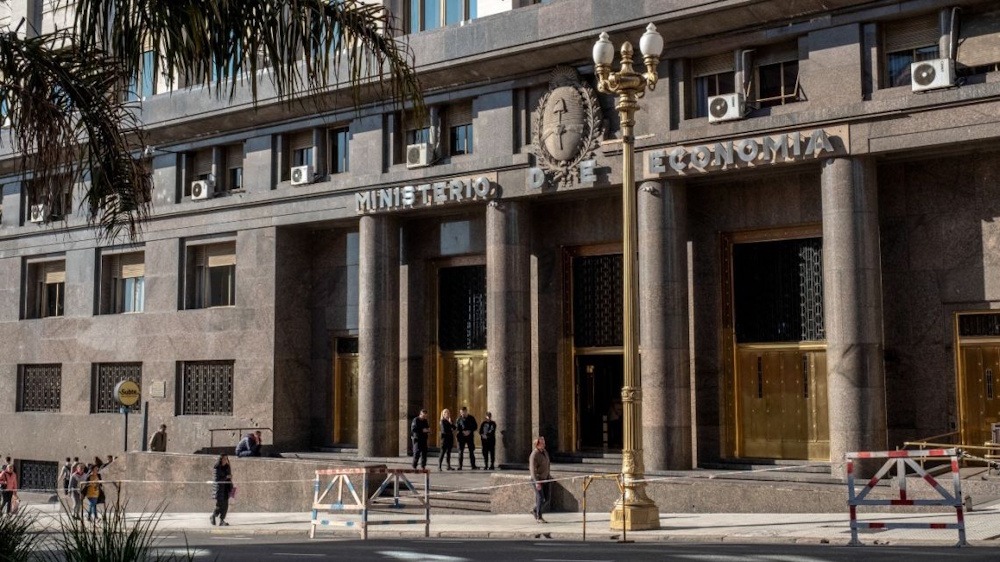
A rout in Argentina’s bonds has caught bullish investors off guard, as a global emerging markets pullback exacerbates worries regarding President Javier Milei’s re-election prospects and the nation’s capacity to fulfilll billions in imminent debt obligations. Argentina’s sovereign dollar bonds have exhibited the poorest performance among emerging markets in the last two months, as a continuous sell-off has driven yields to nearly 12 percent earlier this week and spreads to their highest level in over a year. The losses have accelerated despite appeals from asset managers such as Vontobel, Carmignac, Schroders, and ProMeritum Investment Management, who have asserted that the debt is too cheap to overlook. “Most large investment funds were overweight and surprised by the magnitude of the sell-off. They never thought it would go this far,” said Ramiro Blazquez. “Argentina is one of the first places investors cut exposure when they reduce risk because it’s a higher-risk credit, and that magnifies the move.” Investors flocked to Argentine assets, driven by optimism that Milei will curb inflation and implement fiscal discipline. While he has made significant strides toward those objectives, this progress has coincided with tepid economic growth – which could adversely affect his chances for a second term in the upcoming presidential elections scheduled for next year. Argentina faces approximately US$25 billion in hard-currency debt payments next year, a situation that poses a significant risk to its already fragile financial condition.
Further exacerbating the losses are the ownership dynamics of Argentina’s bond market, where offshore money managers already hold substantial positions while domestic investors have been reducing their share. That results in a diminished pool of buyers to uphold prices when risk appetite wanes and offshore funds reduce their positions – a situation that seems to have unfolded in recent weeks, as US bond yields reach multi-decade highs triggering sell-offs across emerging markets. In 2024, Argentina achieved its first annual budget surplus in 15 years, a significant milestone attributed to Milei’s stringent control over public spending. Concurrently, he has successfully reduced annual inflation, which had reached alarming triple-digit levels at the onset of his administration. Growth, however, has stalled, with the economy expected to slip into a mild recession this year, adding to concerns over support for Milei’s reforms. The government confidence index compiled by Torcuato Di Tella University, frequently utilised as an indicator of support for the incumbent during election cycles, is currently situated close to the lowest levels observed during Milei’s presidency, approximately 40 percent. “The economy is in transition,” said Fernando Sedano. “Investors think if you have better growth dynamics, chances of policy continuity are eventually greater.”
Simultaneously, approximately US$4.5 billion in debt obligations are set to come due in January concerning the nation’s Global and Bonar bonds. The government has suspended local sales of dollar-denominated bonds in recent months as borrowing costs surged, effectively closing off a financing channel that was anticipated to yield an additional US$1 billion this year and US$5 billion the following year. International borrowing, meanwhile, remains prohibitively expensive. Government data also indicate a decline in support from domestic investors. At the close of June, Argentine residents possessed 23.3 percent of the nation’s Global 2030 bonds, a decline from 35.9 percent recorded at the end of 2024, as reported by the INDEC national statistics bureau. Their share of Global 2035 notes decreased to 19.5 percent from 35 percent during the same timeframe, resulting in a market that is increasingly dependent on foreign demand. “Argentine bond prices remain captive to external markets due to overweight positioning from offshore investors and a lack of catalysts before the election,” said David Austerweil.
The sell-off has persisted despite the acceleration of dollar purchases by Argentina’s Central Bank in October, resulting in total acquisitions exceeding US$15 billion for the year. The government is relying on robust energy exports, especially from the Vaca Muerta shale formation, to generate the foreign currency required to fulfilll its obligations. Some investors perceive the recent sell-off as a chance to acquire additional Argentine debt at a reduced price, contending that crucial elements of the nation’s reforms – including fiscal discipline and diminished inflation – continue to be upheld. “We see substantially more pessimism reflected in prices than is justified by the underlying fundamentals, creating what we believe is an attractive medium-term opportunity for investors willing to look through the current noise,” said Thierry Larose. As is frequently observed in Argentina, markets are expected to align with the trajectory of the nation’s political landscape. That may create a volatile environment for the upcoming year. “Ultimately, it is only the 2027 Presidential election that matters,” Austerweil said. “If Milei wins, the sell-off will become a distant memory; if he loses, the recent spread widening will look modest in comparison to what comes after.”
