
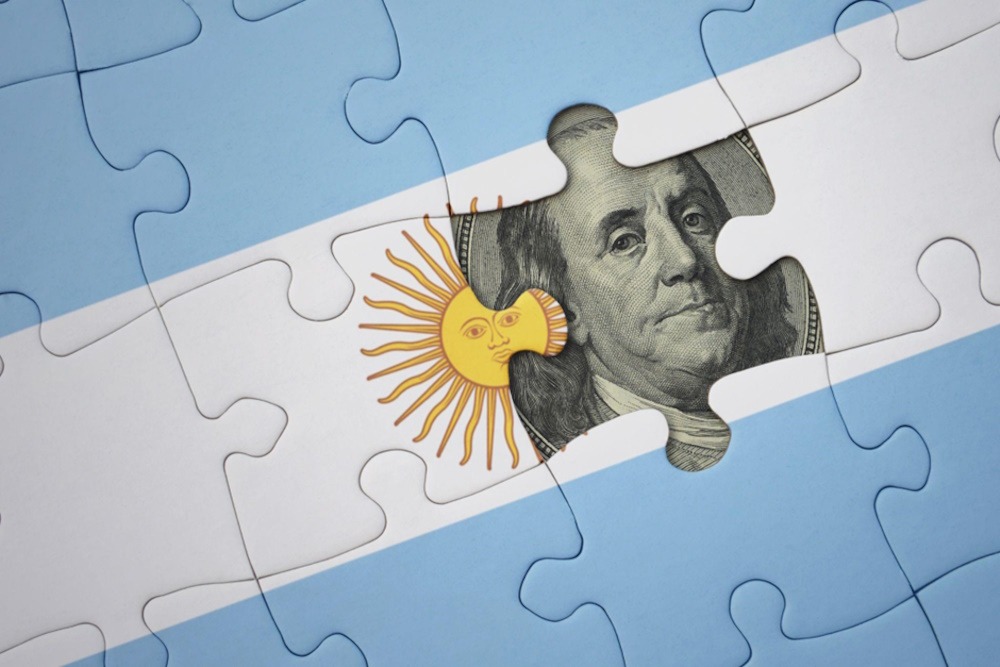
Whether you’re tracking prices at the supermarket or planning to convert savings, the Blue Dollar serves as a real-time measure for Argentina’s economic mood. Whenever official restrictions tighten, or political uncertainty rises, interest in this unofficial price tends to surge. The rate developed because the formal market could not meet real demand for foreign currency, especially when households and companies sought protection from inflation and depreciation.
While the government presents one version of the exchange rate, everyday behavior often follows another: This split between official guidance and lived experience is what gives the parallel rate its influence. Traders, analysts, and even casual observers follow it closely because it captures sentiment in a way that official numbers sometimes struggle to match.
The Exchange Rate Gap as a Signal of Structural Economic Stress
The gap between the peso’s official value and its informal counterpart reflects concerns about inflation, access to foreign reserves, and confidence in future policy. When that spread widens, it usually signals rising expectations of faster inflation or tighter government controls, and those anxieties quickly shape the broader story of economic stability.
This divide also spills over into everyday life, as the cost of imported goods tends to follow the parallel rate, rather than the government’s benchmark, meaning everything from appliances and cars to laptops and building materials becomes pricier when the unofficial rate rises. Retailers watch that number closely because it tells them how difficult (and how costly) it might be to restock. What seems like a distant macroeconomic issue ultimately shows up on grocery receipts and business invoices.
The gap also complicates financial planning, as companies struggle to forecast costs and often reissue quotes due to rapidly shifting expectations. As the gap widens, households and businesses rush to purchase goods or convert their savings, intensifying price pressures. This feedback loop makes the parallel exchange rate one of the most transparent windows into Argentina’s underlying economic tensions.
How Market Participants Use the Parallel Rate in Real Transactions
Although the rate does not appear on official government channels, it plays a central role in countless financial decisions. Families often use it as a mental benchmark when considering savings or large purchases. Real estate transactions commonly reference a dollar figure, and buyers and sellers look to the informal rate to determine the peso equivalent. This practice exists because the official rate does not always align with the actual cost of replacing assets or preserving value.
Businesses behave similarly, with importers and exporters tracking the unofficial exchange rate, as it provides a more realistic estimate of future expenses and earnings. Freelancers who work with international clients also closely monitor this rate, as it affects the local value of their income, and it also influences cross-border trade, particularly in regions near neighboring countries, where price differences can shift quickly.
All of this reinforces a unique characteristic of the Argentine economy: Even if the rate is unofficial, it shapes decisions across many sectors. It serves as a reference point that people trust when the official system seems out of sync with their daily experiences.
Implications for Traders and International Investors
For traders watching the region, the parallel rate offers valuable insight into local expectations. Markets respond not only to complex data but also to sentiment, and the unofficial rate captures mood shifts with unusual speed. When it climbs rapidly, it often reflects deepening concerns about inflation, political surprises, or upcoming policy announcements. These movements help traders anticipate changes in liquidity and risk.
Investors who hold Argentine assets also monitor these fluctuations. When the divergence between the official rate and the informal one becomes too large, it can signal pressure on sovereign bonds or equity valuations. A sharp increase often leads analysts to reassess their exposure. Currency traders view it as an early indicator of volatility, despite its operation outside the regulated system.
Because the informal rate reacts so quickly to news, it often reveals stress points before official data is released. Traders who pay attention to these signals can develop a more informed understanding of shifting conditions. The rate does not replace formal analysis but adds an important layer of context.
The Role of Online Tools in Tracking Volatile Currency Dynamics
Monitoring the Argentine currency landscape requires real-time information. Movements can be abrupt, especially when economic expectations shift or political events prompt a rapid market reaction. Online tools like BlueDollar.net and online trading platforms offer users immediate access to live pricing, which is crucial in a climate where exchange values can fluctuate significantly within a single afternoon.
Real-time charts and calculators help users compare the unofficial rate with the official benchmark. Platforms that aggregate information from multiple sources enable traders to observe how rapidly conditions are evolving and how local behavior is adapting. These tools facilitate a deeper analysis of intraday patterns, seasonal trends, and responses to economic developments.
Because the informal exchange rate is not anchored to central bank policy, it tends to reflect sentiment with intensity. Traders who follow it closely gain a more nuanced understanding of the forces shaping the peso, in an environment where information must move as quickly as the market itself, online monitoring becomes an indispensable part of staying informed.
The Parallel Rate as a Mirror of Argentina’s Economic Future
The long-term direction of Argentina’s currency will depend on policy choices, inflation trends, and the government’s ability to restore confidence. If structural issues remain unresolved, the spread between official and unofficial prices is likely to persist. If reforms improve transparency or ease restrictions, the gap may narrow. Each shift in the rate tells a small part of this larger story.
Final Say
For traders trying to understand where Argentina is heading, movements in the parallel market offer early clues. A steady or shrinking spread suggests a degree of optimism. A sudden jump signals rising pressure. Although policymakers do not formally recognize it, the rate continues to reflect how people interpret the health of the economy. It captures sentiment, caution, and expectation in a way that is difficult to measure through official channels alone. For anyone navigating Argentina’s evolving financial landscape, the Blue Dollar remains one of the most valuable and revealing indicators available.