
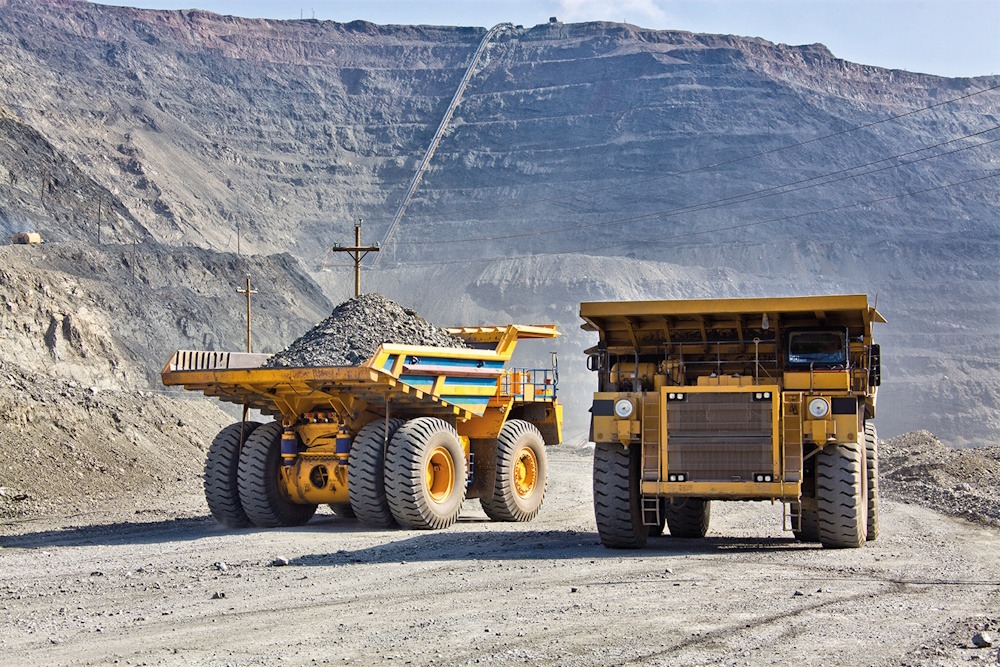
Argentina appears to be shifting from a prolonged resistance to mining and other activities viewed as detrimental to the environment, towards a strategy that prioritizes the pressing need for economic development and growth. Three significant legislative proposals that have captured public discourse in recent weeks indicate this remarkable change in perspectives. On Monday, President Javier Milei introduced a bill aimed at amending existing legislation that safeguards glaciers, seeking to reduce restrictions on mining activities. Last week, the provincial Congress of Mendoza approved what is set to be the first copper mining project in the province in twenty years — a development that environmental activists argue could pose a risk of contaminating the water in the Uspallata region. This week, Tierra del Fuego has enacted legislation permitting salmon farming, a practice that had been prohibited in the province since 2021 due to pressure from environmental groups. These organizations caution that the waste produced by the fish, along with the antibiotics and other substances utilized for their health, poses a threat to the ecosystem. Furthermore, they argue that introducing a non-native species into Argentina’s southernmost waters could jeopardize indigenous species. The discourse regarding these proposals oscillates between polar viewpoints: certain individuals assert that permitting such activities will result in environmental degradation and the pollution of water resources. Some argue that mining represents a crucial sector for Argentina’s development, given the country’s abundant mineral resources.
The government maintains this perspective. “The new Argentina will grow thanks to the three pillars of the economy: farming, energy and mining,” stated Milei recently, endorsing the copper mining initiative in Mendoza. Some argue that the advancement of these industries will yield economic benefits for Argentina; however, it is imperative that both national and local governments prioritize the proper protection of the environment. A report indicates that the pro-mining sector has gained significant traction on social media following Milei’s ascension to the presidency, thereby dominating the discourse. In Mendoza, environmental activists have persistently coordinated demonstrations against the copper mining initiative. A significant number of these events culminated in forceful police interventions, resulting in the arrest of demonstrators. The proposed legislation aimed at amending the law safeguarding glaciers has encountered significant opposition from parties such as Peronism and various left-wing factions. In Buenos Aires, a march orchestrated by unions in protest of a labor reform bill saw demonstrators displaying a banner proclaiming: “There won’t be jobs without water,” in opposition to the glaciers bill as well as the Mendoza project. Anticipation surrounds the forthcoming protests in Buenos Aires as the glaciers bill is set to be debated in Congress during the summer months.
Argentina possesses a significant opportunity to emerge as a pivotal player on the global stage in the mining sector; however, the question remains: is there sufficient consensus to realize this potential? Argentina possesses an abundance of natural resources, notably minerals and metals such as copper and lithium. The global landscape is shifting towards an energy transition, with copper playing a pivotal role. The Milei administration has enhanced the appeal of foreign investment in sectors such as mining through the establishment of a new large investments regime, referred to as the RIGI. This initiative provides tax incentives, currency exchange advantages, and various legal and customs benefits for investors committing over US$200 million to local projects. Mining currently constitutes a mere 4% of the nation’s exports; however, revenue is on an upward trajectory, increasing from US$4.6 billion in 2024 to an anticipated figure exceeding US$5 billion in 2025, as reported. Should those figures be validated, they would establish unprecedented benchmarks for the sector, reflecting a 14% year-over-year increase and representing the fifth consecutive year of expansion. The expansion of the activity has faced significant opposition from environmentalist groups, which have gained strength in recent years, reflecting a broader movement observed globally.
Elisabeth Möhle noted that “there was a big environmentalist wave” globally from 2015 to 2020; however, this movement faced a backlash as United States President Donald Trump characterized the initiative as “communist or woke.” This fostered a global atmosphere of repudiation. “The Argentine government appears to be pursuing that path, with politicians asserting: ‘let’s prioritize productive development and not concern ourselves with the environment,’” she conveyed. Möhle notes that concerns regarding mining projects have largely diminished in public discourse over recent years; however, the dialogue has reemerged, now emphasizing the endorsement of mining activities. “A shift in the perception of citizenship occurred following an extended period devoid of economic growth.” The report indicates that, following Milei’s assumption of office in December 2023 and up until February 2025, there has been an increase in social media users expressing favorable views on the subject, along with a rise in related posts, predominantly from proponents of the activity and the national government. They noted that negative comments regarding mining have also decreased. The report indicated, “This signals a larger acceptance of the industry and a more consolidated social support.”
Nonetheless, attorneys specializing in environmental protection challenge this notion, asserting that the favorable shift towards mining can be solely credited to governmental actions rather than a collective societal movement. “I do not believe there has been a shift in the public’s perception regarding this matter. Instead, we now have a government that is a denialist of climate issues,” stated Enrique Viale. Viale observes a “never-before-seen” extensive alignment with the government among news media outlets, which “makes it look like there is a consensus to move forward with these projects.” This has created a snowball effect, leading to the presentation and approval of bills that facilitate mining projects and salmon farming. “However, there is notable resistance among individuals.” Mendoza experiences a continuous series of marches. “I don’t think there is social consensus for this,” Viale stated. He cautioned that the government intends to advance the bill amending the glaciers’ protection law “without permitting a public debate.” On Thursday, Viale addressed the Senate’s environment commission during a session where experts and representatives from mining and environmental organizations provided their insights on the proposed legislation. The Senate is set to engage in deliberations in February. Prior to his election as president, Milei expressed skepticism regarding the reality of climate change. Upon assuming office, he downgraded the Environment Ministry, reconstituting it as an undersecretariat. Argentina has reversed its position on environmental and climate change matters in international discussions.
In 2024, Milei withdrew the Argentine delegation from the United Nations Climate Change Conference (COP29) and has publicly rejected the UN’s 2030 Agenda for Sustainable Development, which encompasses measures aimed at environmental protection. “It’s not as though we were in an environmental paradise previously; we have expressed criticism of past administrations. But now, they have crossed all lines,” Viale stated. Milei explicitly confronts the environmentalist movement, identifying it as one of his primary adversaries. Cristian Fernández noted that legislation facilitating mining and the extraction of various natural resources has been on the rise since 2022. Fernández posits that the discourse surrounding mining is increasingly becoming prominent in public dialogue, attributed to governmental initiatives aimed at fostering that sector. He argues that the authorities are presenting a “false dilemma” that contrasts economic progress with environmental protection in order to create division among the public. “In Argentina, there is a historical pattern of governments instigating ruptures that lead to societal polarization. The president employs a strategy characterized by disparaging those who hold opposing views.” Nonetheless, this development has prompted the environmentalist movement to consolidate its opposition to Milei’s proposed legislation aimed at altering the law safeguarding glaciers. “The movement will maintain cohesion, making it challenging for the government to implement this reform. And, if it is approved, we will take it to court,” Fernández stated.