
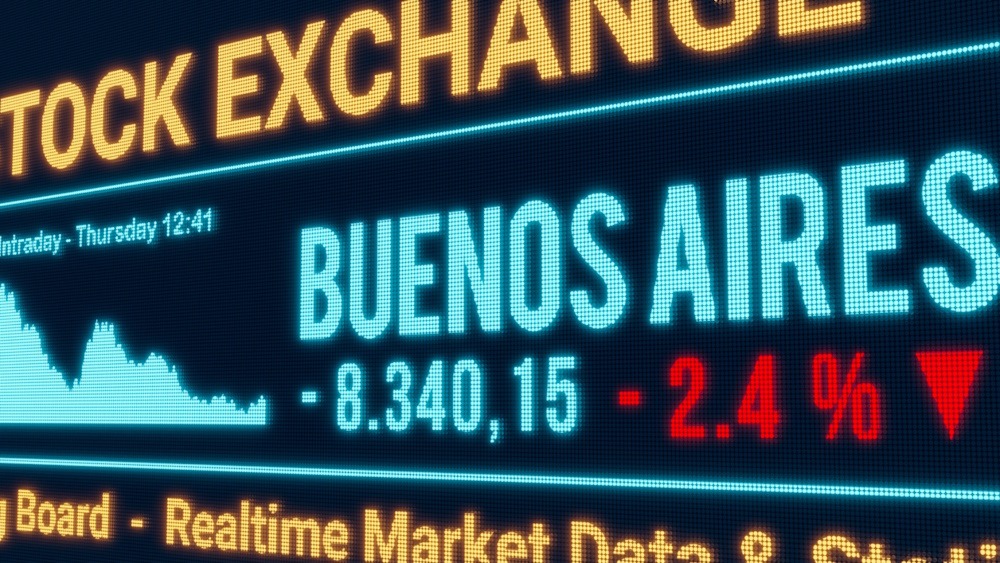
Argentina’s stock market is starting to reflect the economy’s uneven growth under President Javier Milei, with energy shares capitalising on elevated oil prices, while other sectors remain stagnant. The nation’s benchmark S&P Merval index is currently down nine percent in 2026 when measured in dollars, reflecting a cooling off from a rally that commenced in 2023, during which the Global X MSCI Argentina ETF emerged as the top performer among single-country funds. The only local stocks exhibiting significant increases at present are those associated with the energy surge in the shale fields collectively referred to as Vaca Muerta. Nearly all sectors, including banks, construction firms, and consumer-oriented businesses, have experienced declines thus far this year. The Merval has exhibited subpar performance relative to previous rallies and is noticeably trailing in a region where electoral optimism has invigorated equities in Colombia, Brazil, and Peru. “If you take energy out, the S&P Merval looks weak. There’s nothing as compelling as there was last year,” said Martín Polo.
The rally in oil stocks has coincided with enhanced earnings. Aided by elevated prices resulting from the conflict in Iran, state-run YPF SA’s shale production surged nearly 50 percent year-over-year in the second quarter, while Vista Energy SAB and Pampa Energía SA also reported significant increases in both output and earnings. “The performance of energy stocks has been driven half by oil prices and half by the reality of the sector,” said Ricardo Giménez. “Vaca Muerta companies have been increasing production, posting strong results and, in some cases, starting to generate positive cash flow.” The disparity between energy stocks and other sectors of the economy has been increasing since Milei’s party secured victory in the congressional midterm elections of 2025. YPF shares have nearly tripled since then, and Vista has more than doubled, whereas numerous banks and firms more exposed to the domestic economy have significantly underperformed. The Merval has also increased in dollar terms, albeit by only approximately half the amount seen in the leading oil producers. “Argentine stocks have run out of strong catalysts, trading volume has fallen and investors have increasingly shifted into” global stocks, said Federico Desprats. “The only thing driving the Merval today is oil and gas.”
The divergence in stocks mirrors a comparable division in the real economy. Economic activity declined by 1.4 percent year-over-year in July and experienced a 2.9 percent decrease from the preceding month, after adjusting for seasonal variations, as indicated by the most recent data. Manufacturing exhibited relative weakness, whereas mining demonstrated ongoing expansion. The weakness is also impacting the outlook for equities more closely linked to the domestic economy. Banks are experiencing challenges due to increasing delinquencies and a lending sector that has not yet fully gained momentum, while construction firms continue to rely on a resurgence in activity. “If political risk remains, activity stays weak and businesses don’t recover, there are few catalysts for the main sectors in the S&P Merval index to move significantly higher in the short term,” Giménez said. The sole significant Argentine stock beyond the energy sector that has experienced gains this year is Telecom Argentina SA, which has risen a modest five percent due to mergers and acquisition activity. Argentina’s energy boom, set against a backdrop of elevated international prices, is ushering in a significant influx of dollars into the nation and bolstering Argentina’s external accounts. The country recorded a trade surplus exceeding US$16 billion from January to July, propelled by increased exports.
Much of the enhancement in the trade balance is linked to the increase in Argentina’s terms of trade resulting from the conflict between the US and Iran. However, it also indicates a deceleration in domestic activity, which is moderating the rise in imports. That is the challenge currently confronting Milei’s model. The influx of capital from oil, mining, and agriculture has alleviated Argentina’s balance-of-payments issues; however, it simultaneously fosters a real appreciation of the peso, adversely affecting significant sectors of the economy. A stronger currency is aiding in the containment of domestic inflation, partly by reducing the cost of imports. It diminishes demand for domestically produced goods and increases dollar-denominated expenses for manufacturers contending with foreign competitors. Some perceive the existing capital controls implemented by Milei, coupled with the political uncertainty looming ahead of next year’s election, as a deterrent to foreign investment. “Investors are still in wait-and-see mode and exchange controls are still in place,” Polo said. “Energy is one part of investment; the rest of the economy still hasn’t taken off.”
