
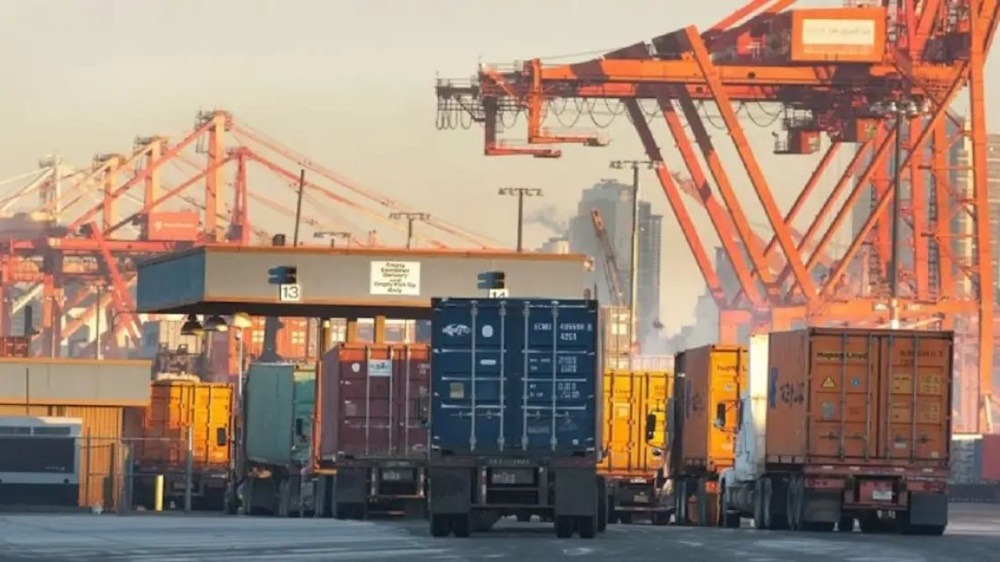
Argentina achieved a trade surplus of US$11.286 billion in 2025, indicating a second consecutive year of positive balance for President Javier Milei. Data released on Tuesday aligns with the government’s announcement last Friday regarding Argentina’s fiscal surplus in 2025, marking the second consecutive year of such an outcome. Data indicates that Argentina’s exports reached a value of US$87.077 billion in the previous year, whereas imports amounted to US$75.791 billion. While this indicates a second consecutive trade surplus, the figure reflects a decrease relative to 2024. The record surplus of US$18.899 billion that year can be attributed primarily to a significant decline in imports and a recovery in agricultural exports after the drought experienced in the preceding year.
In 2025, exports experienced a year-on-year increase of 9.3 percent, primarily propelled by primary products, which saw a significant rise of 21.2 percent. Manufactured goods derived from agriculture experienced a growth of 2.7 percent, whereas industrial manufacturing saw an increase of six percent. Brazil continued to be Argentina’s primary trading partner, with exports totaling US$12.771 billion and imports reaching US$18.424 billion, even amid the persistent tensions between Milei and his Brazilian counterpart Luiz Inacio Lula da Silva.
On the previous Friday, the government disclosed that the nation concluded the year 2025 with a primary fiscal surplus, prior to interest payments, amounting to 1.4 percent of gross domestic product. The overall fiscal surplus was recorded at 0.2 percent of GDP. President Milei has achieved two consecutive years characterized by what the government refers to as “twin surpluses,” encompassing both fiscal and trade dimensions. Prior to his assumption of office, Argentina had not experienced a surplus in its public accounts since 2010.
In the initial two years of Milei’s administration, inflation experienced a significant decline, decreasing from 211 percent in 2023 to 118 percent in 2024 and further to 31.5 percent in 2025. The 2025 outcome was characterized by a significant recalibration of public expenditure, featuring reductions in subsidies and the freezing of budgets across sectors including education, healthcare, scientific research, and public works.