
The Argentine mining sector is progressively establishing itself as a fundamental component of the nation’s export portfolio. According to a report by consulting firm Aleph Energy, mining exports amounted to US$744 million in June, representing 9% of the country’s total exports. The total figure for the first six months of 2026 stands at US$4.7 billion, representing 9.7% of total exports, marking a record for the country during this timeframe. Growth is propelled by an amalgamation of increased lithium volumes, escalating international prices, and the ongoing contribution of precious metals. Gold maintained its status as the foremost export, while lithium reinforced its standing as the second-largest mining commodity, achieving a record for that month. The new investment landscape is also starting to alter the sector’s outlook. Projects approved under the Incentive Regime for Large Investments (in Spanish, RIGI) indicate that sectors such as mining, energy, oil, and gas dominate the recorded investor interest to date, with significant initiatives focused on lithium, copper, gold, and silver. “Argentina has world-class geological resources, particularly in copper, lithium, gold, and silver, in an international context where the energy transition is driving growing demand for critical minerals,” Roberto Cacciola told. “This opportunity has already begun to translate into concrete investments, as the mining sector accounts for nearly half of RIGI projects and investments totaling nearly US$40 billion, counting those approved and those currently under review,” he said.
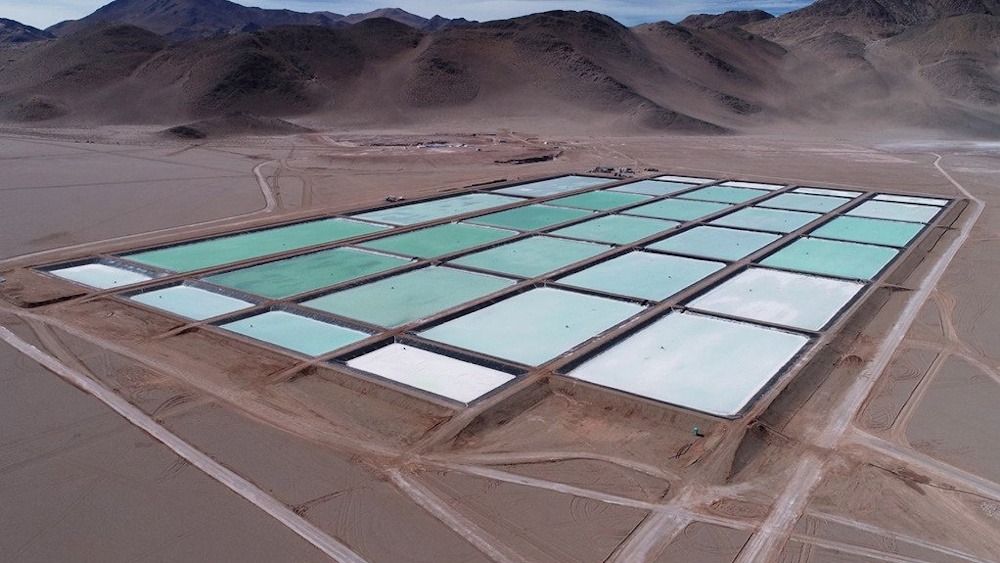
Lithium exports amounted to US$179 million in June, reflecting a remarkable 329% increase compared to the previous year and a 113% rise projected for 2026. These figures represented 28.5% of the month’s mining exports. Lithium carbonate emerged once more as the most dynamic segment. In June, exports reached 10,378 metric tonnes, reflecting a year-on-year increase of 65% and a rolling-year growth of 40%. Total production was 11.562 tonnes, reflecting a 45% increase on an annual basis. While lithium carbonate production is predominantly focused on seven major projects, the report highlights a total of 68 lithium operations in Argentina, associated with 41 companies, each at different stages of development. indicating that the nation may increase its export capacity in the forthcoming years. While lithium is experiencing rapid growth as a mineral, gold continues to be the primary source of revenue. In June, gold exports amounted to $401 million, reflecting a 9% increase compared to the previous year and a 38% enhancement over the last 12-month period. Gold constituted 52% of the mining exports for the month. Silver contributed US$108 million, reflecting a year-on-year growth of 116% and a 67% increase over the year. Together, metal-bearing minerals constituted 69.2% of the mining exports in June.
International prices present a disparate landscape. Spot lithium carbonate averaged US$21,100 per metric tonne in June, reflecting a 160% increase compared to the same month last year. Argentina’s export price for lithium carbonate was US$17,300 per metric tonne, reflecting a notable increase of 120%. Silver averaged US$66.7 per ounce, reflecting an 85% year-over-year increase. Gold was priced at US$4,228 per ounce, reflecting an increase of 26%. Copper averaged US$13,600 per metric tonne, reflecting a 38% increase compared to June 2025. The report indicates that prices were affected by elevated interest rates in the United States, a robust dollar, and geopolitical tensions. In the case of copper, demand from China associated with power grids, renewable energy, household appliances, and data centers has played a significant role in maintaining elevated price levels. RIGI is positioning itself as a pivotal instrument for expediting mining development. Official data indicates that there are 41 initiatives announced, amounting to US$140 billion in investments. Around 80% of that amount is associated with projects that remain under review. At this time, 16 projects totalling nearly US$30 billion have received approval, while an additional 25 projects, valued at US$111 billion, are currently under review. This indicates that merely 21.2% of the reported figure has obtained formal approval. The sectoral breakdown underscores the significance of mining within the investment framework.
Among the 16 sanctioned projects, the majority are concentrated in the mining sector, accounting for 9, followed by the oil and gas sector with 3, renewable energy with 2, and both steel and infrastructure with one project each. The extractive sector remains a significant focus among the projects under review, with oil and gas accounting for 12, mining for 11, energy for 1, and infrastructure for 1. The overall picture indicates that the RIGI is primarily influenced by the advancements in Vaca Muerta, the growth of energy exports, and significant mining initiatives associated with copper, lithium, gold, and silver. Mining projects approved under the RIGI regime amount to US$10.2 billion. Copper and lithium emerge as the minerals with the highest potential to catalyse a new phase of expansion. San Juan ranks among the provinces poised to gain significantly. The province hosts Los Azules, a significant copper project in the nation, with anticipated investments amounting to US$2.6 billion, in addition to Carbonatos Profundos de Gualcamayo and the expansion of Veladero. These three initiatives amount to US$3.7 billion. Lithium also plays a significant role in the sector. Approved projects encompass Rincón in Salta; the expansion of Cauchari-Olaroz in Jujuy; Hombre Muerto Oeste and the expansion of Minera del Altiplano, both situated in Catamarca. Included in this list is Diablillos, situated between Salta and Catamarca, which is concentrated on the production of gold and silver. Also included is PSJ Cobre Mendocino, in Mendoza, with a projected investment of $891 million. This data is significant as it establishes a connection between the present export landscape and prospective growth opportunities.
Today, gold, silver, and lithium dominate mining exports; however, copper is set to experience substantial growth over the next decade, contingent upon the advancement of these projects into construction and production phases. The provincial snapshot reveals a robust concentration within the export sector. As of May 2026, Santa Cruz was at the forefront of provincial mining exports, with San Juan, Jujuy, Salta, Catamarca, and Chubut following in succession. The relative weight of mining within provincial exports is also significant. According to the report, mining exports constituted 95.9% of total exports in Catamarca. In Santa Cruz, the figure stood at 88.8%, while San Juan recorded 88.4%. Jujuy followed closely with 88.2%, and Salta reported a lower percentage of 64.1%. The figure illustrates the significance of the sector within regional economies, where mining serves as a primary source of foreign currency, employment, and investment. Among the principal export initiatives are Veladero, Cerro Vanguardia, Cerro Negro, Cauchari-Olaroz, San José, Chinchillas-Pirquitas, Lindero, Fénix, Olaroz, Centenario Ratones, Sal de Oro, and 3Q, among others. Information from CAEM indicates that the mining industry currently generates over 110,000 jobs thru both direct and indirect employment, with the potential to significantly increase this impact as new projects commence production. “In addition to formal, quality employment, it drives infrastructure, regional development, and an extensive value chain made up mostly of Argentine suppliers. Its effect extends far beyond the mining provinces, mobilizing activities linked to industry, technology, logistics, energy, trade, and services,” Cacciola said.
According to the Alpeh report, direct mining employment in Argentina stood at 40,040 jobs in February 2026, reflecting a year-on-year increase of 0.5%. Mining constituted 0.6% of overall employment within the registered private salaried sector. Female employment reached 5,312 positions. While the report lacks specifics regarding its progression, the figure contextualises the involvement of women in an industry that has traditionally been dominated by men. By segment, metallic minerals constituted 32.3% of mining employment, even tho they represented only 5.9% of companies within the sector. Lithium, meanwhile, constituted 13.5% of employment, despite representing only 2.4% of companies. This indicates that lithium and metallic-mineral companies possess a significantly greater employment scale compared to the sector average. In February 2026, the number of mining companies stood at 999, reflecting a decrease of 56 compared to the same month in the previous year. The year-on-year decline registered at 5.3%. The metallic-mineral segment comprised 59 companies, yet it represented nearly one-third of employment within the mining sector. In that segment, a mere 12 companies represented 82% of employment, employing an average of 886 workers per company.
In lithium, the concentration was even greater. The report documented 24 companies engaged in the activity; however, nine of these firms represented 94% of employment within the segment, averaging 562 employes per company. The report also incorporates international data from the U.S. Geological Survey. Global lithium production reached 288,380 tonnes in 2025, an increase from 239,880 tonnes in 2024. Argentina’s lithium production reached 23,000 tonnes in 2025, an increase from 18,000 tonnes in 2024 and significantly higher than the 5,970 tonnes recorded in 2021. The increase illustrates the rate of local expansion within a global market primarily led by Australia, China, and Chile. According to the 2025 data included in the report, Argentina possesses 4.4 million tonnes of lithium in terms of reserves. In terms of resources, the nation possesses 28 million tonnes, ranking below the United States and above Chile, Australia, and China. The figure underscores the nation’s strategic importance within the global marketplace. Demand for lithium is predominantly associated with batteries, which represent 88% of end uses, propelled by the expansion of electric vehicles, grid storage, portable electronic devices, and power tools. The August snapshot reveals an Argentine mining industry characterised by record exports, advantageous prices across various segments, a burgeoning lithium sector, and an investment portfolio that is starting to achieve scale under the RIGI.
The sector possesses a well-established export foundation in gold and silver, with lithium emerging as the primary driver of growth. The initiation of new projects and the continuation of expansions may enhance the sector’s scale, although numerous developments are currently experiencing a gradual production ramp-up. The challenge will be to convert resources, approvals, and investment announcements into tangible production outcomes. The RIGI assists in structuring a portion of investor expectations; however, a significant portion of the reported figure remains under assessment. It must first transition into formal approvals before it can be realised in terms of construction, employment, suppliers, and exports. The snapshot indicates that mining stands out as one of the sectors with significant potential for foreign currency generation. However, its growth is contingent upon a limited number of large-scale projects and the capacity to expedite the commencement of the current project pipeline. “To consolidate this growth, it is essential to maintain competitive and predictable conditions. Macroeconomic stability, legal certainty, infrastructure, and the strengthening of local suppliers and talent are key factors in supporting an industry that plans and invests for the long term. The minerals are there, and so are the investments; the challenge is to accelerate their transformation into more production, more employment, and more development for Argentina,” Cacciola concluded.
