
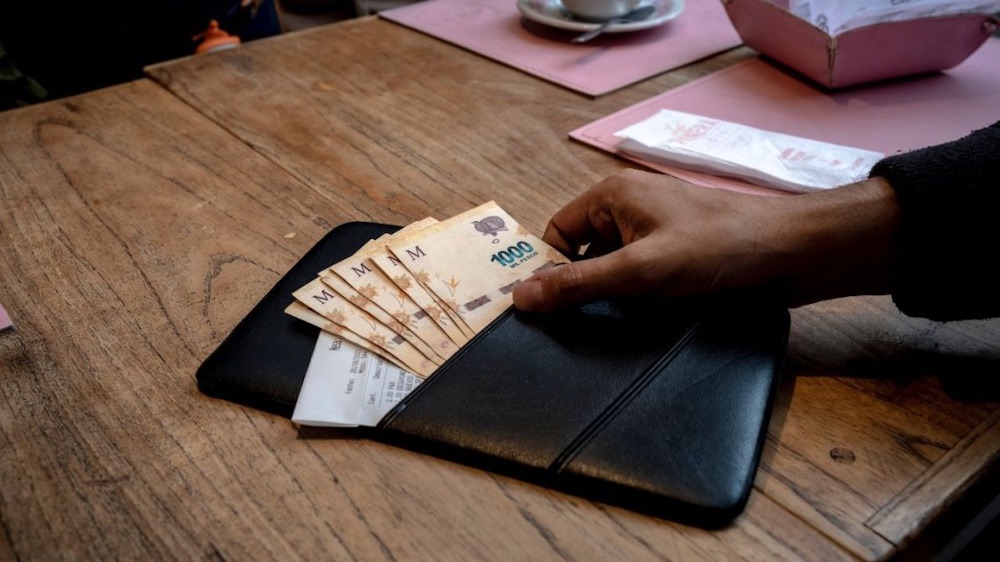
Recent private surveys indicate that consumer spending remains stagnant, raising concerns about the economic recovery that President Javier Milei has been forecasting for the upcoming months. In April, retail sales experienced a decline of 3.2% compared to the same month last year, and a decrease of 1.3% relative to the preceding month, as reported by the Argentine Confederation of Medium-Sized Businesses. In the initial four months of the year, sales are tracking 3.5% lower compared to the corresponding period last year. “Activity leaned toward essentials and seasonal items, with shoppers driven by the hunt for financing and discounts,” stated CAME. Pharmacies represented the sole category to experience year-on-year growth, achieving an increase of 6.1%. “Because these are essential goods, transactions kept flowing even as price lists were updated,” stated the business chamber. Sales experienced a decline in various categories: housewares and home décor decreased by 12.3%, perfumery saw a reduction of 7.2%, and hardware, electrical supplies, and construction materials fell by 4.2%.
Textiles and apparel experienced a decline of 3.7%, while food and beverages fell by 3.1%, and footwear and leather goods decreased by 0.5%. In addition to the decline in food and beverages, which are most directly linked to daily consumption patterns, there has been a notable change in the purchasing behavior of Argentines: consumers are increasingly opting for more affordable brands, while the quantity of items per shopping trip is decreasing. CAME also noted that households are increasingly seeking methods to extend their budgets, with bank promotions and discounts serving as the primary mechanism preventing a more significant decline in sales. E-commerce is failing to address the shortfall. The report indicated that online shopping is gaining traction among Argentine consumers. In April, online sales by traditional retailers experienced an increase of 8% compared to the same month last year, and a rise of 0.7% from the preceding month, after seasonal adjustments. Nonetheless, that was insufficient to counterbalance the overall decrease in CAME’s retail sales index. A comparable trend emerged in a survey conducted by the private consultancy Scentia Consulting. E-commerce experienced a notable increase of 34.3% year-on-year in March, whereas pharmacies saw a modest rise of 0.9%.
However, the overall average remains 5.1% lower compared to the same period last year. E-commerce has emerged as a critical focal point in discussions surrounding economic policy. Milei has rejected the surveys indicating a decline in household consumption, contending that they “aren’t reliable indicators” due to alterations in shopping behaviors. “I would examine the balance sheets of the e-commerce companies,” the president stated. “The manner in which individuals engage in consumption has evolved. One engages in numerous transactions on Mercado Libre. Meanwhile, 1816, a consultancy closely monitored by local investors, has once again highlighted the increase in household loan defaults. Based on the analysis, there was a continued increase in March, reaching the highest level in over twenty years and further constraining disposable income. According to official data from the Central Bank, household loan delinquency increased from 11.2% in February to 11.5% in March. “Keep in mind that household credit delinquency was just 2.5% in October 2024, so it has nearly quintupled in less than a year and a half, even as GDP grew 1.8% over the same period,” 1816 stated.
The official response was articulated by Central Bank President Santiago Bausili in late April, who contended that “the first wave of credit was, in a way, extended blindly.” Without knowledge of the identity of the borrower. “That learning curve encountered last year’s interest-rate shock, exacerbating the challenge,” he added. The burden of elevated household debt coupled with increasing defaults is hindering the recovery process. In its latest report, the center-right think tank Fundación Capital asserted that “the authorities’ bet is to jumpstart activity through credit,” as occurred in late 2024 and early 2025. “However, the impact is expected to be constrained due to subdued corporate demand for financing and elevated household default rates,” the report indicated, further noting that “durable goods may exhibit stronger momentum, benefiting from moderate support from credit.”
