
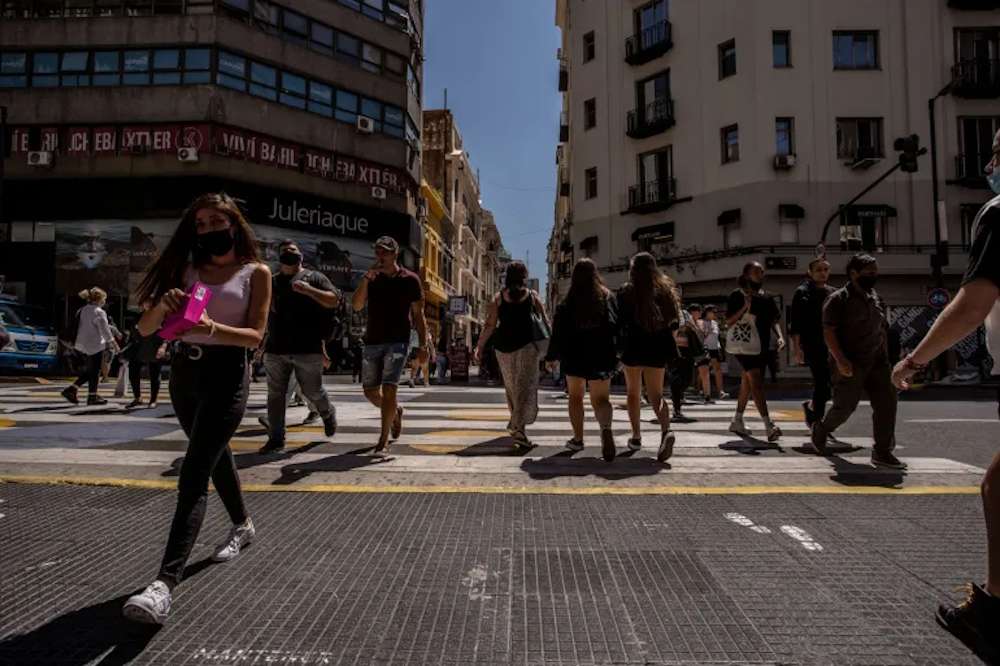
Argentina’s economy contracted in April following a brief recovery in the preceding month, highlighting a pattern of inconsistent growth as President Javier Milei’s term progresses beyond the halfway mark. Economic activity declined by 1.5 percent from March, falling short of the one percent decrease projected by economists, as reported by government data released on Monday. From a year ago, the gross domestic product proxy grew 1.6 percent, which falls short of the 3.3 percent median estimate provided by economists. “The key problem remains a highly uneven composition. Most strength is concentrated in a handful of competitive tradable sectors, with no signs of a pickup in the broader economy,” stated Jimena Zúñiga.
Agriculture drove growth on an annual basis, whereas manufacturing, retail, and fishing experienced declines. Earlier indicators had already suggested a disparate performance across the economy, with mining experiencing growth while manufacturing and construction both saw contractions exceeding two percent compared to the previous year. Argentina’s gross domestic product experienced a growth of 0.7 percent in the first quarter, surpassing expectations, attributed to an increase in consumer spending compared to the previous quarter.
Argentine GDP is projected to grow for the second consecutive year in 2026, propelled by unprecedented exports from the energy, agriculture, and mining sectors. Yet unemployment continues to rise as the formal labour force sheds nearly half a million jobs. Economists in Argentina anticipate a growth rate of 2.9 percent for the country in 2026, with inflation projected to ease marginally to 30.5 percent, as indicated by the Central Bank’s monthly survey conducted in May.
