
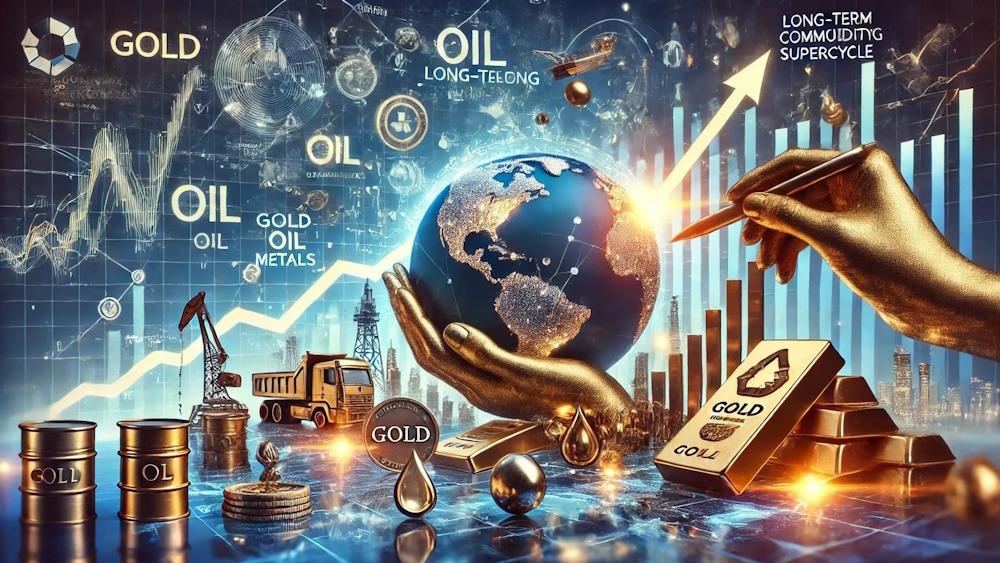
For years, discussions around artificial intelligence have been almost entirely about software, algorithms, various models, and the companies building them. But beneath the surface of this digital revolution, there are far more tangible consequences. The first of them was the skyrocketing price of RAM, caused by huge demand created by powerful AI chips. The next step may be even more significant, as the rapid expansion of AI is beginning to reshape global demand for physical resources, quietly laying the groundwork for what could become the next major commodity supercycle.
The Physical Backbone of Artificial Intelligence
The question of physical infrastructure needed for AI expansion mostly gets overlooked. Many imagine it as just a series of massive warehouses with giant fans, but the reality is that they demand huge amounts of raw materials, not all of which are readily available.
This uptick in demand is already visible in industrial metals. Copper, for example, has become increasingly important due to its role in electrical systems and energy transmission. From hyperscale data centers to expanded grid capacity, copper demand is closely tied to how quickly AI infrastructure can scale.
But it doesn’t end there. Materials like gallium and germanium for semiconductors, lithium and cobalt for energy storage, and palladium for capacitors are playing an increasingly important role in AI expansion.
Data Centers Are the New Factories
To understand the scale of this shift, it helps to rethink what data centers represent in the modern age. They play a similar role to factories in the first industrial revolution during the 19th century. The only difference is that they don’t produce goods. Instead, they process and store information, a key commodity of the fourth industrial revolution.
Building and maintaining these facilities requires vast quantities of steel, aluminum, copper, and rare materials. More importantly, they consume enormous amounts of electricity, which in turn drives demand for energy commodities and grid infrastructure.
This is where the AI-driven commodity story becomes very interesting. Unlike traditional demand cycles, which can fluctuate with economic conditions, AI investment is increasingly viewed as strategic. Governments and corporations alike are prioritizing it as part of long-term competitiveness, making the underlying demand for commodities more resilient, with no end in sight.
Energy Demand Is Surging Alongside AI
One of the most immediate and visible impacts of AI expansion is its effect on energy markets. Training large-scale AI models and running data centers requires enormous amounts of power, often far exceeding that of traditional IT infrastructure.
As a result, energy producers are facing a new wave of demand. This has implications not only for fossil fuels but also for renewable energy sources. Solar panels, wind turbines, and battery storage systems all depend on key metals, further increasing the pressure on supply chains and raw material extraction.
Coverage from CCN and other crypto industry media has been documenting the pressure on the energy sector created by crypto mining. This was often cited as a key argument against mass crypto adoption. However, the electricity levels in the crypto industry pale in comparison with the demand for AI expansion. Crypto mining already put considerable pressure on existing networks, and the latest surge in demand from data centers threatens to push them over the edge.
Rare and Overlooked Materials Are Gaining Importance
Metals like copper and silver have always been in high demand, and a new spike in demand for them is not surprising. But AI is also driving demand for less visible resources. Semiconductor manufacturing, cooling technologies, and specialized hardware all require rare elements whose production is experiencing a huge increase in demand.
In some cases, these materials have limited supply chains concentrated in a handful of regions. This creates potential bottlenecks, especially as geopolitical tensions and trade restrictions continue to affect global markets.
Conclusion
The impact of AI expansion is often viewed in terms of digital transformation, but it also has consequences that far exceed data and algorithms. It is affecting the physical world in ways that are only beginning to be understood.
From the huge increase in demand for raw materials to the massive expansion of electricity production and distribution, AI is creating a significant demand cycle in the commodity market. At this rate, AI will not just transform industries that are directly benefiting from it but will completely change the commodity landscape for decades to come.