
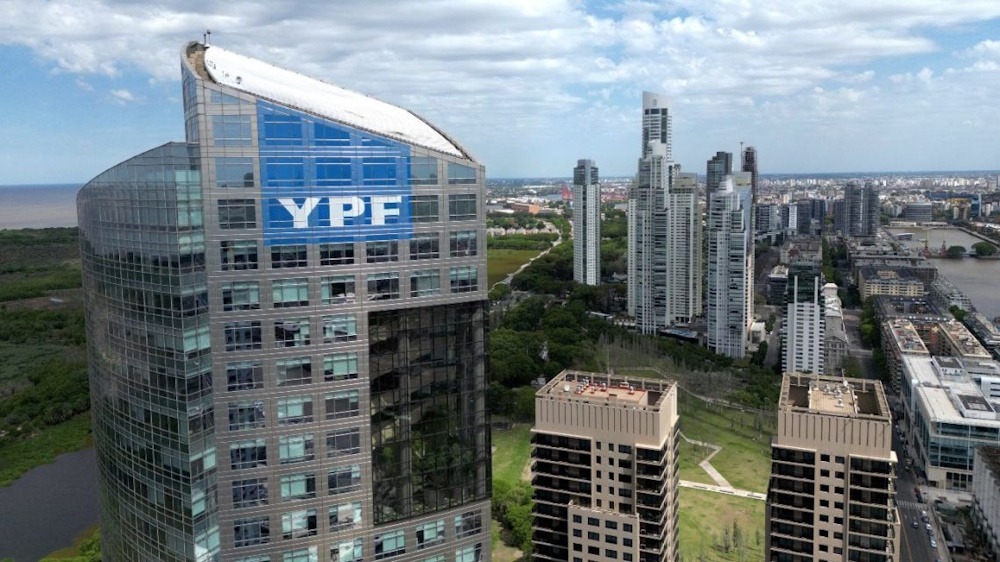
YPF is poised to advance its most ambitious projects in the coming year, as president and CEO Horacio Marín has indicated that the company will soon finalize agreements with international partners for its liquefied natural gas initiative and then move to seek funding. The CEO projected that the process to arrange financing aimed at transforming Argentina’s export matrix is set to begin with JP Morgan next week. Starting then, the U.S. bank will initiate consultations with more than 200 banks to launch project financing for 12 million tons. Sources linked to the operation confirmed that the goal is to raise US$12.5 billion, corresponding to the project’s first phase involving two liquefaction vessels, with 70 percent of the investment financed through debt and the remainder provided by partners’ capital.
According to the project roadmap, Adnoc is expected to be the first to join, while a replacement for Shell is being sought after the latter paused its participation. From YPF’s Puerto Madero headquarters, officials confirmed that talks are ongoing with a “super major” to enter the project and expand capacity from 12 to 18 million tons annually. YPF is also negotiating participation with another foreign entity, aiming for Argentina to achieve exports of US$40–50 billion starting in 2030. If the expansion to 18 million tons materializes, the total financing required from the JP Morgan–led banking consortium would rise to around US$17 billion.
As crude prices dip below US$59 per barrel, concerns are growing across the sector, with forecasts pointing to instability in the year ahead for a commodity crucial to the Vaca Muerta shale. In response, YPF has adopted an “armour-plating” strategy for its portfolio. Marín noted that the unexpected sale of Profertil fertilisers allowed the largely state-owned company to build reserves that provide sufficient liquidity to withstand price volatility. Despite the low-price environment, YPF expects a growth-focused 2026, planning investments of US$6 billion—20 percent more than the previous year—largely directed toward shale oil.
Productivity in Vaca Muerta has improved markedly, with Marín reporting gains of more than 31 percent in fracking efficiency and over 25 percent in drilling, enabling production targets to be met with fewer facilities. Progress on the Vaca Muerta Oil Sur pipeline remains steady, now more than 45 percent complete and on schedule. Projections indicate that by early 2027 Argentina will export over 180,000 barrels per day via this route, doubling to 360,000 within six months and rising further to 550,000 barrels by 2028.