
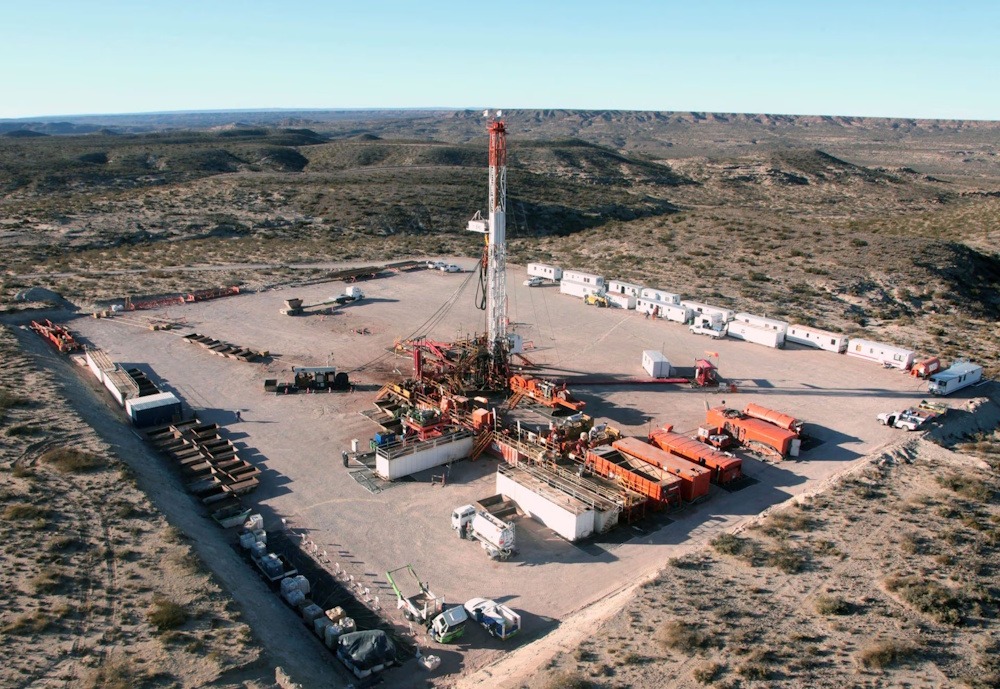
Last week, in a straightforward manner, the government’s Deputy Economy Minister for Energy & Mining, Daniel González, revealed that a new study indicates Vaca Muerta possesses nearly twice the oil resources previously estimated by the US Energy Information Administration fifteen years ago. The EIA had stated that the recoverable oil was 16.2 billion barrels; the revised estimate now suggests it stands at 30 billion barrels. This is an inflation that the government favours. It indicates that, rather than being moribund, Vaca Muerta remains a venture in its early stages. It is already altering the nation’s macroeconomic landscape, driven by its substantial exports, which are anticipated to yield an additional trade surplus of US$13.5 billion this year. However, the most advantageous period is still ahead; the President who will reap the rewards of the energy surge is expected to be the one assuming office in the relatively far-off 2031, when oil production and exports are projected to at least double and new liquefied natural gas projects will be fully operational. Gonzalez stated in his AmCham speech, during which he revealed the Vaca Muerta news, that the nation needs to shift its perspective: from contending with scarcity to overseeing abundance. However, as we approach a year from the apex of the 2027 presidential race, the inquiry that is progressively entering the public discourse is who will ultimately capitalise on this newly discovered windfall.
Currently, Milei has concentrated on enhancing the position of a single participant in the abundance competition: the corporations. The RIGI investment program stands out as the hallmark of the Milei administration’s policy initiatives. It has effectively transformed into a defining feature of his government, prompting significant international investors to reassess their prior notions regarding Argentina’s investment landscape. A total of 43 large projects have been submitted, committing investments of nearly US$200 billion over the next 30 years. Most of that money will only begin to flow once (and if?) Milei secures re-election. Other players in proximity to the newly abundant Argentina perceive a necessity to contend for their portion. The most apparent individual is the governor of Neuquén, Rolando Figueroa, who currently possesses a significant portion of that now-inflated oil wealth. According to a poll by the CB Global Data firm released this week, Figueroa holds the position of the country’s most popular governor. There is a compelling rationale for this: Neuquén stands out as one of merely three provinces that have achieved net positive job creation since Milei assumed the presidency, while 22 provinces are experiencing job losses and one remains stagnant. However, even Figueroa contends that he is not receiving an adequate amount.
Last week, he elaborated that the province receives merely 13 percent of the value derived from each barrel extracted from Neuquén’s subterranean reserves: 30 percent accounts for production costs, another 30 percent represents the profits of the companies, the federal government appropriates 17 percent in taxation, and the remaining 10 percent is distributed to other provinces through federal revenue-sharing mechanisms. Governor Figueroa lamented that Neuquén continues to bear the financial burden of funding roads and other infrastructure essential for facilitating oil and gas production. Neuquén, similar to the other provinces of Argentina, is currently not receiving any financial allocations for public works initiatives from the Milei federal administration, which is fixated on achieving a fiscal surplus. A province such as La Pampa, situated north of Neuquén and devoid of Vaca Muerta rock within its borders, is poised to impose a special toll on trucks traversing its roads en route to the oil region. Peronist Governor Sergio Ziliotto asserts that the trucks merely damage the roads and fail to provide any benefits for La Pampa. Abundance presents an intriguing dilemma, yet it possesses the potential to create misconceptions. The abundance of certain items may highlight the scarcity of others.
In terms of policy, the effectiveness of the RIGI policy in re-establishing Argentina’s presence in the investor spotlight stands in stark contrast to the absence of policy addressing other, less appealing economic concerns. The most salient issue is that of household delinquency, which remains at a stubborn decades-long record. Individuals find themselves caught between declining incomes that compel them to seek loans for daily expenses and the abusive interest rates imposed by unregulated financial entities, including not only banks but also digital wallets such as Mercado Pago. Milei is at ease disregarding the daily economic concerns of the populace, which are referred to as the micro by economists. However, his inner circle – now comprising some pragmatists such as Cabinet Chief Diego Santilli, whose primary political objective is to maintain power – is growing increasingly concerned that this trajectory will render the 2027 electoral year a challenging endeavour. Experience has shown that all the underground wealth in the world holds no significance if it fails to reach the pockets of voters at the appropriate moment.
